
A young adult needs a routine venipuncture in an outpatient clinic, has visible veins in both antecubital fossae, reports a previous right mastectomy with lymphedema precautions, and is anxious about multiple sticks. The technician must choose the first attempt site. Which venipuncture site selection best supports safe first-attempt venipuncture collection?
Select an answer to reveal the explanation.
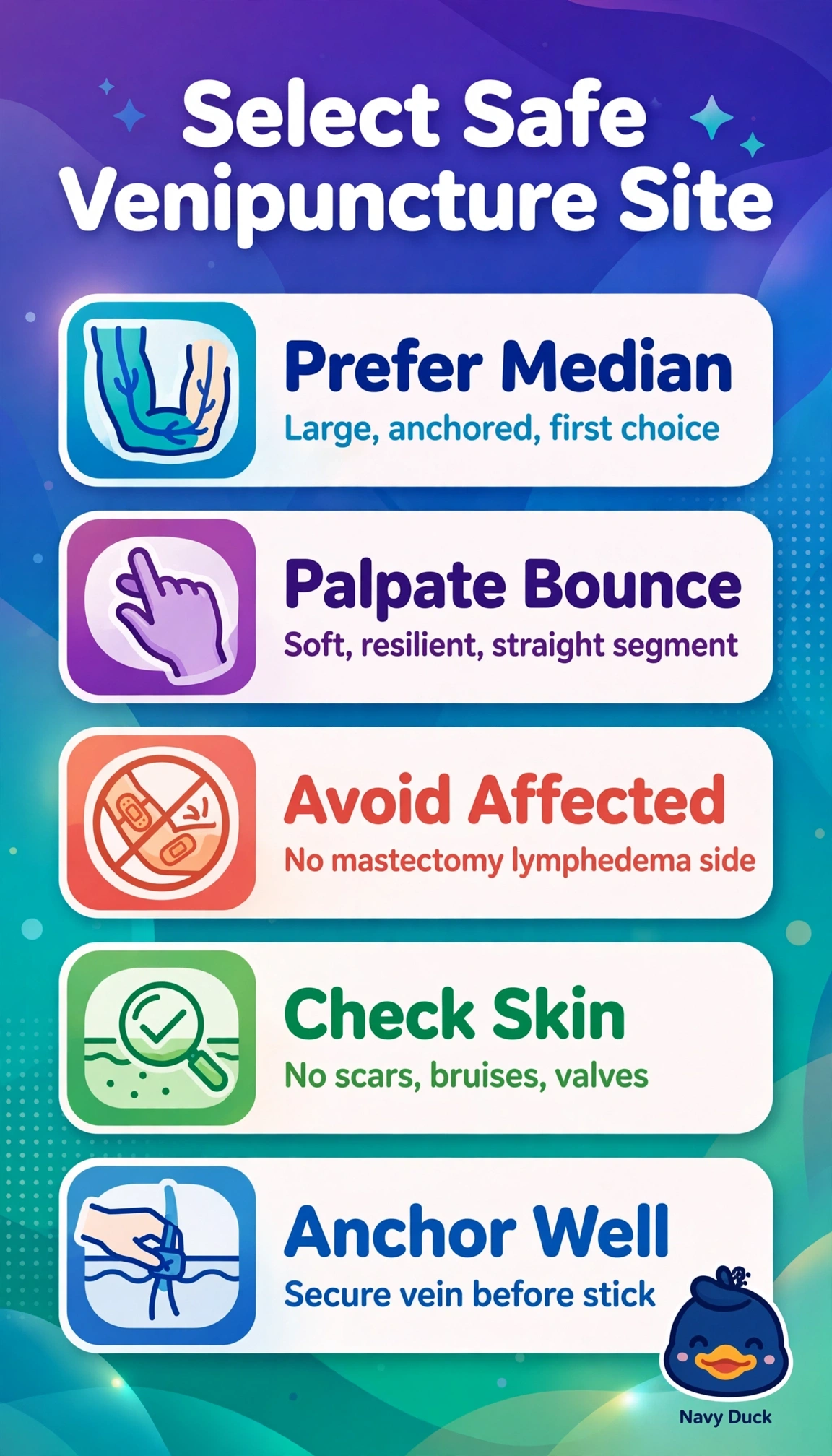
Short Explanation
You want the bouncy, forgiving vein that gives on the first stick. Careful palpation reveals resilience that eyes alone can miss. That palpation plus avoiding the affected side keeps it safe.
Full Explanation
The correct selection maximizes safe first-attempt success because the left arm respects right mastectomy with lymphedema precautions where venipuncture increases swelling and infection risk, the antecubital fossa is preferred when visible veins exist due to larger caliber and straighter course than dorsal hand veins, palpation for bounce confirms elasticity, turgor and patency rather than appearance alone, and a straight intact segment away from scars and flexion creases allows firm anchoring and clean entry that limits probing and repeat sticks critical for an anxious patient. The left cephalic alternative fails on optimal vessel concept since the cephalic is smaller, more lateral and more prone to rolling with less fibrous anchoring than the well-supported median cubital, reducing first-pass success despite correct side and technique. The bifurcated near-joint median cubital alternative fails on segment quality concept since bifurcations, valves and joint mobility promote needle deflection, through-and-through puncture and movement pain even when the correct vein is palpated. The location-only palpation alternative fails on assessment adequacy concept since feeling for position without bounce and resilience cannot distinguish a patent elastic vein from a sclerosed, thrombosed or fragile vein that looks acceptable but collapses. An exam caveat is that mastectomy, lymphedema, lymph node removal, fistula, infusion or injury always outrank vein appearance, so that side is avoided for routine collection without explicit provider direction. A practical check is to tourniquet, feel with the index finger for soft bouncy refill, release and reapply, cleanse, then anchor distally and enter the straight segment bevel up while confirming flash and comfort.