
On a busy afternoon in a 12-bed step-down unit, a bedside monitor alarms asystole for a postoperative adult who is sitting up, talking, and eating lunch. The tracing shows a flat line with occasional sharp spikes, and the chest electrode edge is visibly lifting with sweat. Which telemetry alarm response best verifies a possible asystole artifact?
Select an answer to reveal the explanation.
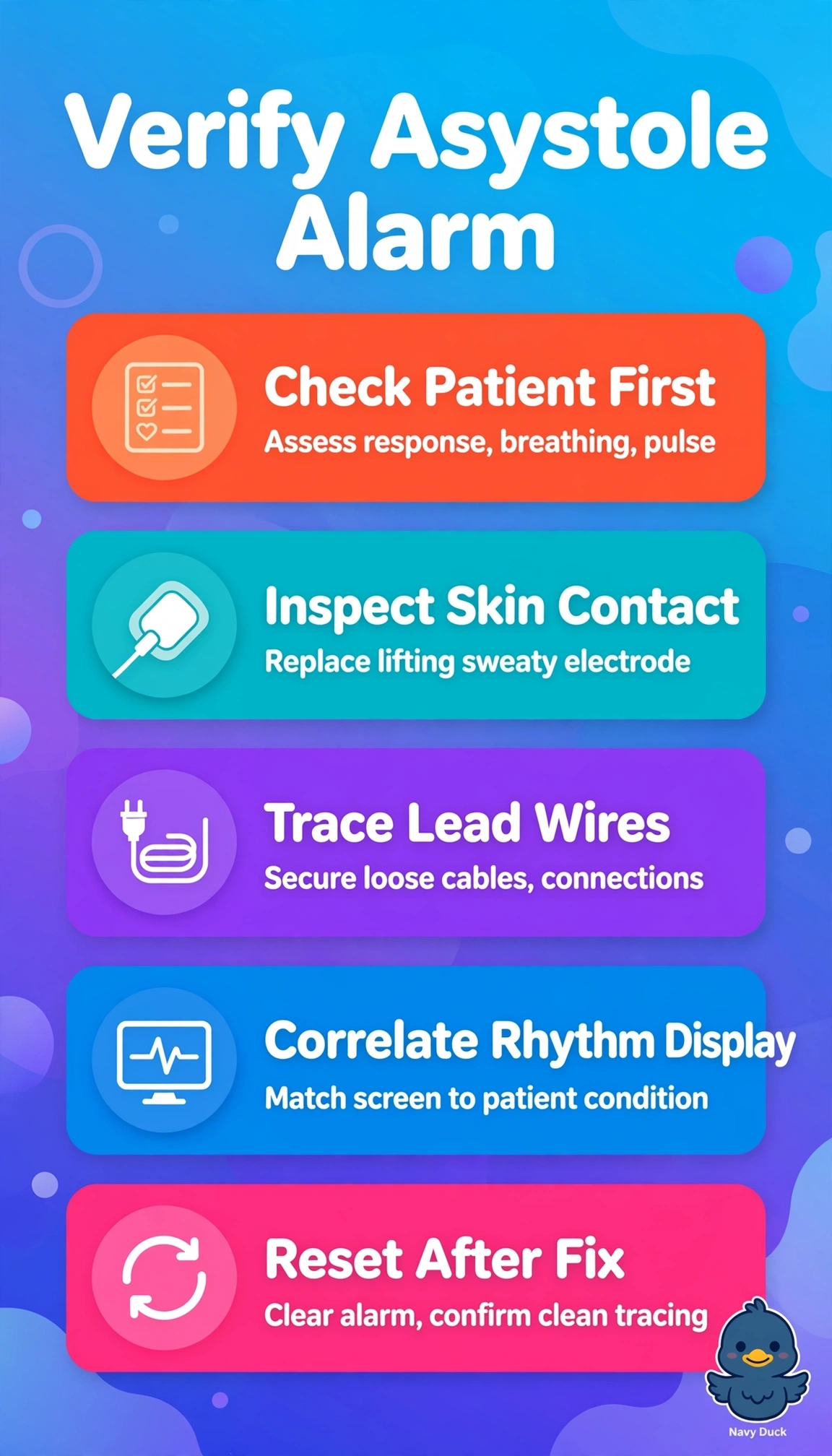
Short Explanation
You've got a talking patient with a flat line, so trust your eyes first. Check responsiveness and fix that sweaty contact and you'll sort artifact from true arrest fast.
Full Explanation
True asystole cannot coexist with talking and eating, so the correct action pairs immediate bedside perfusion assessment with simultaneous inspection of lead wires and skin contact, which addresses both patient safety and the visible cause of artifact from sweat-loosened electrodes producing a flat line interrupted by motion spikes. Assessing responsiveness and lung sounds while deferring lead inspection is thorough pulmonary assessment but fails the telemetry troubleshooting concept because it leaves the known poor electrode-skin interface unexamined, allowing artifact to persist and alarm again. Cleaning sweaty skin and replacing lifting electrodes to restore the tracing is excellent skin-prep technique but fails the resuscitation prioritization concept because it treats the monitor before confirming responsiveness and perfusion when asystole is claimed. Reviewing the flat tracing with spikes at the central monitor to evaluate for pacemaker activity is a reasonable rhythm-analysis habit but fails the artifact-recognition concept because it misattributes motion spikes in a non-paced talking patient and delays required bedside verification despite the lifting electrode clue. An exam caveat is that test writers often embed a talking or moving patient with lead malfunction clues to signal artifact, yet any mention of possible asystole still requires in-person assessment and never remote reassurance alone. A practical check is to observe the patient, feel for pulse and speak to them while with one hand tracing each lead wire to the electrode, drying and reseating loose edges, then confirming a normalized QRS at the bedside monitor before silencing alarms.