
A technician assisting a 78-year-old long-term care resident with bathing notices multiple bruises in various healing stages on arms and torso, a fearful withdrawal from a visiting relative, and a report of missed meals. The resident whispers not to tell. Which mandated reporting action should the technician take for suspected abuse and neglect?
Select an answer to reveal the explanation.
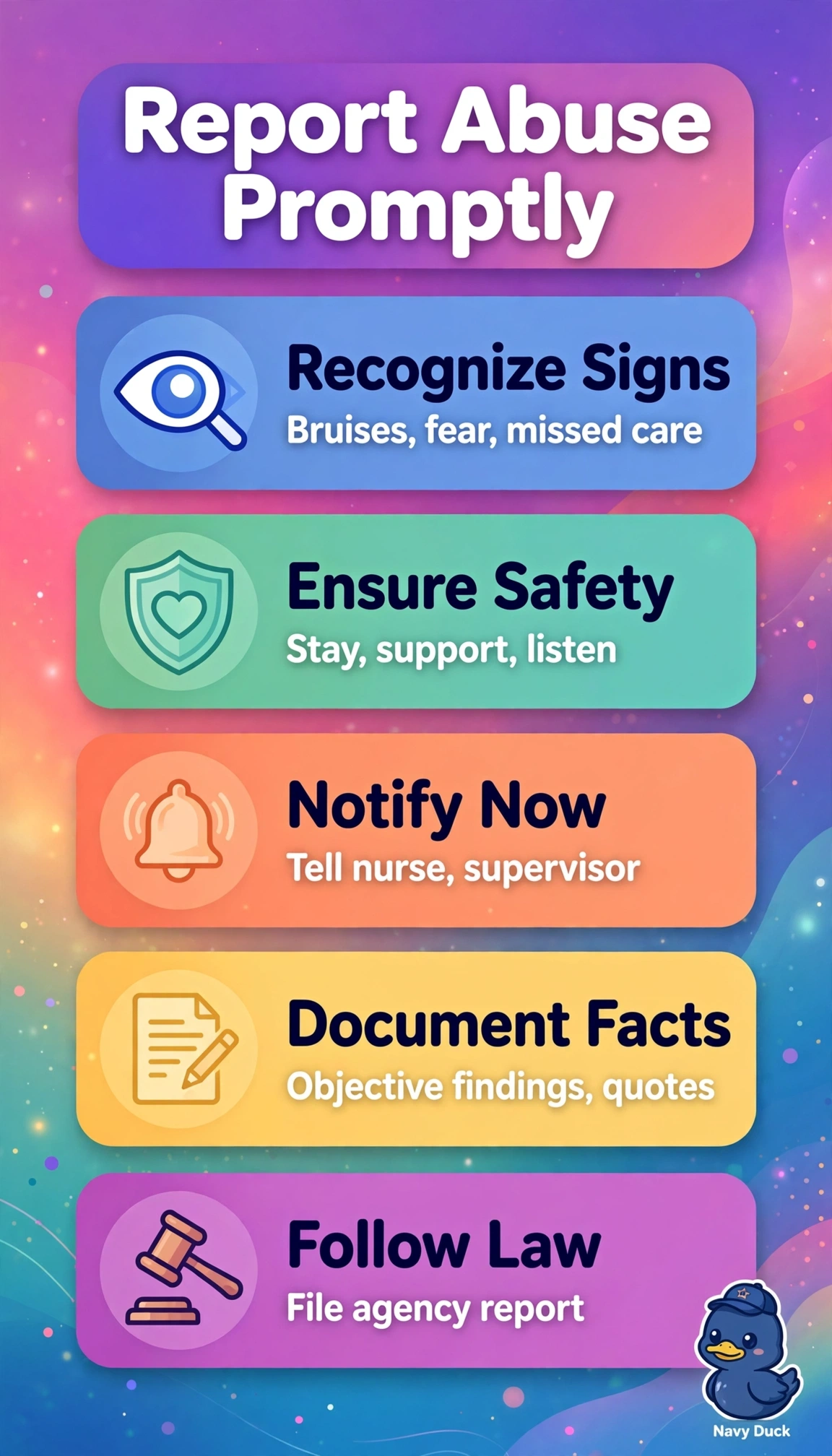
Short Explanation
You cannot keep secrets that leave someone unsafe, even when asked kindly. Prompt reporting through proper channels triggers protection and investigation.
Full Explanation
The correct action reflects mandated reporting for a vulnerable elder where bruises in various healing stages imply repeated trauma, fearful withdrawal implies possible interpersonal harm, and missed meals imply neglect, so the technician must transmit only objective facts immediately up the chain per policy even when the resident pleads for silence, because safety overrides confidentiality and frontline staff never investigate or determine substantiation. Reassuring compassionately but waiting until end of shift preserves rapport yet violates immediacy, which exists to enable rapid nursing assessment, preserve evidence, and prevent further harm during the same shift. Documenting thoroughly and continuing to monitor reflects sound surveillance yet fails without timely verbal escalation, leaving the nurse and protective system unaware when intervention is most urgent. Seeking additional history to clarify before notifying reflects thorough assessment in other contexts yet exceeds technician scope, delays protection, and risks re-traumatization or compromising a formal investigation. An exam caveat is to separate supportive care and charting, which are always needed, from reporting, which is never optional, delayed for certainty, or delegated to the resident. A practical check is to use concise SBAR language with locations, stages, exact quotes about meals and fear, note the request not to tell, confirm nurse receipt, and document notification per policy.