
In a medical intensive care room, a 55-year-old adult with a pressure injury must remain flat on strict bed rest, cannot sit, stand, or transfer, has attached drainage bags and monitors, and needs an accurate daily weight in the same bed. Which bed-scale weighing procedure best ensures accuracy and line safety for this patient?
Select an answer to reveal the explanation.
Short Explanation
You're chasing tiny day-to-day shifts, so every blanket counts. Consistent taring and a free-hanging lift keep consistency tight like using the same bowl each time you weigh flour.
Full Explanation
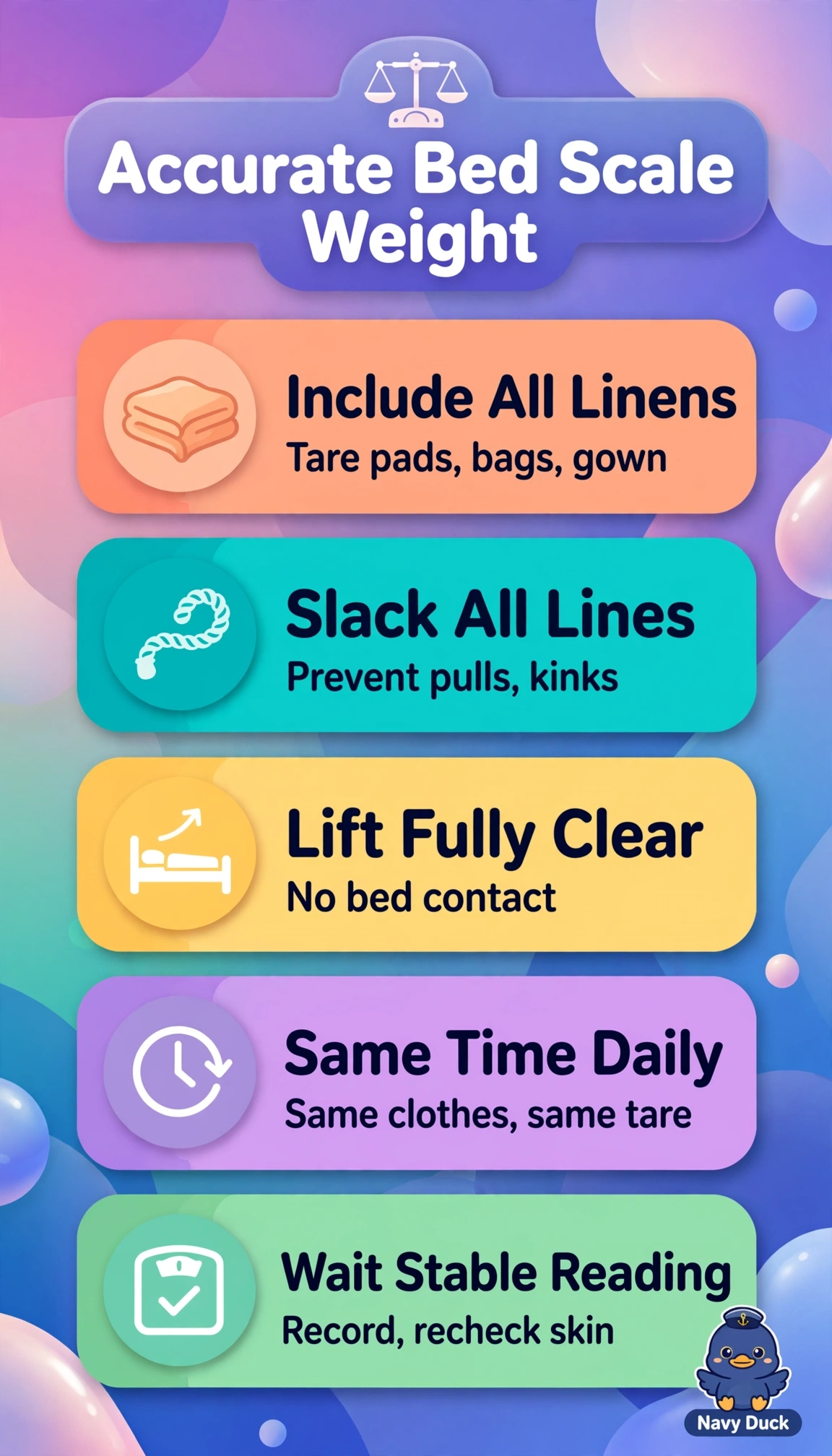
The correct procedure works because it controls all major sources of error while respecting strict flat bed rest and indwelling lines: taring removes the weight of linens plus drainage bags and monitors so only the patient is measured, fully suspending the sling with no bed contact prevents partial weight transfer that would falsely lower the reading, keeping the patient flat in the same bed with lines secured avoids unsafe sitting, standing or transfer and prevents traction or dislodgement, and weighing at the same time daily under comparable conditions minimizes physiologic variation for meaningful trends. The linen-only taring approach fails by the concept of unmeasured added mass, since untared drainage fluid and monitor cables add variable weight that inflates and destabilizes the trend despite perfect suspension and timing. The varying-times-after-meals approach fails by the concept of biologic and intake variability, since food, fluids, diuresis and dressing changes shift weight through the day so identical technique still yields noncomparable values. The brief-edge-contact-for-comfort approach fails by the concept of load sharing, since even light mattress contact transfers part of the load to the bed frame and produces a falsely low and inconsistent weight despite correct taring and timing. As an exam caveat, prioritize answers that preserve every stem condition together rather than selecting a familiar routine that quietly changes one condition such as tare scope, contact, timing, position or bed. As a practical check, zero with all linens and attached equipment in place, confirm the sling swings free with slack tubing, keep the patient flat, and repeat at the same hour in the same bed.