
A PCT working nights in long-term care is asked by a resident with diabetes to adjust an insulin pump setting, by a family member to explain lab results, and by a nurse to perform a routine fingerstick glucose and reposition a resident. Staffing is short and residents are waiting. Which action choice best demonstrates practice within the PCT/A scope of practice under nursing supervision?
Select an answer to reveal the explanation.
Short Explanation
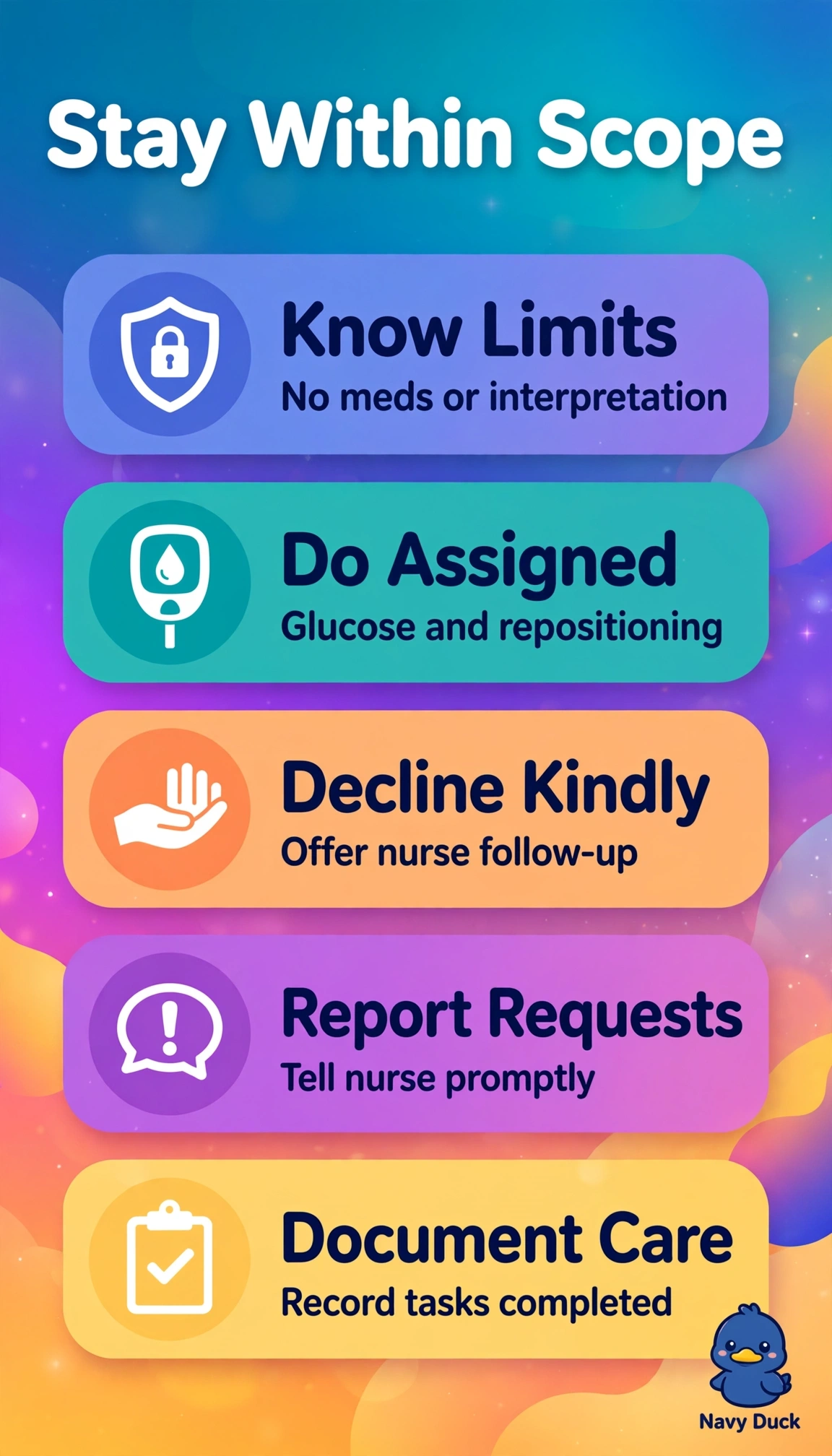
You’re holding a kind but firm line under pressure, and patients count on that. Boundaries protect everyone when you do assigned tasks and escalate the rest.
Full Explanation
Correct scope honors legal and ethical limits by performing only assigned PCT tasks such as glucose screening and positioning under supervision while declining medication-device adjustment and diagnostic interpretation, then routing those requests to the nurse, because assessment, medication management, and result interpretation require nursing or provider judgment. Adjusting the pump and explaining results while delaying assigned work violates scope on two fronts even though helping with waits feels compassionate, since insulin dosing and interpretation exceed PCT authority and the delegated task is neglected. Doing assigned care then changing the pump slightly still crosses into medication administration even though the adjustment seems small, because any pump change alters dosing and requires licensed judgment with orders. Interpreting results for the family and deferring assigned care to the nurse reverses priorities and scope even though communication matters, since interpretation belongs to the nurse or provider and delegation cannot be passed upward without completing an accepted safety task. Exam caveat is that patient or family requests never expand scope, and practical check is to use a brief refusal with an alternative and promptly report the request and actions taken.