
In an outpatient draw station, a 68-year-old adult has small superficial forearm veins that collapse under strong vacuum, needs one small-volume chemistry tube today, reports sharp pain with large needles, and is alert and well hydrated. Which venipuncture device and collection method best balances vein preservation and sample quality for this draw?
Select an answer to reveal the explanation.
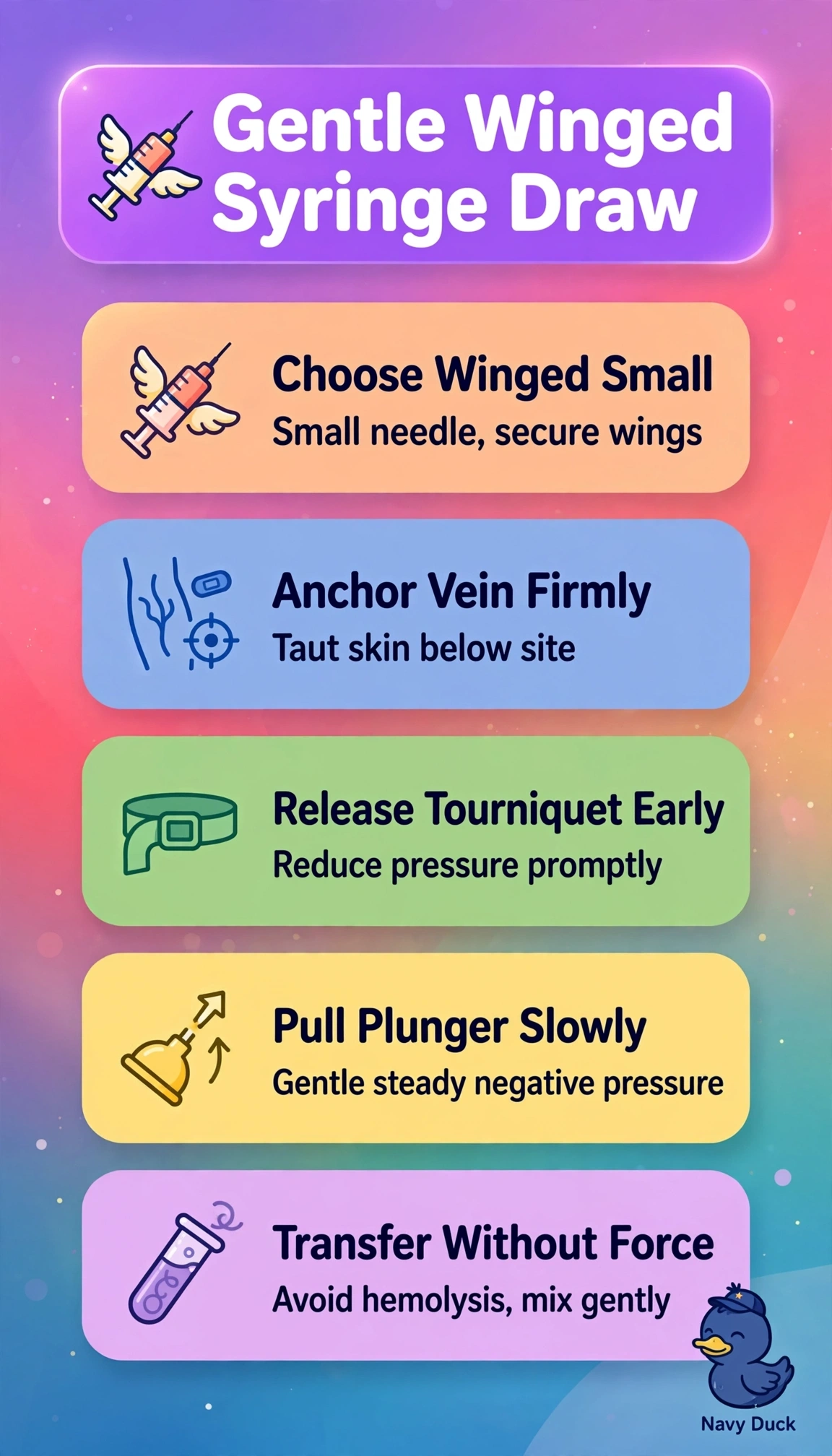
Short Explanation
You've got delicate veins that cave in if you pull too hard. A gentle syringe draw through a small winged needle gives you vacuum-control like sipping through a straw instead of a shop vacuum.
Full Explanation
The correct approach succeeds because a small-gauge winged set minimizes entry pain and trauma in small superficial forearm veins while a syringe replaces fixed tube vacuum with operator-controlled negative pressure, and prompt tourniquet release with slow steady withdrawal prevents stasis, collapse, and shear-induced hemolysis while easily filling one small-volume chemistry tube in an alert hydrated adult. Maintaining tourniquet pressure until transfer is complete fails by stasis concept because prolonged occlusion causes hemoconcentration, shifts protein-bound analytes and potassium, increases hemolysis risk, and adds discomfort without benefit when only one small tube is needed. Using the same small winged set with a standard evacuated tube holder fails by pressure-control concept because standard tube vacuum cannot be titrated, so a vein known to collapse under strong vacuum is likely to occlude, abort flow, and produce a hemolyzed or insufficient specimen. Using a small straight needle with otherwise careful syringe technique fails by stabilization concept because straight needles offer less anchoring and angle control in mobile superficial veins of an older adult, increasing through-and-through puncture, hematoma, and repeat sticks compared with wings that allow taping and low-angle tracking. Exam caveat is that evacuated systems and straight needles remain correct for routine antecubital draws with robust veins, so base selection on the stated fragility, pain history, and vacuum collapse rather than habit. Practical check is to release the tourniquet once flow is established and within one minute, observe the vein staying patent during gentle aspiration, and confirm free slow flow before continuing to fill and transfer.