
A patient care technician must collect a fasting blood specimen in a busy morning round, shares a semi-private room with another patient, and has a wristband and a printed requisition at bedside. Two patients on the unit have similar last names. Which identifier verification practice meets patient safety standards before specimen collection?
Select an answer to reveal the explanation.
Short Explanation
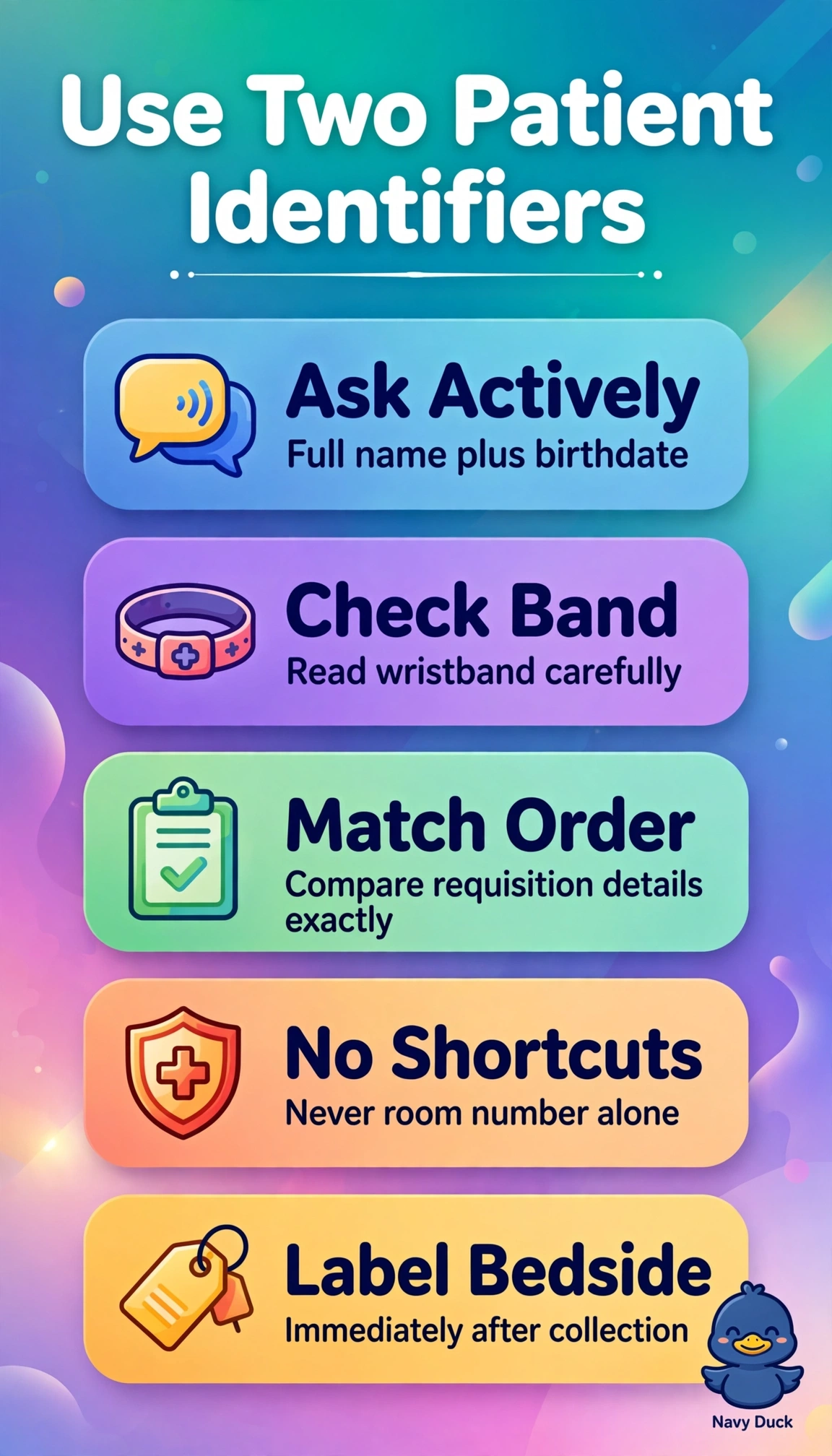
You’re the last safety checkpoint before that tube is drawn. Two matching facts beat one guess every time. That verification stops mix-ups, especially with similar names.
Full Explanation
Safe patient identification requires active use of two independent identifiers, typically full name and date of birth, obtained from the patient and verified against the wristband and order or requisition, never using room number alone or leading questions. Asking full name and birth date verbally and matching wristband to requisition details fulfills the standard because it engages the patient and cross-checks documents. Confirming room and bed number risks error during transfers or shared rooms, while asking if they are a certain name invites a confused yes and passive agreement. Matching last name only and labeling after leaving the room increases misidentification and labeling error. Exam caveat: labeled tubes must be labeled at bedside immediately after collection, and practical check: if identifiers do not match or the band is missing, stop and resolve with the nurse before proceeding.