
A busy telemetry unit nurse asks a PCT to check a blood glucose on a stable patient with diabetes, record intake and output, and sit with a new post-fall patient who needs frequent observation. The PCT is trained and deemed competent in glucose testing, has three other patients, and the fall-risk patient is restless. Which delegation decision best applies the Five Rights of Delegation for this assignment?
Select an answer to reveal the explanation.
Short Explanation
You’re sorting a full plate like a pro — matching skill to stability matters most. Clarity keeps delegation safe when you confirm task, person, and follow-up.
Full Explanation
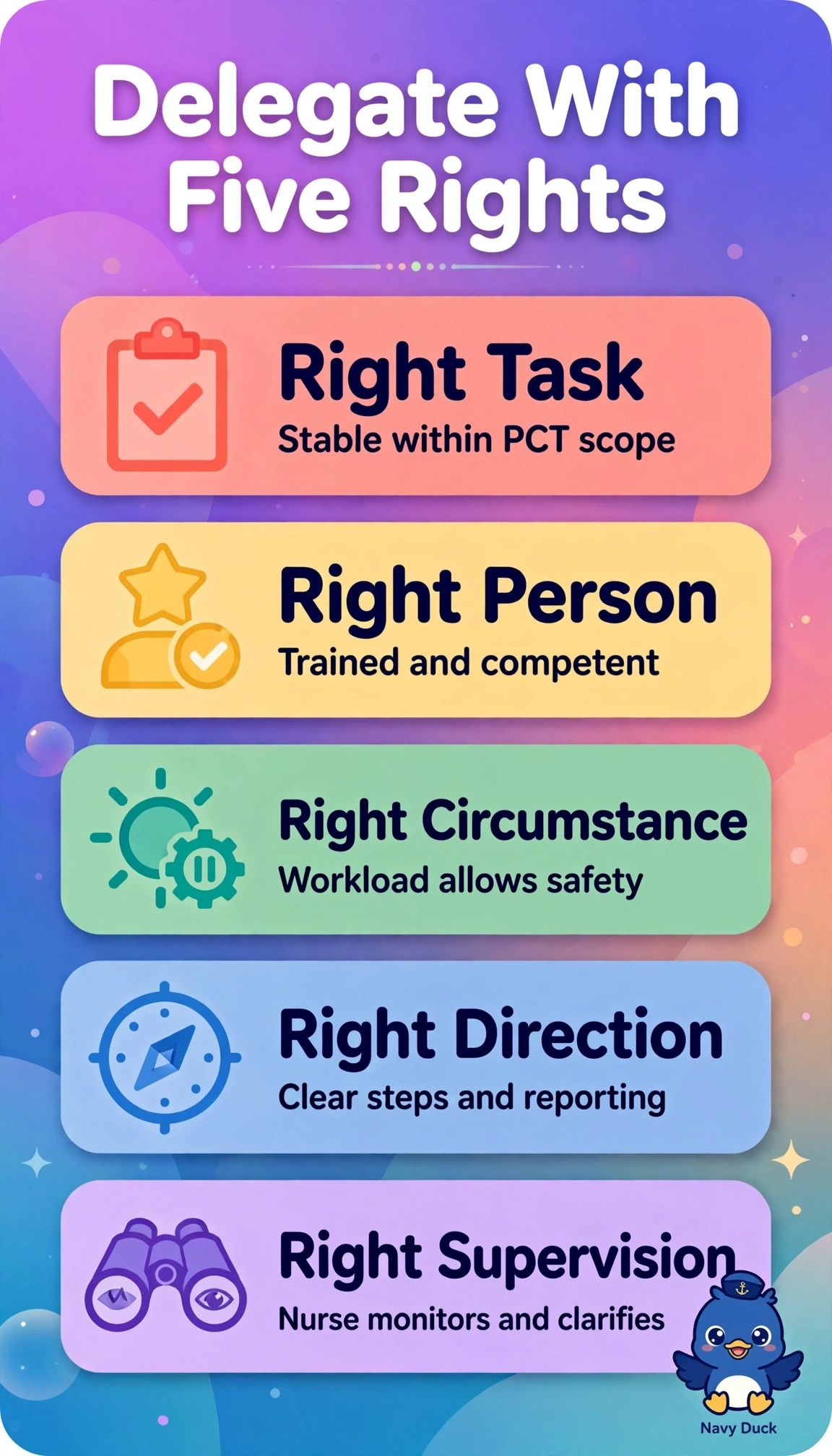
Correct application weighs right task, right circumstance, right person, right direction, and right supervision by accepting only stable-patient tasks within PCT competence when workload permits, while clarifying supervision for an unstable observation need that requires nursing judgment, because delegation must match stability and competency with clear communication. Accepting everything and seeing the restless patient last satisfies willingness but violates right circumstance and supervision by delaying safety observation for a high-risk, changing need while routine work comes first. Declining glucose testing as nursing-only misstates scope when training and competency exist, and agreeing to solo continuous observation without direction fails right supervision even though staying with the patient sounds protective, because the plan lacks delegation clarity and workload limits. Reassigning to another aide without authority and rounding without updating the nurse violates right direction and communication even though helping is well intended, since redelegation is not permitted and the nurse loses oversight of a restless fall-risk patient. Exam caveat is that stability and need for nursing judgment decide delegability more than busyness alone, and practical check is to repeat back what was accepted, limits, and when and how to report findings.