
In a pediatric outpatient clinic, a calm 9-year-old with a congenital left below-elbow stump needs a 12-lead EKG for a heart murmur, the parent will stay at the bedside, the chest is small, and the right arm is intact for comparison. Which EKG adaptation should the PCT use to obtain an accurate pediatric amputee tracing?
Select an answer to reveal the explanation.
Short Explanation
Small bodies need small tools and steady signals, and you can help keep the child calm with the parent’s support. Placing the left arm lead on the proximal stump preserves the circuit for an accurate pediatric tracing.
Full Explanation
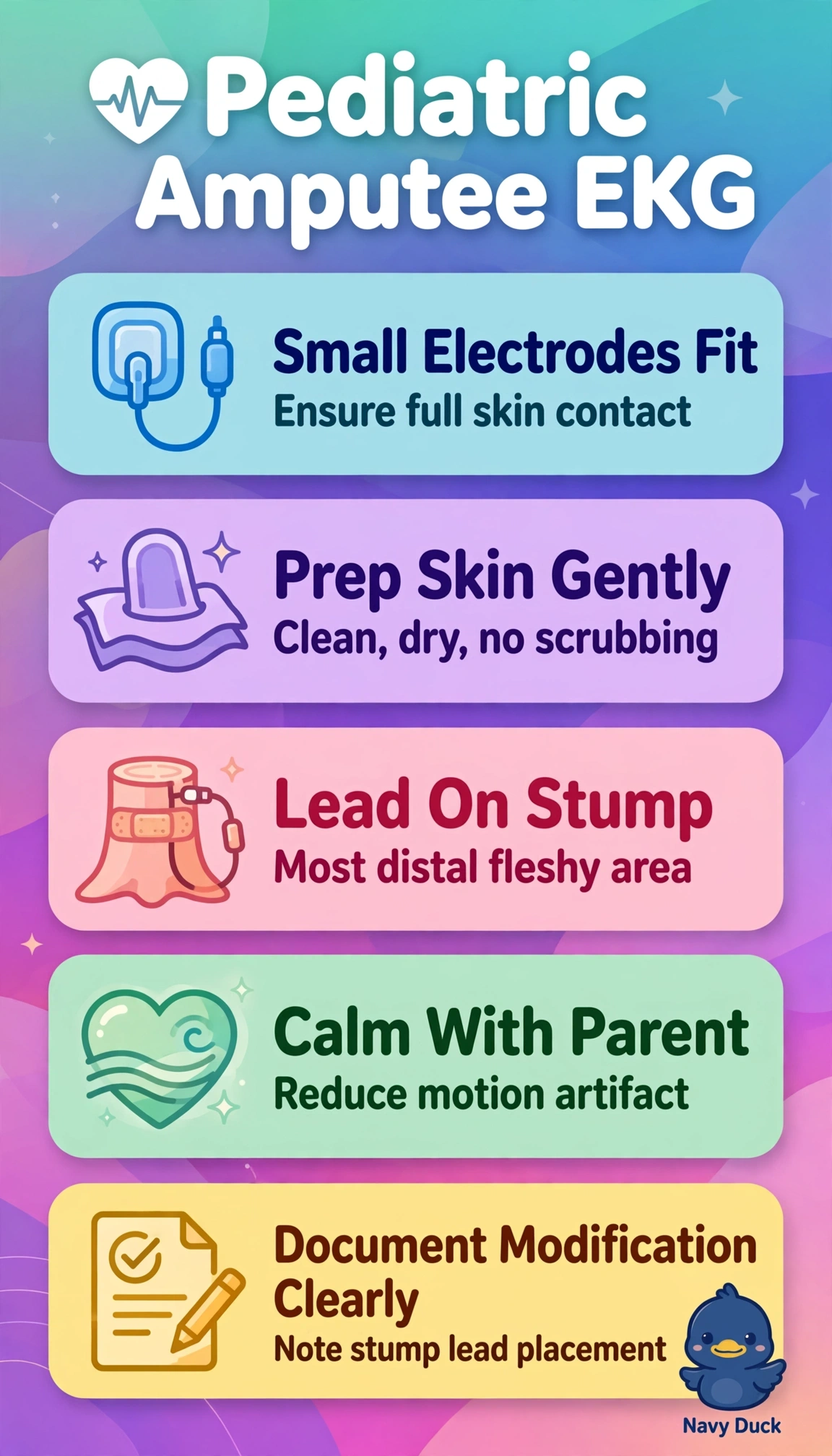
Use appropriately sized pediatric electrodes for the child’s small skin surface and good contact, and place the left arm lead on the most distal fleshy portion of the same-side residual limb to preserve electrical symmetry. Parental presence and a calm explanation can reduce motion artifact. Using trimmed adult electrodes and moving the left arm lead to the right leg violates the limb-placement symmetry concept: it duplicates another limb vector and can distort frontal-plane morphology, even with parental soothing. Placing the lead on the left shoulder and omitting right-sided comparison violates the distal-placement and complete-acquisition concepts, because proximal torso placement alters voltage and omitting leads prevents interpretation, despite using pediatric electrodes. Holding the lead in the air near the stump violates the skin-contact and closed-circuit concepts; air cannot conduct the electrical signal, resulting in artifact or a flatline. Exam caveat: do not place limb leads over bone or dressings or across to the opposite side, and document any modified placement. Practical check: confirm skin preparation, secure adhesion without pressure injury, check the child’s comfort, and repeat an artifact check before transmitting.