
A PCT is caring for an older adult in a busy emergency department who speaks limited English, averts eye contact, and declines a hospital gown because of modesty beliefs. The adult child offers to interpret and urges the PCT to hurry. The PCT needs vital signs and a clean gown before the provider exam. Which communication approach best demonstrates therapeutic communication and culturally competent care in this situation?
Select an answer to reveal the explanation.
Short Explanation
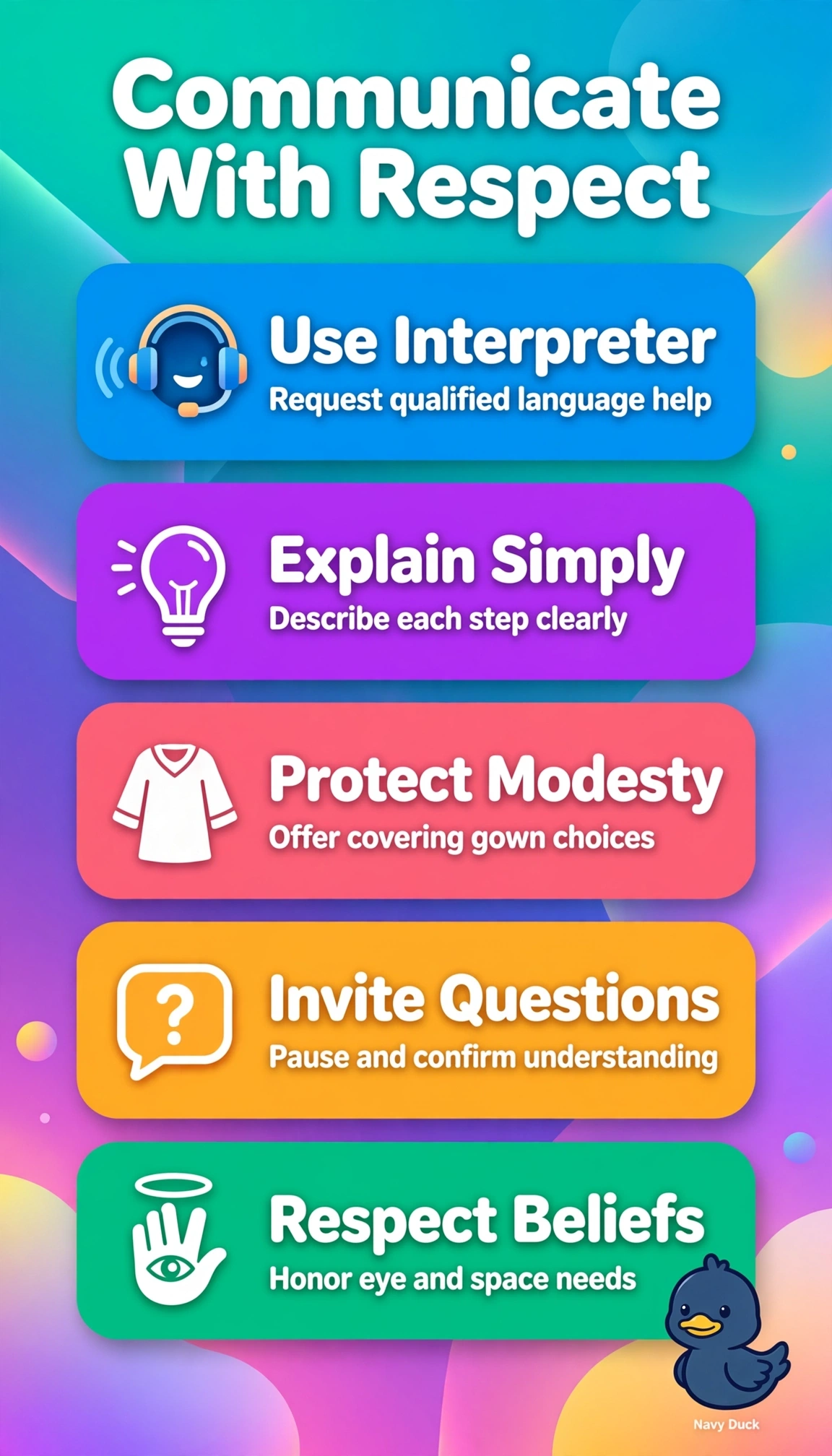
You’re balancing respect and clarity beautifully in a rushed moment. Dignity grows when you use a qualified interpreter and protect modesty while explaining care.
Full Explanation
The correct response integrates all scenario demands: limited English, modesty beliefs, need for vital signs and a clean gown before the provider exam, and pressure to hurry. Requesting a qualified interpreter ensures accurate, confidential, impartial communication required for safe assessment and consent, which supports both therapeutic communication and culturally competent care. Explaining each step simply with time for questions builds trust, respects autonomy, reduces anxiety, accommodates an older adult who averts eye contact, and allows confirmation of understanding rather than rushed compliance. Offering gown choices that preserve modesty demonstrates cultural humility while still accomplishing necessary preparation. The response that uses the adult child to interpret fails on interpreter standards because family interpreters risk omission, distortion, bias, privacy loss, and coercion even when willing and convenient. The response that provides only the standard gown promptly fails on cultural congruence because prioritizing uniformity and speed over assessed modesty needs can damage trust and increase refusal or distress. The response that proceeds without pausing for questions fails on patient-centered communication because hurrying to meet workflow sacrifices health literacy, safety, and cooperation, especially with language barriers. For exams, remember convenience never justifies family interpretation and averted gaze should not be misread as disengagement. A practical check is to secure the interpreter first, describe one step at a time, show gown alternatives, then use teach-back and explicitly invite questions.