
A PCT is sitting with a patient on an oncology unit whose spouse died last month and who now faces a new serious diagnosis. The patient says there is no point in treatment, has stopped eating, cries quietly, and declines visitors but accepts the PCT sitting nearby. Family asks why the patient is giving up. Which supportive action best aligns with coping support and the stages of grief for this presentation?
Select an answer to reveal the explanation.
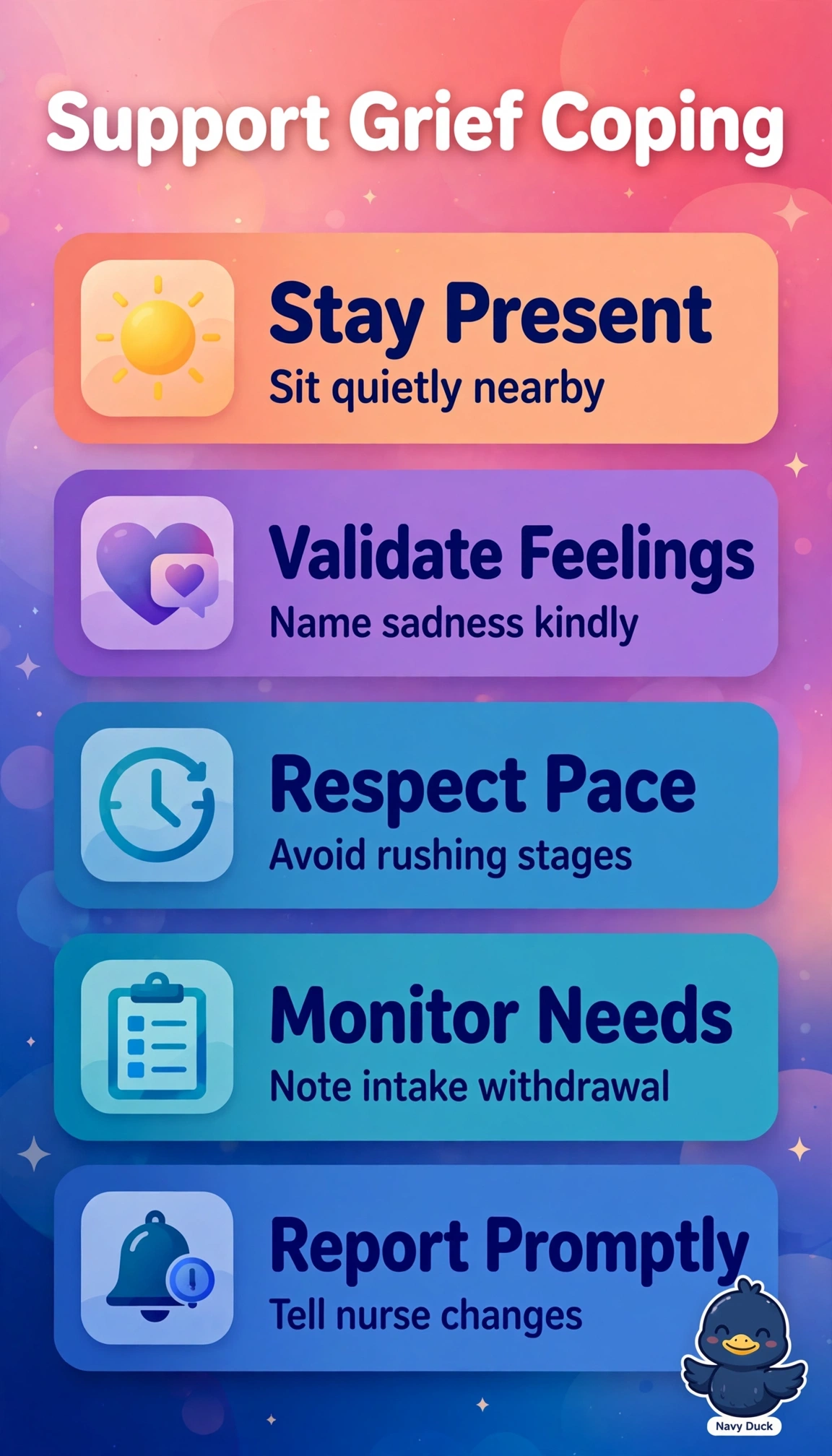
Short Explanation
You can recognize that low mood and withdrawal call for steady company, while the patient’s acceptance of your presence matters. Presence can comfort more than pep talks when grief weighs heavily, and reporting the changes helps the nurse respond.
Full Explanation
Quiet presence, acknowledging sadness and loss, and reporting appetite and withdrawal changes best combine coping support, grief-sensitive care, and the PCT’s role. Staying nearby respects the patient’s choice to decline visitors while accepting company; validation responds to quiet crying and hopelessness amid a spouse’s recent death and a new serious diagnosis. Reporting stopped eating and withdrawal gives the nurse important observations rather than leaving the changes uncommunicated. Empathic listening about the losses is supportive, but inviting family to visit conflicts with the patient’s stated preference and could cause distress or undermine trust. Sitting nearby, validating loss, and reporting changes are appropriate, but urging the patient to express anger assumes anger is the needed stage and treats grief stages as fixed steps that should be advanced; grief should be met where the person is. Quiet support, validation, and teaching paced breathing may offer coping help, but without reporting appetite and withdrawal changes, the care team may miss concerns requiring attention. An exam caveat is to use cues such as crying, anorexia, hopeless language, and the preference to avoid visitors to identify the current presentation, rather than assuming a sequence or acceptance. A practical check is to remain briefly available, reflect the loss simply, document intake, affect, and statements objectively, and promptly update the nurse while maintaining the patient’s privacy.