
An adult post-surgical patient has IV fluids infusing, is drinking water and broth, has a Foley catheter, and vomited once during the shift on a busy unit. The nurse asks for an accurate shift intake and output total to guide fluid management. Which intake and output documentation method ensures accurate fluid balance tracking?
Select an answer to reveal the explanation.
Short Explanation
You’re the fluid detective on this shift, so every drop counts. Including all ins and outs paints the full balance picture. That completeness helps the team spot overload or dehydration early.
Full Explanation
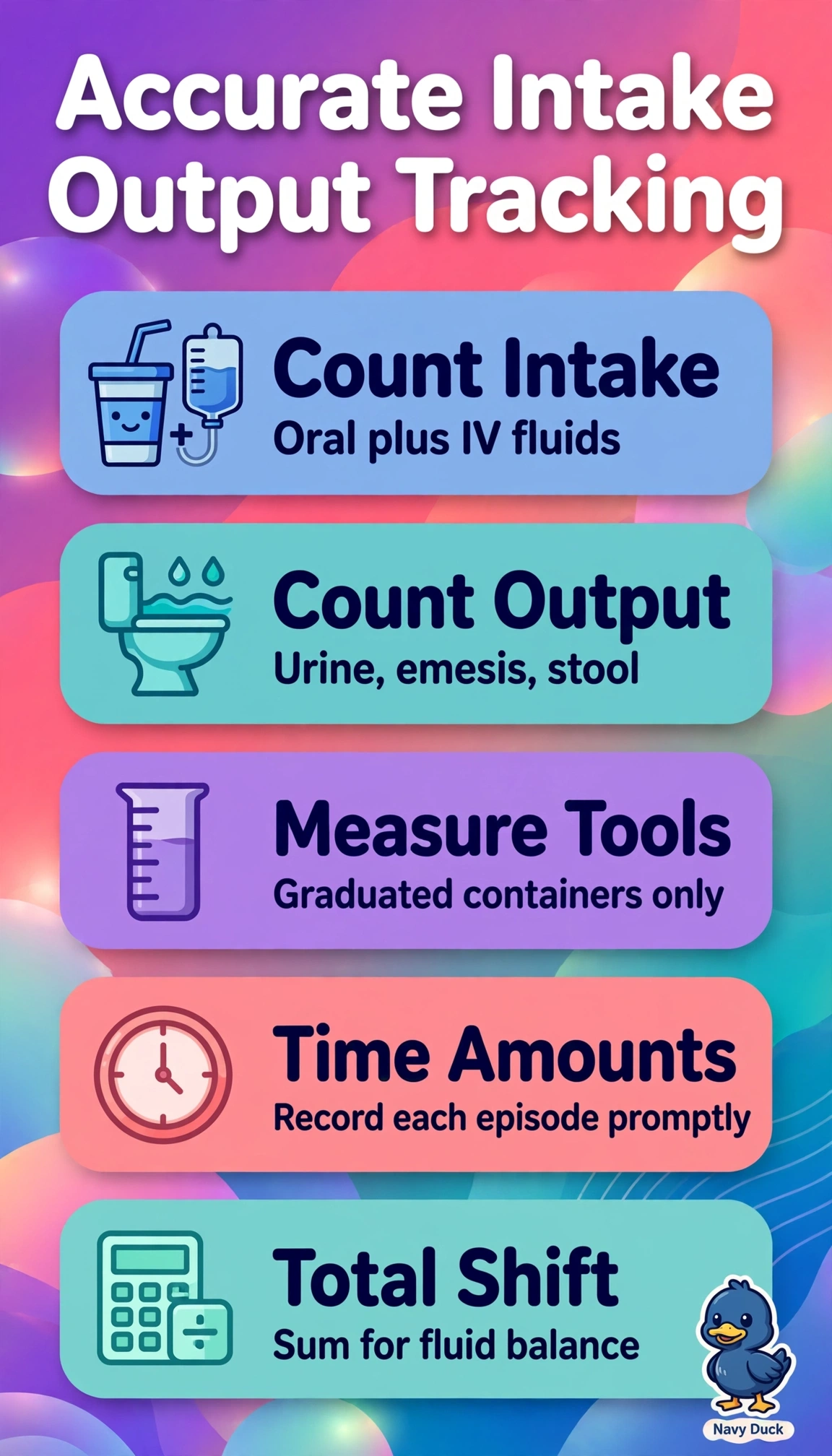
Accurate shift fluid balance requires every intake and every output with volume and time to support running totals and clinical decisions, which is why the comprehensive method including oral fluids, IV fluids, urine, emesis, and stool with times and amounts fits this post-surgical case with drinking, continuous infusion, Foley drainage, and one vomiting episode. Documenting oral intake, urine, emesis, and stool with times and measured volumes uses sound volume measurement but fails intake completeness by omitting IV fluids, so parenteral volume is uncounted and fluid status appears more negative than reality, masking overload risk and misguiding replacement. Documenting oral fluids, IV fluids, urine, and stool with times and measured amounts uses sound intake and routine output tracking but fails output completeness by omitting emesis, so a discrete volume and acid loss is ignored and subsequent nausea, electrolyte, and hydration assessment lacks a key event. Summarizing all categories as totals without specific times preserves category completeness but fails chronological tracking, so hourly trends, onset of oliguria, and temporal response to fluids or vomiting cannot be judged during the shift. The exam caveat is that questions reward timed entries over end-of-shift totals whenever management depends on rate and sequence, not just net balance. The practical check is to cross-verify oral cups and broth bowls, pump infused volume, Foley graduations per hour, plus basins for emesis and stool notes before handoff.