
A PCT is doing night rounds on a medical-surgical unit for a postoperative older adult who was alert and oriented at bedtime. The patient is now difficult to arouse, responds only to sternal rub, has new labored breathing with low oxygen saturation, and has cool clammy skin. Which immediate recognition and nurse-reporting action for decreased consciousness with shortness of breath best fits PCT scope?
Select an answer to reveal the explanation.
Short Explanation
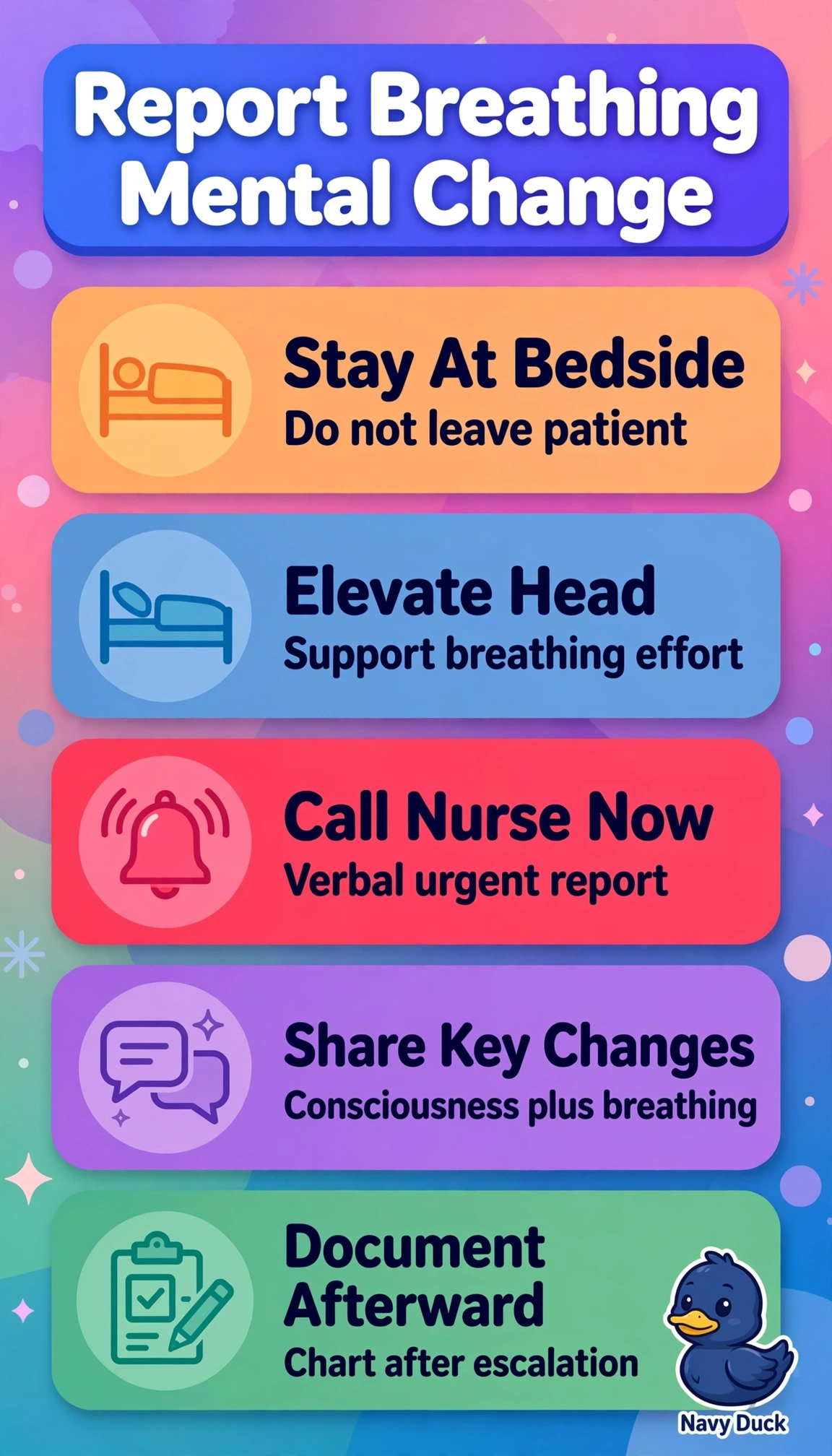
You're the smoke alarm, not the fire crew here. You've spotted a falling consciousness plus new breathing trouble, so you'll protect the airway with elevation while you get the nurse right now.
Full Explanation
The correct response reflects PCT scope for an unstable postoperative older adult with acute change from alert and oriented to responsive only to sternal rub plus new labored breathing, low saturation, and cool clammy skin, which signals possible deterioration requiring staying with the patient for safety and continuous observation, maintaining head of bed elevated to support ventilation and reduce aspiration risk, and notifying the nurse immediately with both consciousness and respiratory findings without independent diagnosis or treatment. The thorough vitals-first approach fails by prioritization because obtaining full vitals and glucose is appropriate data collection but must not precede immediate notification when decreased responsiveness with respiratory distress is present, as delay postpones evaluation and rescue. The brief-walk-for-alertness approach fails by safety and positioning because early mobilization benefits stable postoperative patients yet mobilizing someone difficult to arouse with labored breathing risks falls, worsening hypoxia, and cardiovascular collapse and abandons needed in-bed elevation. The routine-sleepiness framing fails by recognition because attributing unresponsiveness to expected postoperative drowsiness omits the critical baseline change and the need to report decreased consciousness as urgently as dyspnea, which normalizes a red flag. An exam caveat is to distinguish routine drowsiness that improves with voice from new inability to arouse except with painful stimuli combined with respiratory signs, which is never routine monitoring. A practical check is to use SBAR while staying present: state baseline alert at bedtime versus now sternal-rub-only, new labored breathing with desaturation and clammy skin, head of bed elevated, and request immediate nurse evaluation without leaving for data or equipment.