
A PCT draws morning labs on a medical-surgical unit for a patient needing bilirubin and lactate testing. The requisitions note protect from light, keep chilled, and deliver to the lab within 30 minutes. The unit clerk asks the PCT to batch the tubes with routine specimens for the next porter round. Which specimen transport method best meets CDC and temperature, light, and time requirements for these tests?
Select an answer to reveal the explanation.
Short Explanation
You nailed the tricky part here — different tubes can need opposite handling in one trip. Protection means light, cold, and speed all matter at once, like packing ice cream and eggs together.
Full Explanation
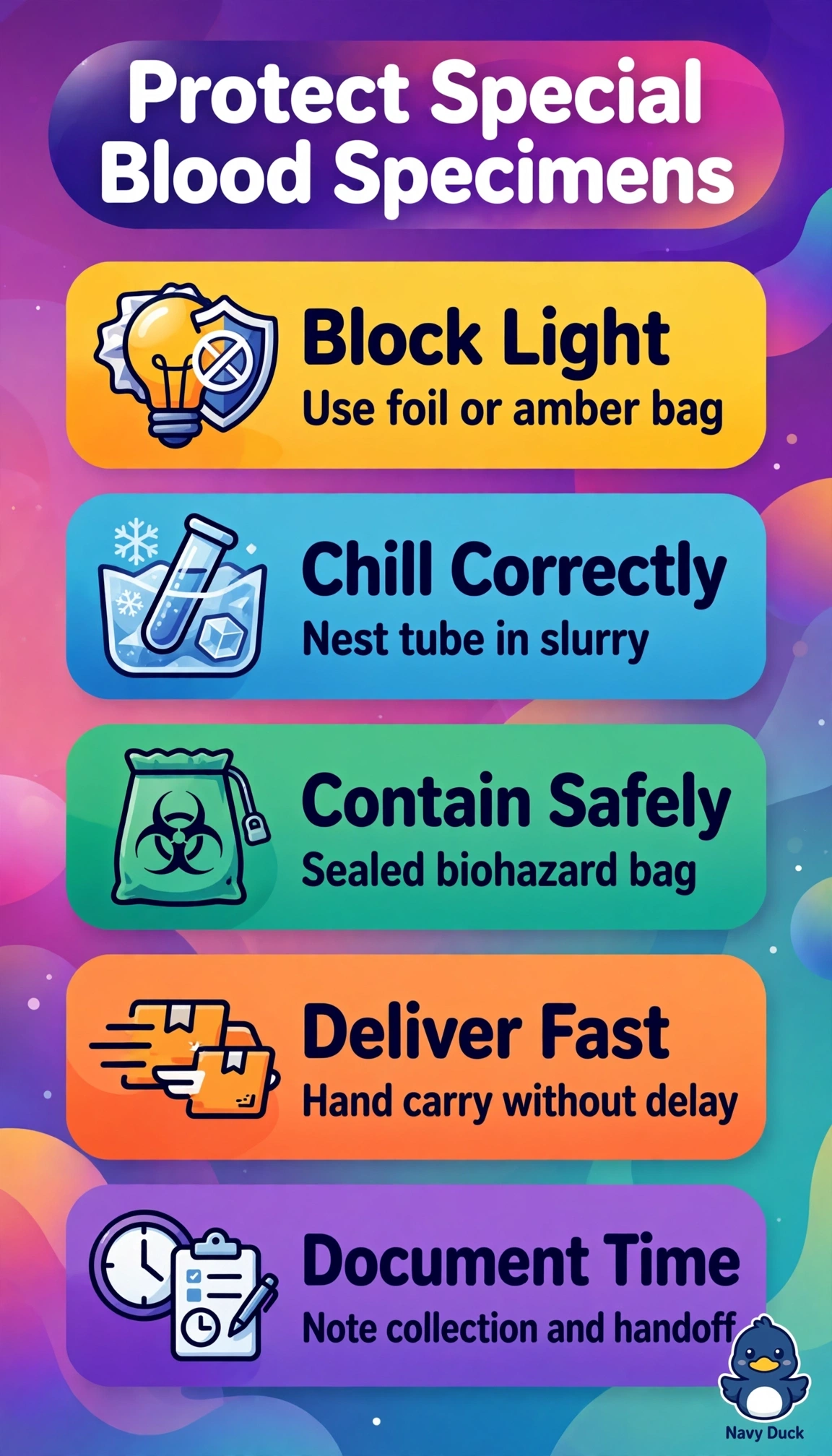
The correct method succeeds because it controls all three instabilities together, with opaque wrapping preventing photooxidation of bilirubin that causes falsely low results under room or fluorescent light, true ice-water slurry providing uniform zero to four degree contact that slows red cell glycolysis and stabilizes lactate, and immediate hand delivery satisfying the thirty minute whole blood limit and CDC principles for correct labeling, containment and direct transfer without batching delay. The amber bag on a frozen gel pack fails by temperature concept because despite adequate light reduction and timely delivery, a solid pack leaves air gaps and warms unevenly and cannot maintain slurry cooling, allowing continued metabolism and lactate error. The method that foils the lactate tube while icing both fails by light concept because chilling is correctly applied yet photoprotection is applied to the wrong analyte, leaving bilirubin exposed to degradation while lactate gains no benefit from darkness. The method that uses correct wrapping and slurry but waits until all morning draws are complete fails by time concept because even perfect cooling cannot stop cellular activity indefinitely and grouped delivery exceeds the stability window, risking rejection. As an exam caveat, do not accept near equivalents, since any cold is not slurry, any tinted bag is not guaranteed opaque for the correct tube, and any walk to the lab is not timely if batched. As a practical check, confirm the requisitions, fully enclose the bilirubin tube, verify tubes are surrounded by slurry, note the collection time, and hand them directly to lab staff for receipt.