
A PCT must move a stable post-surgical adult from a med-surg bed to radiology by stretcher, with an IV pole and a urinary bag attached, down a busy corridor with elevators. The patient can assist slightly but cannot walk. Which stretcher transport technique should the PCT use to ensure safe movement?
Select an answer to reveal the explanation.
Short Explanation
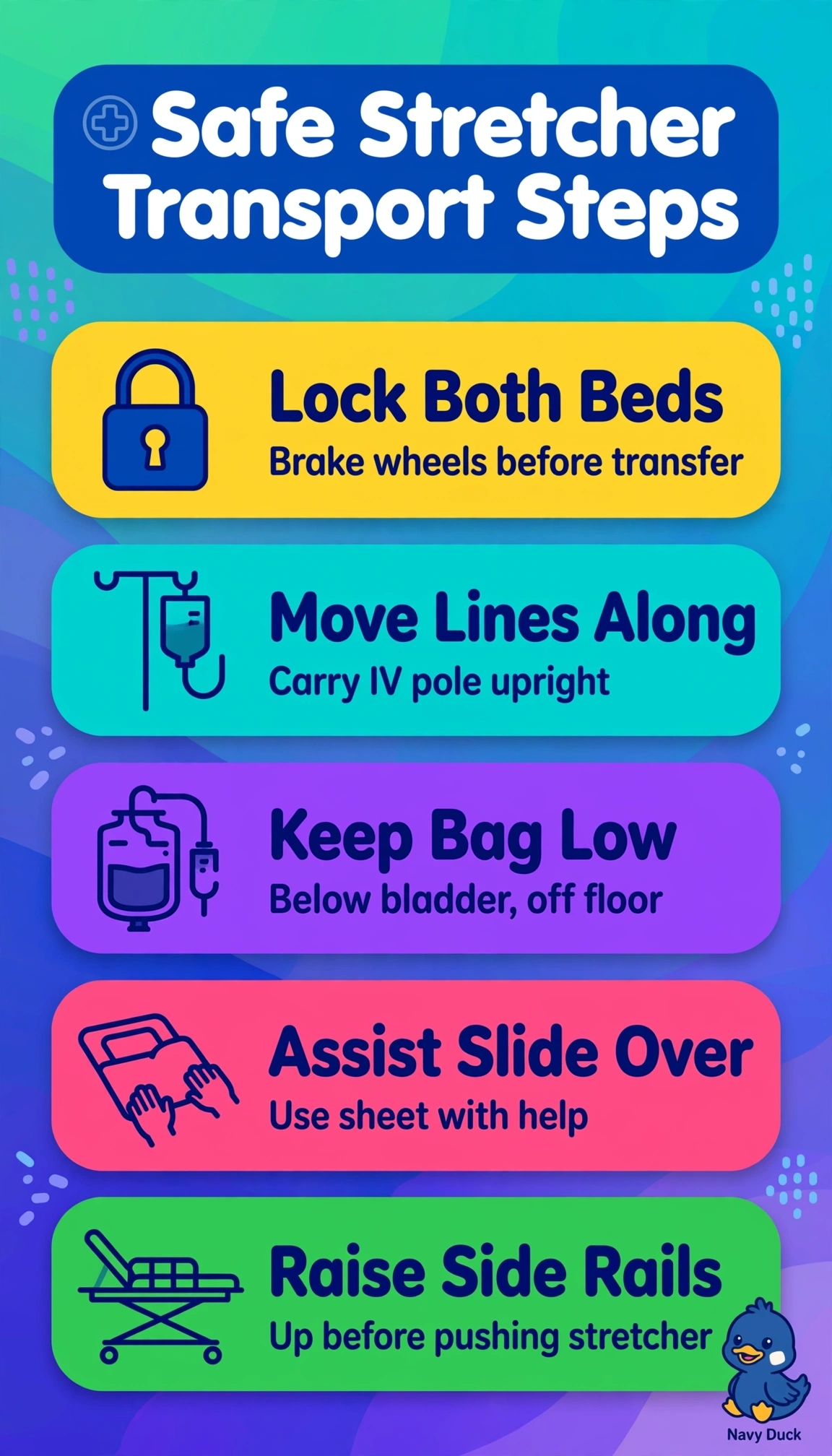
You’ve got the safe transfer when you lock both sets of wheels, use a draw sheet, raise the rails, and move the attached equipment with the patient. Think of it as securing everyone before the ride: transfer with help and keep the lines and bag safely positioned.
Full Explanation
The correct technique matches safe stretcher transfer for a post-surgical adult who can assist slightly but cannot walk: locking the bed and stretcher wheels prevents rolling during the lateral transfer, and a draw sheet accommodates the patient’s limited assistance while helping protect skin. Raise the rails for transport, and move the IV pole and urinary bag with the patient while keeping the tubing patent, the IV elevated, and the urinary bag below bladder level and off the floor to support drainage and infection control. The option that keeps the urinary bag above bladder level risks reflux, infection, and inaccurate output despite including wheel locks, a draw-sheet transfer, and raised rails. The option using a standing pivot is unsafe because pivoting requires reliable weight-bearing and trunk stability, which the patient’s inability to walk does not support, even if the wheels and lines are managed. The option that directs you to push head-first reduces forward visibility and can make it harder to manage doors and elevator clearance in a busy corridor, despite its appropriate transfer and equipment securement. Exam caveat: a choice may contain several safe steps but still fail because of one critical detail, such as bag height, weight-bearing, or direction of travel, so check each element against the stem. Practical check: before moving, confirm both sets of wheels are locked for the transfer, the lines are free, the IV is elevated, the bag is below the bladder and off the floor, the rails are up, and the route is clear.