
A hospital patient newly told of a terminal illness is shouting at staff, refusing lunch, and saying this cannot be happening to him after a 40-bed unit transfer delays family arrival. He tells you as the PCT to leave him alone. Which grief-stage coping support best fits this angry moment?
Select an answer to reveal the explanation.
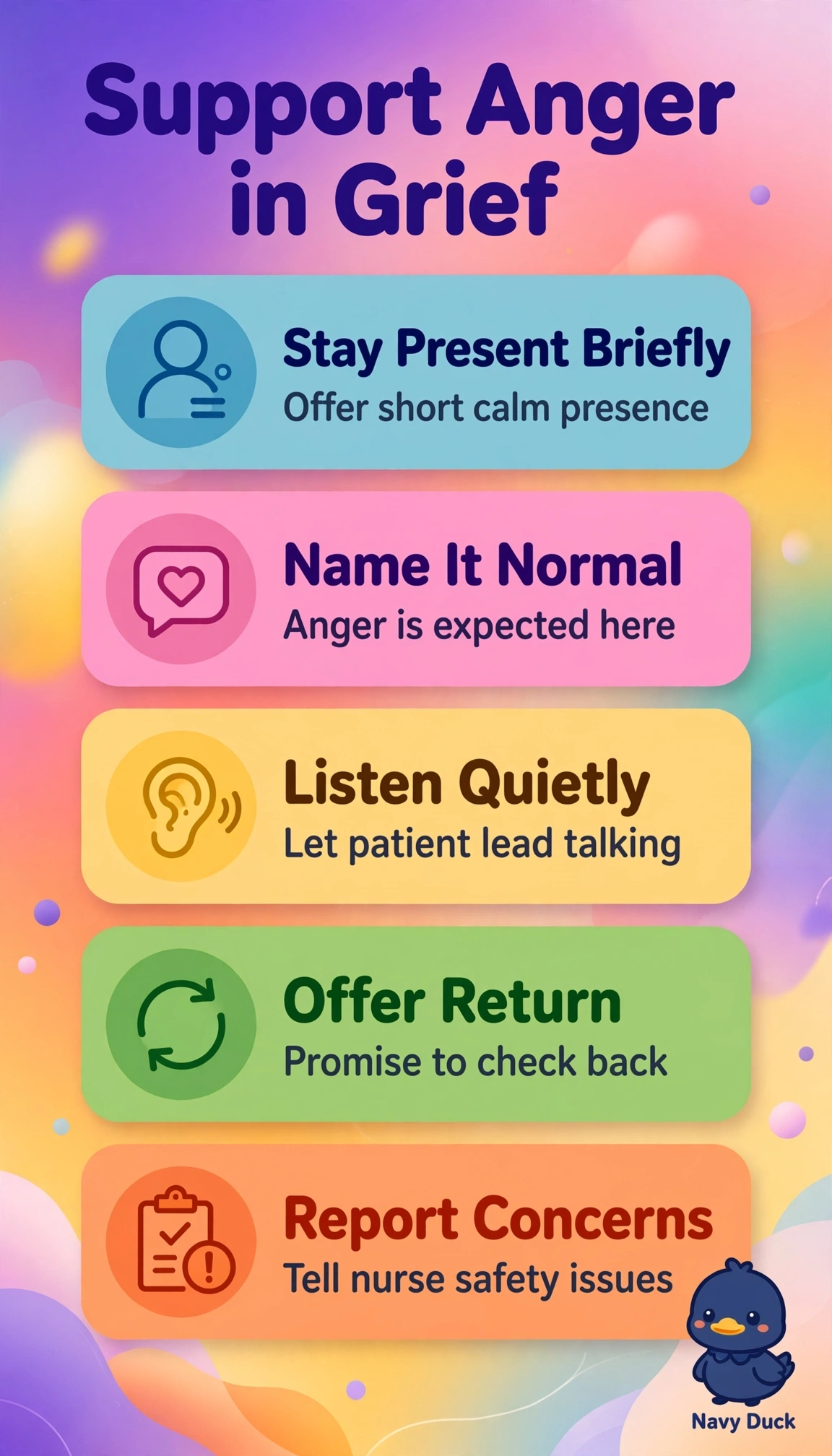
Short Explanation
You’re doing the hard part by staying present when anger feels personal. Anger is a normal grief response, so briefly acknowledging it and listening quietly is more helpful than reviewing the diagnosis, leaving immediately, or prompting sadness.
Full Explanation
Briefly staying with the patient, acknowledging anger as normal, listening quietly, and offering to return shortly fits the acute anger shown by shouting, refusing lunch, and reacting to the transfer delay. It validates the emotion and maintains a calm presence while respecting his request for space without abandoning care. Exploring disbelief with open questions and reviewing the diagnosis calmly can support denial, but it mis-times the response: although “this cannot be happening” sounds like denial, angry protest is predominant, and reviewing facts may invite debate or escalate distress. Leaving immediately to arrange a family update and meal later respects the request and addresses practical needs, but skips the immediate acknowledgment and listening that can help de-escalate anger and may feel rejecting. Sitting quietly and encouraging sharing of sadness and loss can suit depression or withdrawal, but does not address an activated, angry moment and may seem dismissive. An exam caveat is to identify the predominant behavior rather than rely on a fixed stage sequence or one phrase; denial language may persist into anger. As a practical check, use brief, nondefensive statements, give a clear return time, monitor safety, reoffer the meal, facilitate family contact, and document according to protocol.