
In a long-term care unit, a resident with an established ileostomy needs routine pouch emptying later, but first you must assist the nurse with a prescribed tap-water cleansing enema for a constipated roommate who can turn, has no bleeding, and has a clear low bed with a bedpan nearby. Which enema-assistance technique should the PCT use to provide safe enema support?
Select an answer to reveal the explanation.
Short Explanation
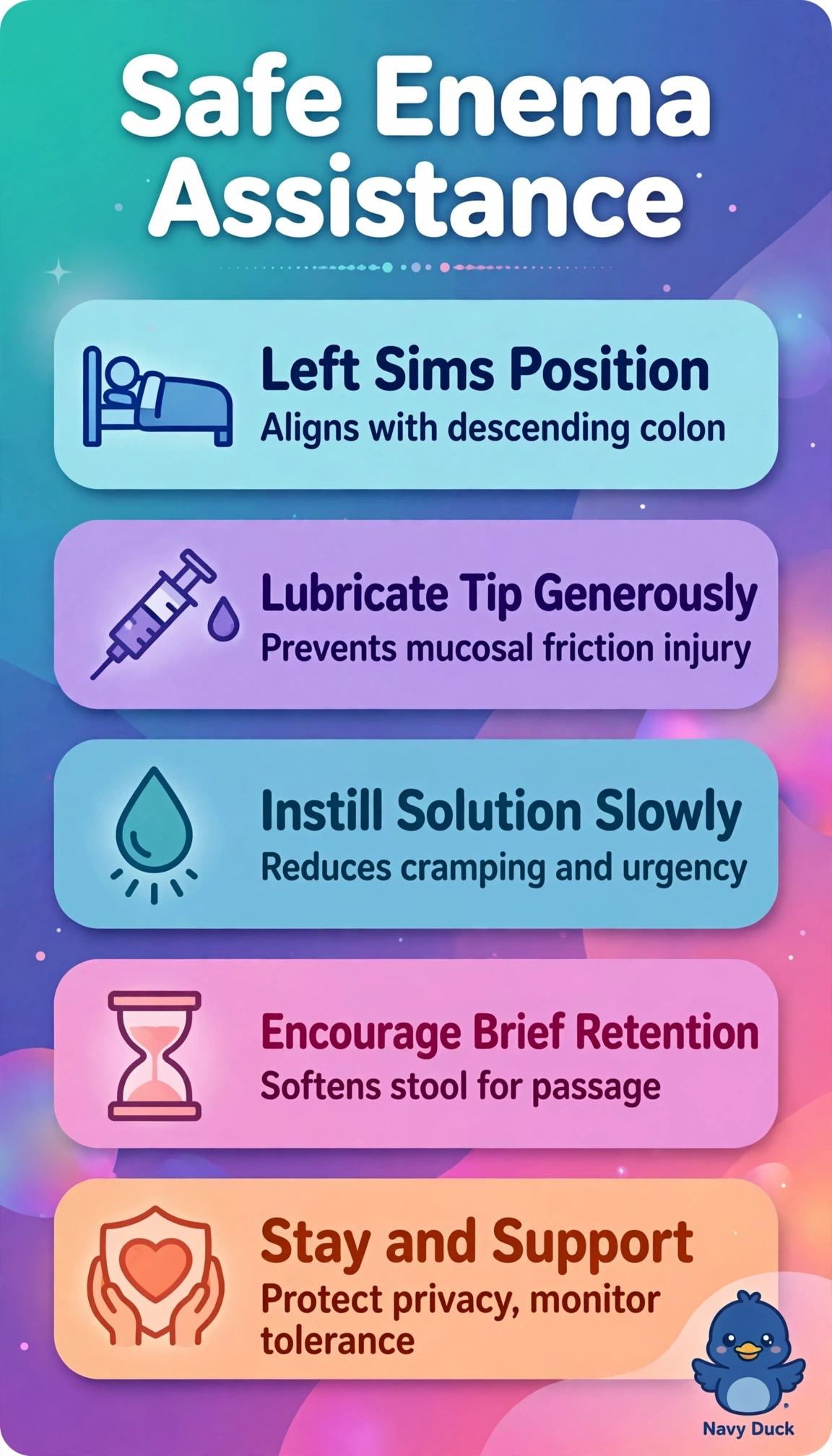
You've got this — left-side positioning is your secret weapon here. It follows the colon's natural curve so fluid flows gently with gravity, easing cramps and improving results.
Full Explanation
The correct approach combines left lateral Sims positioning, lubrication, slow instillation and brief retention because the descending and sigmoid colon lie on the left, so gravity assists flow into the colon while reducing spasm, lubrication reduces mucosal trauma, and slow administration with retention allows softening of stool. Positioning in right Sims uses the same lubrication and timing but works against colonic anatomy, causing more cramping and poorer distribution, so the laterality concept fails. Inserting the tip dry for grip violates the lubrication and atraumatic insertion concept, increasing friction and injury risk even though position and speed elements seem efficient. Placing the resident flat supine with legs straight violates the anatomical positioning and retention concept, preventing dependent flow and increasing discomfort despite correct lubrication and slow infusion. Exam caveat is that the PCT assists and never orders or forcefully administers an enema if bleeding, severe pain or obstruction is present, and practical check is to verify privacy, water temperature per nurse, bedpan access, call light in reach and perineal care after the result.