
A patient care technician prepares to enter the room of an adult patient on contact and droplet precautions for influenza who needs vital signs. A gown, surgical mask, goggles, and gloves are available at the doorway with hand sanitizer. Which donning sequence should the technician follow to achieve correct PPE protection?
Select an answer to reveal the explanation.
Short Explanation
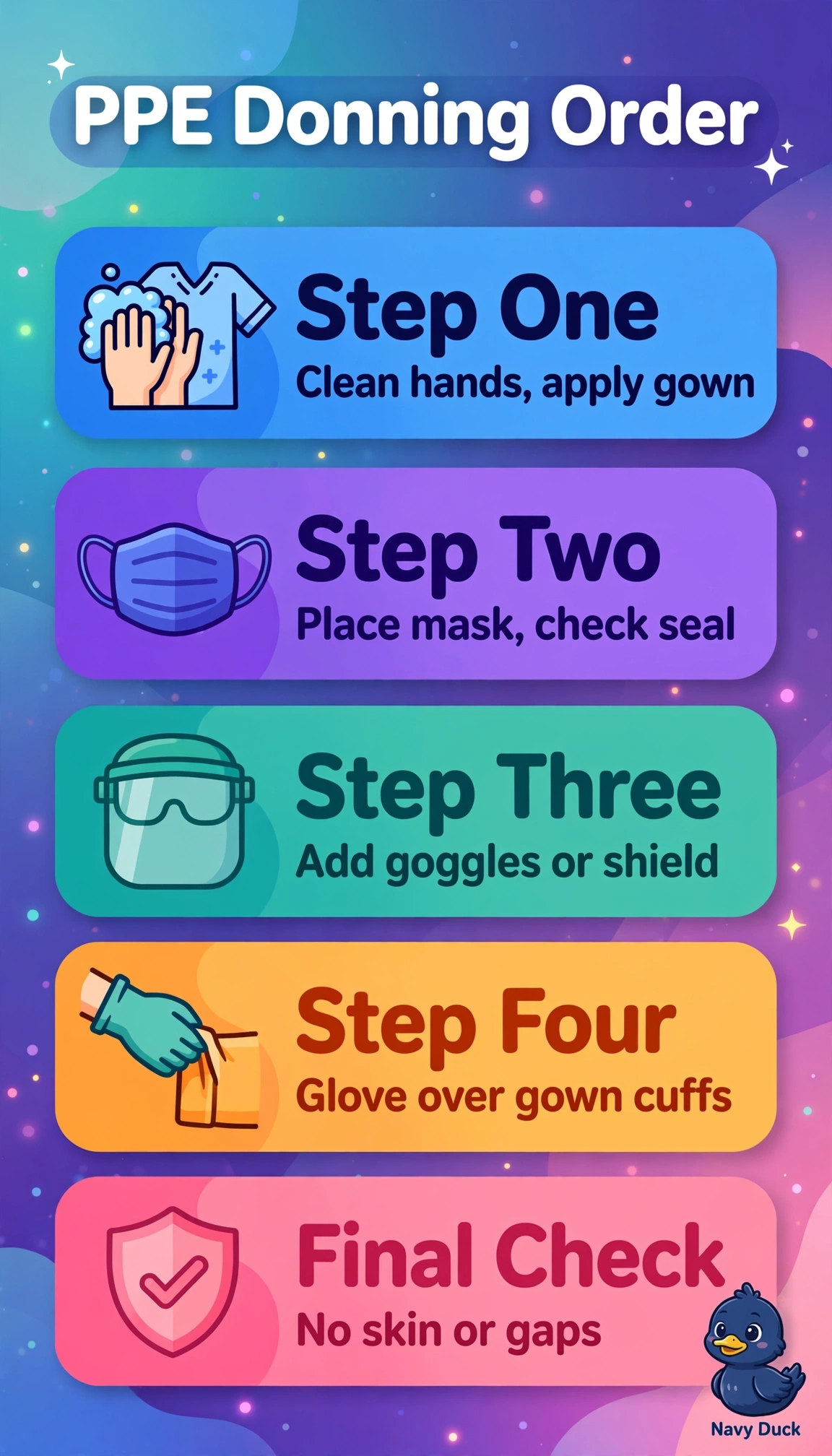
You can protect yourself by following a clean-to-dirty sequence: gown, mask, goggles, then gloves over the gown cuffs. Getting the sequence right helps cover your skin and mucous membranes before you provide care.
Full Explanation
Correct donning begins with hand hygiene, followed by the gown, surgical mask, goggles, and gloves pulled over the gown cuffs. This provides continuous coverage, places the mask and eye protection before your hands are gloved, and helps keep the cuffs covered during care. The sequence that puts on the mask and gown before gloves but adds goggles after gloves fails because eye protection should be in place before gloving, avoiding the need to bring hands toward your face afterward. Putting on gloves before the gown, mask, and goggles fails because your hands can contaminate the gown while you put it on, and the gloves may be soiled before patient contact. Putting on goggles and gloves before the gown and mask fails because later gowning can displace the eye protection, and the mask cannot be properly fitted with the other equipment already in place. An exam caveat is to distinguish donning from doffing: gloves are removed first when taking PPE off. Before entering, check that the gown is secured, the mask fits over your nose and mouth, the goggles have no gaps, and the gloves cover the gown cuffs.