
On a cardiac step-down unit, a 74-year-old with heart failure has new 2+ ankle pitting edema, shoes feeling tight, cool pale feet with slow capillary refill, and newly cloudy foul-smelling urine in the hat. Which recognition and reporting of edema, impaired circulation, and specimen abnormalities is correct?
Select an answer to reveal the explanation.
Short Explanation
You've got puzzle pieces that only make sense together — swelling, pale cool feet, and cloudy urine. You'll help the team act fast when you report that cluster to your nurse right away.
Full Explanation
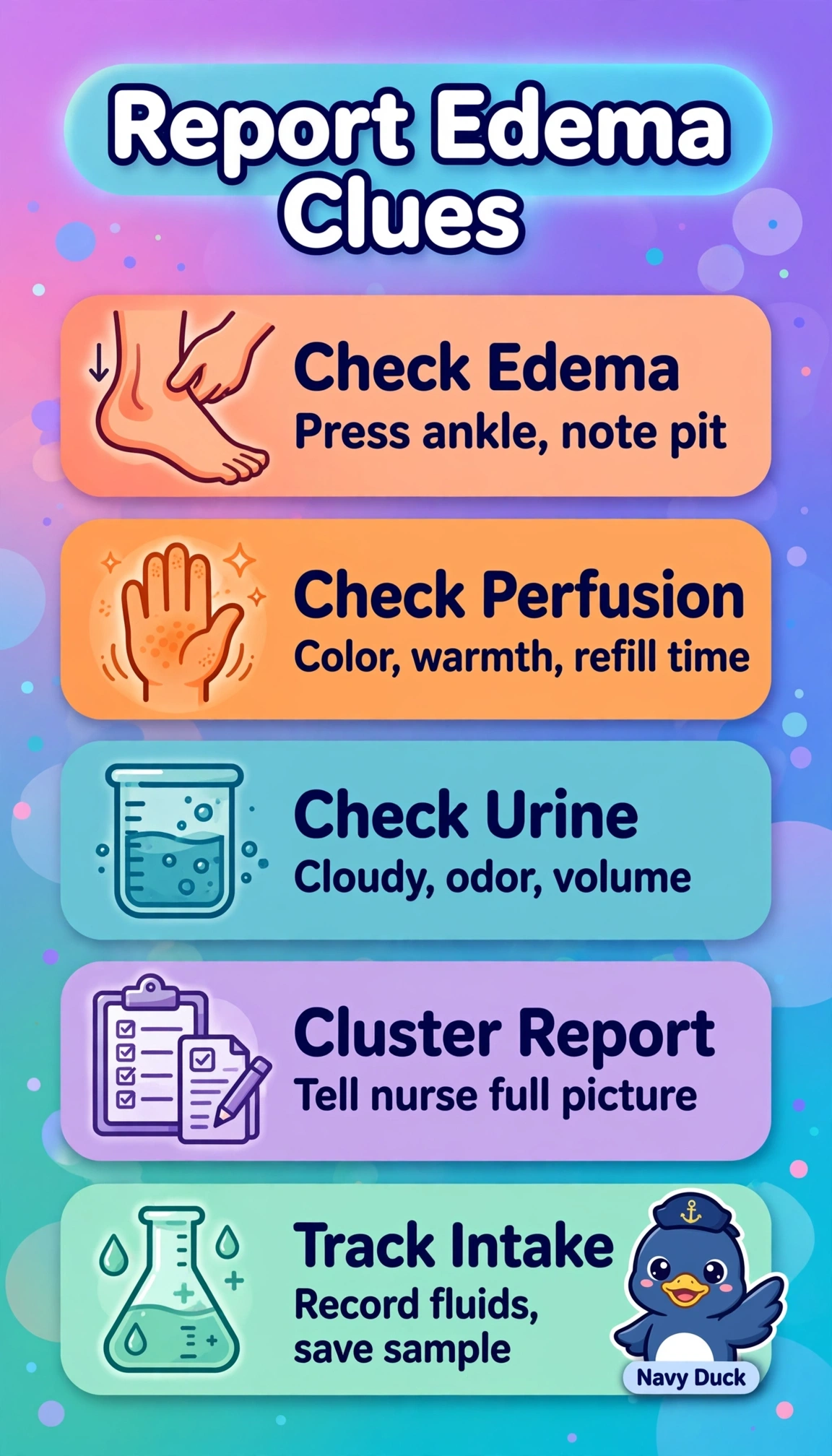
The correct recognition requires integrating three linked changes in heart failure rather than treating any finding alone, because new 2+ pitting ankle edema with tight shoes signals worsening fluid retention, cool pallor with delayed refill signals impaired peripheral perfusion that must be described precisely, and newly cloudy foul urine signals possible infection requiring timely nurse review for assessment, urinalysis and care plan updates. The response that elevates ankles and reports edema with poor perfusion is familiar and comforting yet fails by omission because it leaves out the urinary abnormality, violating completeness of reporting and delaying infection evaluation. The response that reports edema and urine while charting feet as warm and pink fails by inaccurate assessment, because replacing documented cool, pale, slow refill with normal findings misrepresents circulation and could misdirect heart failure management. The response that saves urine and tracks intake and output fails by selective reporting, because good specimen handling does not compensate for omitting new edema, a key cue for weight, lung sounds, sodium intake and diuretic response. An exam caveat is to favor complete accurate reporting over a single good intervention, since elevation or collection alone does not replace notification when multiple new findings coexist in a high-risk older adult. A practical check is to use a structured handoff of what changed, onset, vitals, intake output, edema grade, skin temperature, color, refill time, and urine color and odor together.