
Outside an isolation room for a patient with profuse diarrhea and vomiting, a technician must enter to check vitals and then exit to handle clean linens. Gown, gloves, mask with goggles, and hand sanitizer are available at the doorway station. Which PPE donning and doffing sequence should the technician use for this contact-precaution entry?
Select an answer to reveal the explanation.
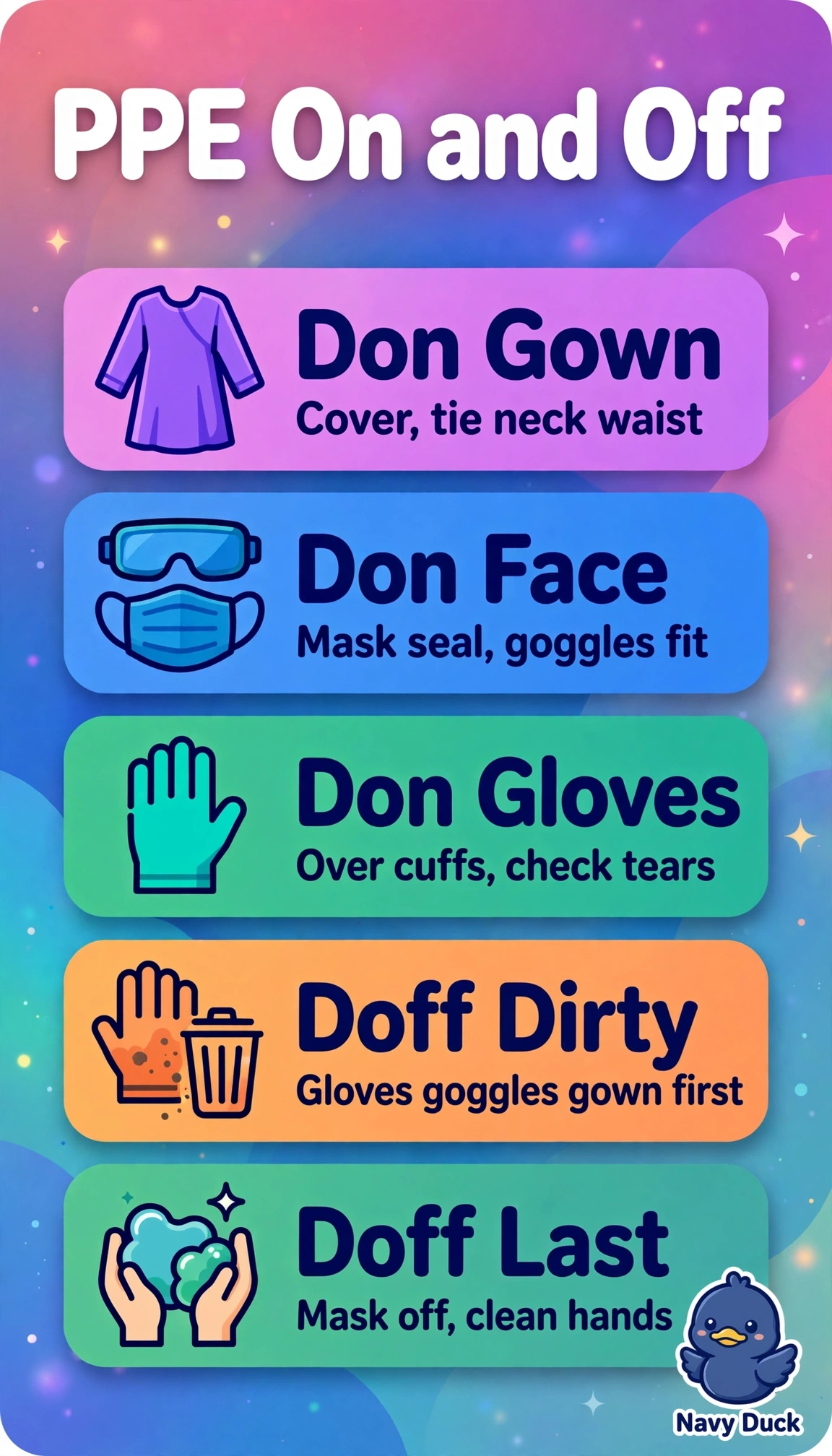
Short Explanation
You’ve got clean and dirty worlds to keep apart, so follow sequence-smart protection. Like peeling off muddy gear at the door, shed the dirtiest pieces first.
Full Explanation
The correct sequence follows contact-precaution logic for profuse diarrhea and vomiting, where gown is donned first for body coverage, then mask and goggles for mucous membrane protection, then gloves last to extend over gown cuffs, and after vitals gloves are doffed first as most contaminated, followed by goggles without touching the face, then gown peeled inward, then mask removed last away from the room, with hand hygiene preventing transfer to clean linens. Donning gloves before securing mask and goggles fails on clean-to-dirty workflow because adjusting ties and nose fit with gloved hands soils the face zone and leaves cuffs uncovered, reducing barrier continuity. Doffing goggles before gloves fails on contamination hierarchy because handling headbands and eye frames with soiled gloves transfers enteric organisms to the face and hair, whereas gloves must be discarded first. Doffing the gown before goggles fails on controlled peeling because the bulky, heavily soiled gown can brush the still-exposed eye area and uniform when eye protection remains, increasing self-contamination risk before final mask removal. An exam caveat is that vomiting plus diarrhea here means contact spread needing gown and glove order, not airborne room controls. A practical check is to sanitize hands after doffing and before clean linens while confirming no outer surface touched skin or clothing.