
A competent adult on a medical unit refuses morning medications, the family urges the PCT to give them anyway, the nurse is busy with another patient, and the PCT respects autonomy while ensuring safety. Which Patients’ Bill of Rights and chain-of-command response should the PCT provide?
Select an answer to reveal the explanation.
Short Explanation
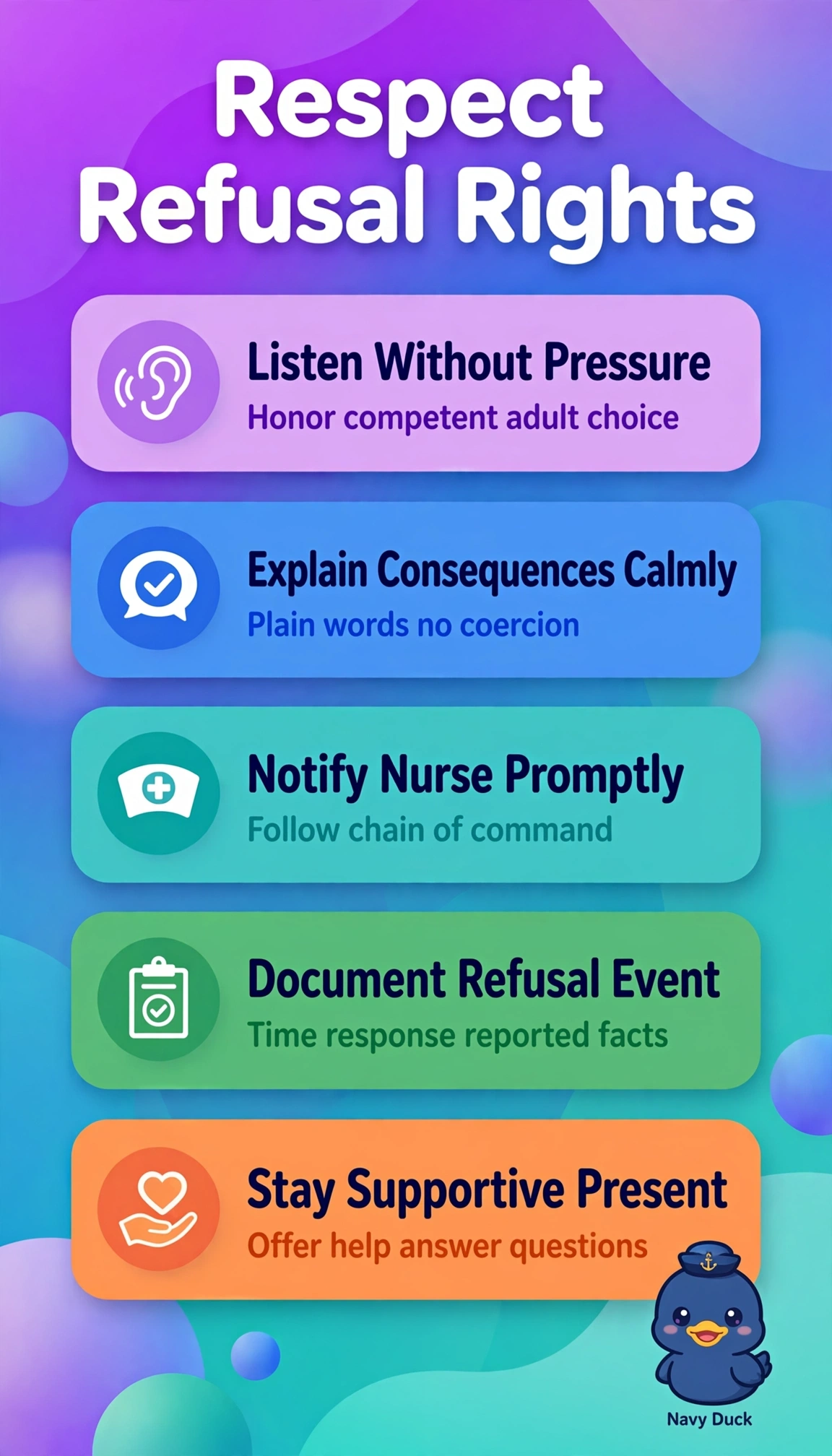
You honor the patient’s clear refusal while staying attentive to their safety. You explain the possible consequences and promptly tell the nurse, balancing respect with timely care. Uphold informed-refusal rights through proper reporting.
Full Explanation
A competent adult has the right to informed consent and informed refusal, so you respect the decision, briefly explain the possible consequences of missing the dose, and promptly notify the nurse. The nurse can assess the patient, provide further counseling, contact the provider, and document the refusal. Honoring the refusal but updating the nurse only after finishing other care delays chain-of-command reporting; the nurse’s workload does not remove the need for prompt communication. Validating family concerns is appropriate, but seeking family consent for the dose disregards the competent patient’s decision-making authority; family members do not consent or refuse on the patient’s behalf unless the patient lacks capacity. Supporting the patient’s choice and documenting the refusal for later review is not enough: documentation alone does not ensure that the nurse promptly evaluates the missed medication and any follow-up needed. An exam caveat is that family pressure or a busy nurse does not justify delaying notification or asking family to authorize treatment, and you must not administer the medication or coerce the patient. A practical check is to acknowledge the refusal, explain the concern clearly to the nurse, confirm the nurse received the message and next steps, and continue monitoring safety.