
An adult with a new colostomy needs a pouch change, reports burning under the wafer, and also has a scheduled soapsuds enema ordered for constipation. The PCT/A is asked to assist within training and report concerns. Which ostomy care and enema assistance priority best protects peristomal skin and rectal safety?
Select an answer to reveal the explanation.
Short Explanation
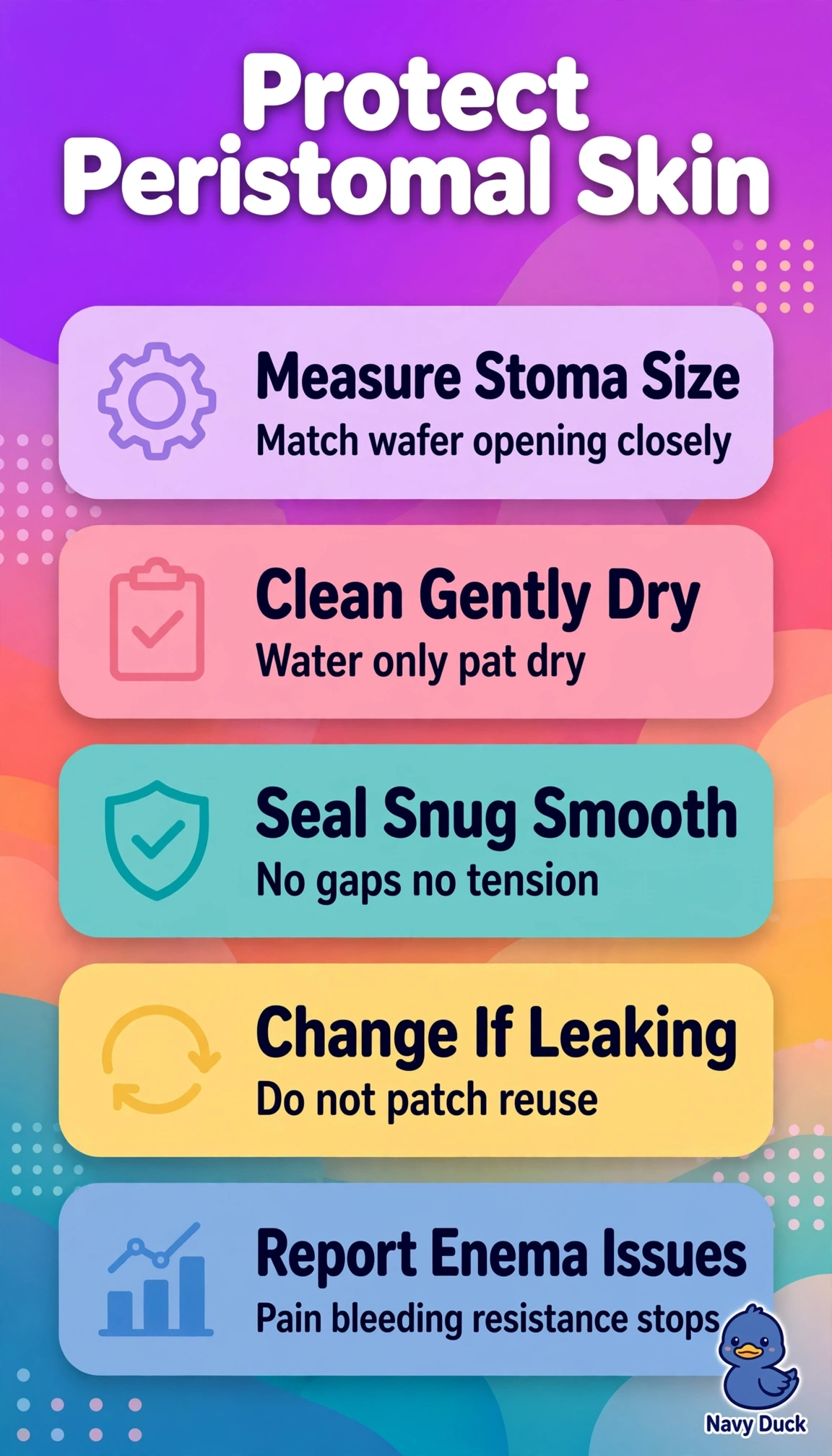
You'll protect your patient's skin like you'd seal a rain boot — no gaps for leaks to sneak in. Measure the stoma each time, keep that wafer snug, and don't wait to report burning or redness.
Full Explanation
The correct priority reflects new-ostomy physiology and assistant scope: early stomas change size as edema resolves, so measuring each time allows a snug wafer opening that prevents effluent contact, while prompt reporting of burning, leakage, redness, or denudation ensures nurse assessment and timely skin protection without exceeding training. Reusing the prior wafer size with gentle cleansing and prompt reporting of burning seems efficient but fails sizing accuracy because even a small peristomal gap permits leakage and chemical irritation that sustains breakdown despite reporting. Securing a snug seal and then assisting with the ordered soapsuds enema seems thorough but fails rectal safety and delegation because altered anatomy after new colostomy requires nurse verification of route, indication, and contraindications before any rectal instillation, so proceeding independently risks injury. Measuring and reporting while leaving the pouch off to air dry seems soothing for moist skin but fails continuous barrier protection because prolonged exposure to stool and moisture worsens maceration and delays healing compared with prompt resealing. On exams, avoid applying routine stable-ostomy or routine-enema logic to a new stoma with symptoms, where remeasure, reseal, and escalate take precedence over continuing orders. As a practical check, confirm no skin shows between stoma and wafer, document skin appearance and leakage, maintain a dry secure seal, and clarify any rectal procedure with the nurse before assisting.