
In a quiet hospice room, a technician cares for a dying older adult whose family wants comfort, cultural rituals, and time together. Breathing is irregular, skin is cool and mottled, and pain medication was given by the nurse. The family asks about after-death care. Which palliative, hospice, and postmortem care approach should the technician provide for this family?
Select an answer to reveal the explanation.
Short Explanation
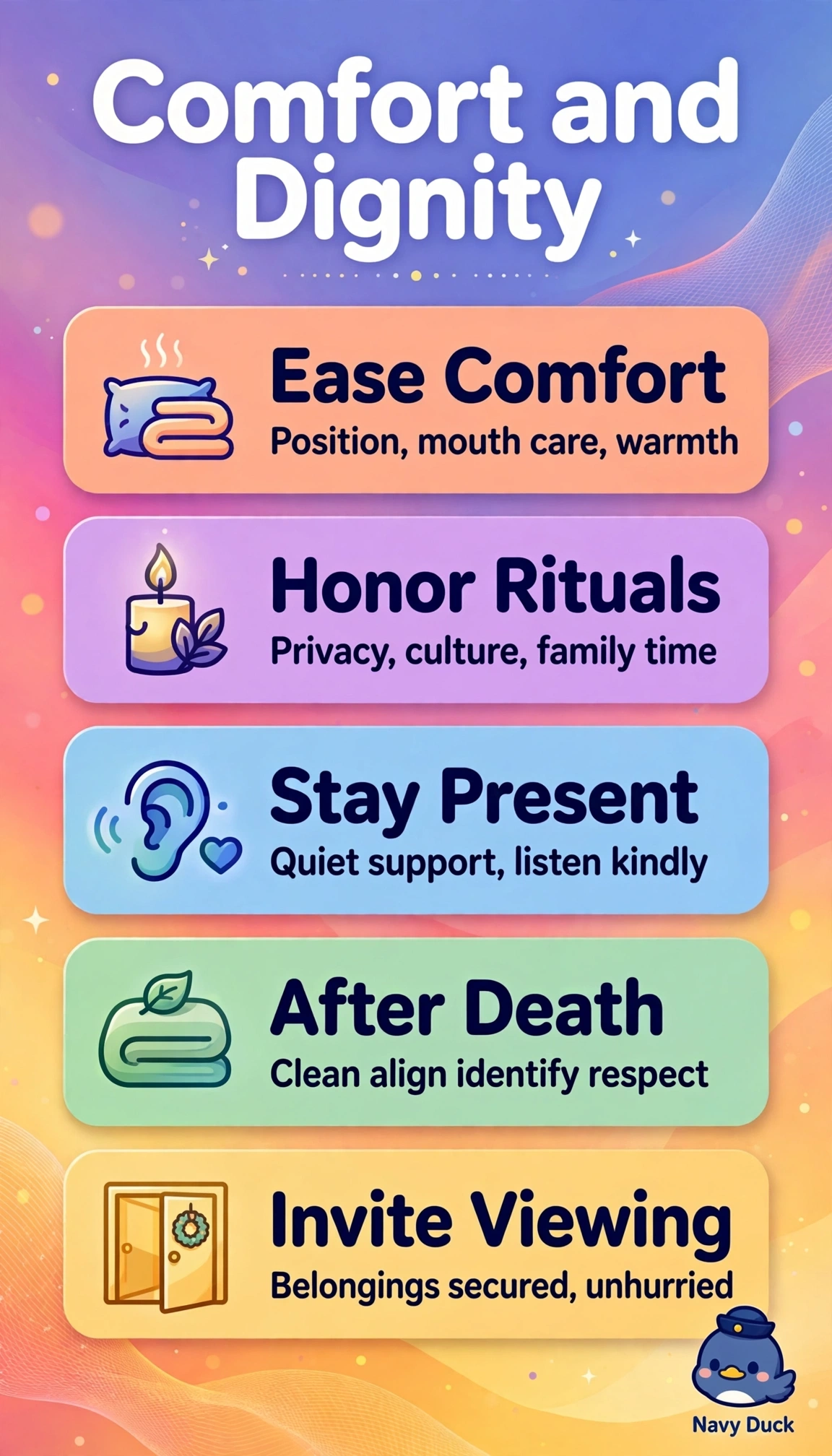
You can make this moment gentler by honoring the family’s wishes and offering comfort-centered care. Protect their privacy, respect their rituals, and prepare the body respectfully after death.
Full Explanation
The approach that provides gentle comfort, honors rituals and privacy, and prepares the body respectfully after death fits active dying and family-centered hospice care. Irregular breathing and cool, mottled skin are signs of dying, so the focus is comfort rather than restorative care. Since the nurse gave pain medication, you can offer gentle measures such as positioning, warmth and oral care, report changes, protect privacy, honor requested rituals, and explain respectful postmortem care according to policy. Quiet comfort, privacy and time together followed by respectful preparation address important needs but omit the cultural rituals the family requested, risking culturally incongruent care and distress. Gentle comfort, rituals, privacy and family presence at the bedside support the family before death but do not address the explicit question about after-death care or provide continuity into postmortem care. Gentle comfort, rituals and privacy followed by documentation and referrals substitute administrative tasks for respectful physical preparation of the body. Exam caveat: prioritize comfort, dignity, culture and continuity over acute surveillance or paperwork, and stay within technician scope rather than assuming nursing duties such as medication management. Practical check: ask about rituals and viewing preferences, confirm privacy, keep the nurse informed of comfort changes, explain postmortem steps simply, and follow the facility checklist for identification, positioning, cleanliness and belongings.