
In a pediatric same-day surgery unit, a technician must reassess pain in a tearful 5-year-old who cannot reliably count to ten and in a 16-year-old athlete who can rank sensations precisely. Both had limb procedures and can point and speak. Which pain-scale assessment with FACES and numeric tools is correct for these patients?
Select an answer to reveal the explanation.
Short Explanation
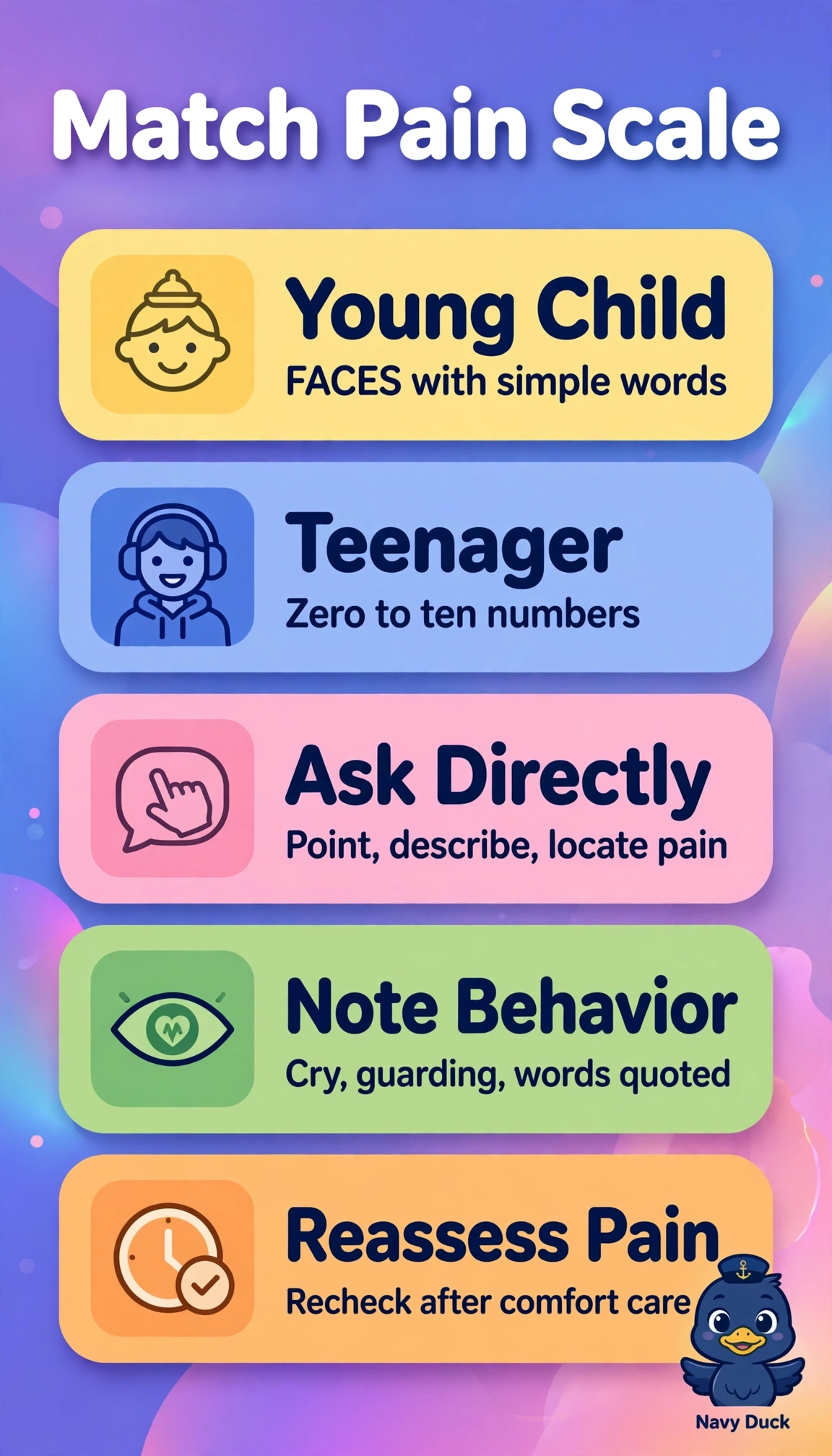
You've got to meet your patients where they are, like choosing shoes that actually fit. You'll get truer pain scores with FACES for your tearful 5-year-old and the 0-to-10 numbers for your teen athlete.
Full Explanation
Developmentally appropriate assessment uses concrete visual FACES with simple language for preschool children with limited numeracy and abstract 0-to-10 numeric rating for adolescents who can seriate intensity, both anchored by patient self-report. Reversing the tools fails because a 5-year-old often cannot reliably rank numbers while a teenager finds faces less precise and potentially patronizing. A single lengthy questionnaire with staff estimation fails because it exceeds attention span, introduces bias, and omits validated age-specific scaling. Vital signs alone fail because heart rate and blood pressure reflect many stressors and cannot substitute for subjective pain location, quality, and severity. Exam caveat: let the patient choose the face or number whenever possible. Practical check: show the scale, use consistent wording, reassess after intervention, and report scores with behaviors and words quoted.