
A new below-knee amputee with a prosthesis and elastic shrinker sock is learning transfers, has a healed incision without drainage, reports mild phantom tingling, can sit on the bed edge, and needs help before standing with a walker while skin remains the priority. Which assistance step should the PCT take to support the orthotic, prosthetic, and adaptive device safely?
Select an answer to reveal the explanation.
Short Explanation
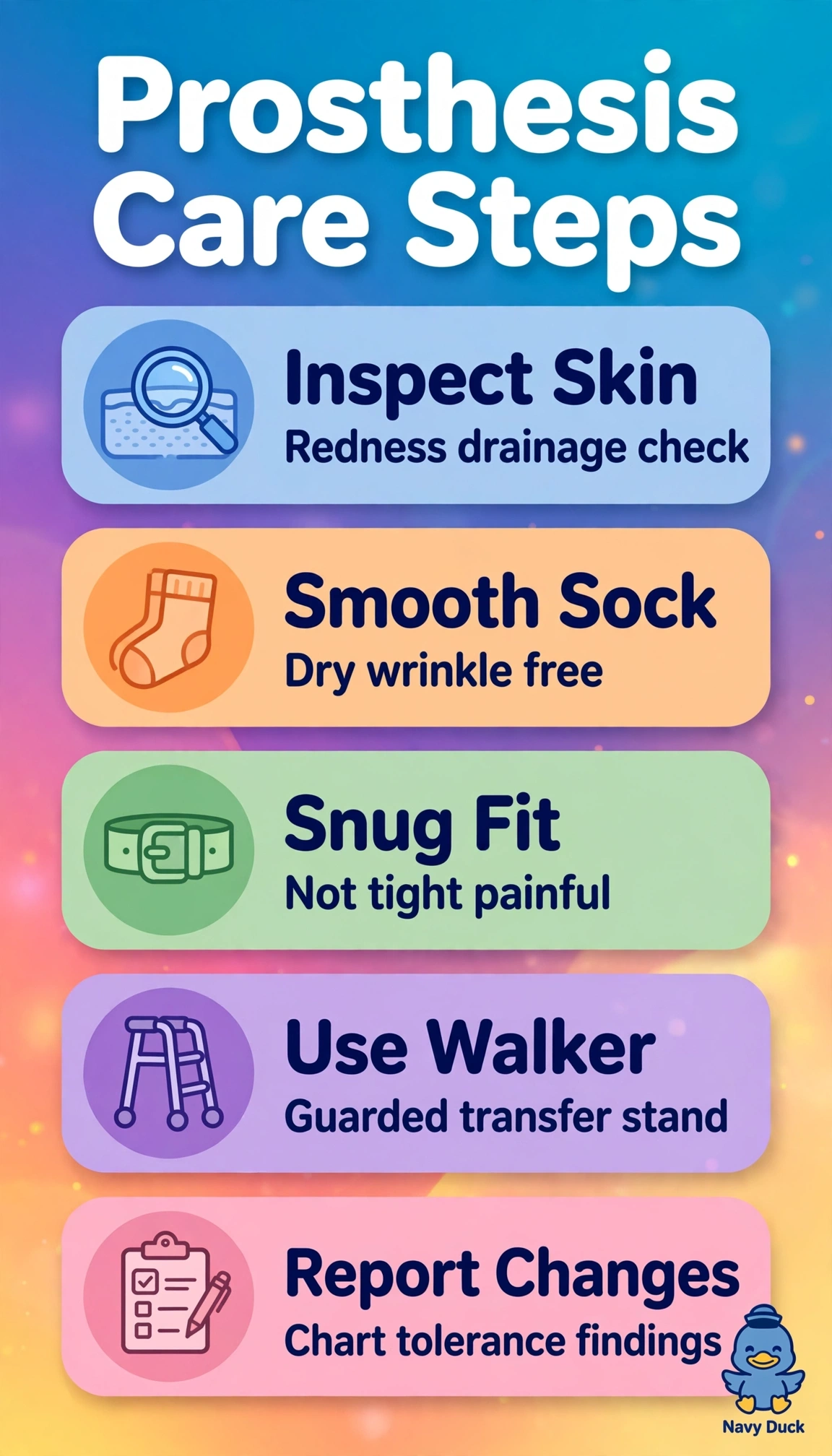
You’re protecting that limb with a quick skin check, smoothing the sock snugly before helping with the prosthesis—like flattening socks inside sneakers to avoid blisters. When the skin is clear and the sock has no wrinkles, you can guide a steady stand with the walker.
Full Explanation
Inspecting the limb skin and sock for wrinkles, helping achieve a snug prosthesis fit, and then assisting the walker transfer is correct because it prioritizes skin protection while supporting safe prosthetic mobility. With a healed incision and mild phantom tingling, the stem gives no sign that the transfer must be delayed. A bedside-table push-up instead of using the walker is unsafe: the new prosthesis changes balance, and the walker provides the stable support needed during this standing transfer. Smoothing the shrinker sock and practicing the walker transfer without the prosthesis does not support the requested prosthetic use or controlled loaded transfer; balance practice without the device may suit other situations, but not this task. Postponing the transfer to report mild phantom tingling as an acute complication misreads a common sensation after amputation when there is no drainage or other stated warning sign. Exam caveat: treat the stem as a checklist and reject a plan that changes, delays, or omits skin inspection, prosthesis use, or walker supervision, even if it sounds thorough. Practical check: inspect the limb and sock, remove wrinkles, confirm a snug fit without gaps, position the walker securely, and guard closely with a gait belt before cueing the stand.