
On a busy orthopedic floor, a nurse asks a technician to independently assess a fresh wound, administer pain medication, and adjust an IV drip for a postoperative adult with stable vitals and family present. The technician is trained in vital signs, ADLs, and specimen collection. Which PCT/A scope-of-practice decision should the technician make for this delegation request?
Select an answer to reveal the explanation.
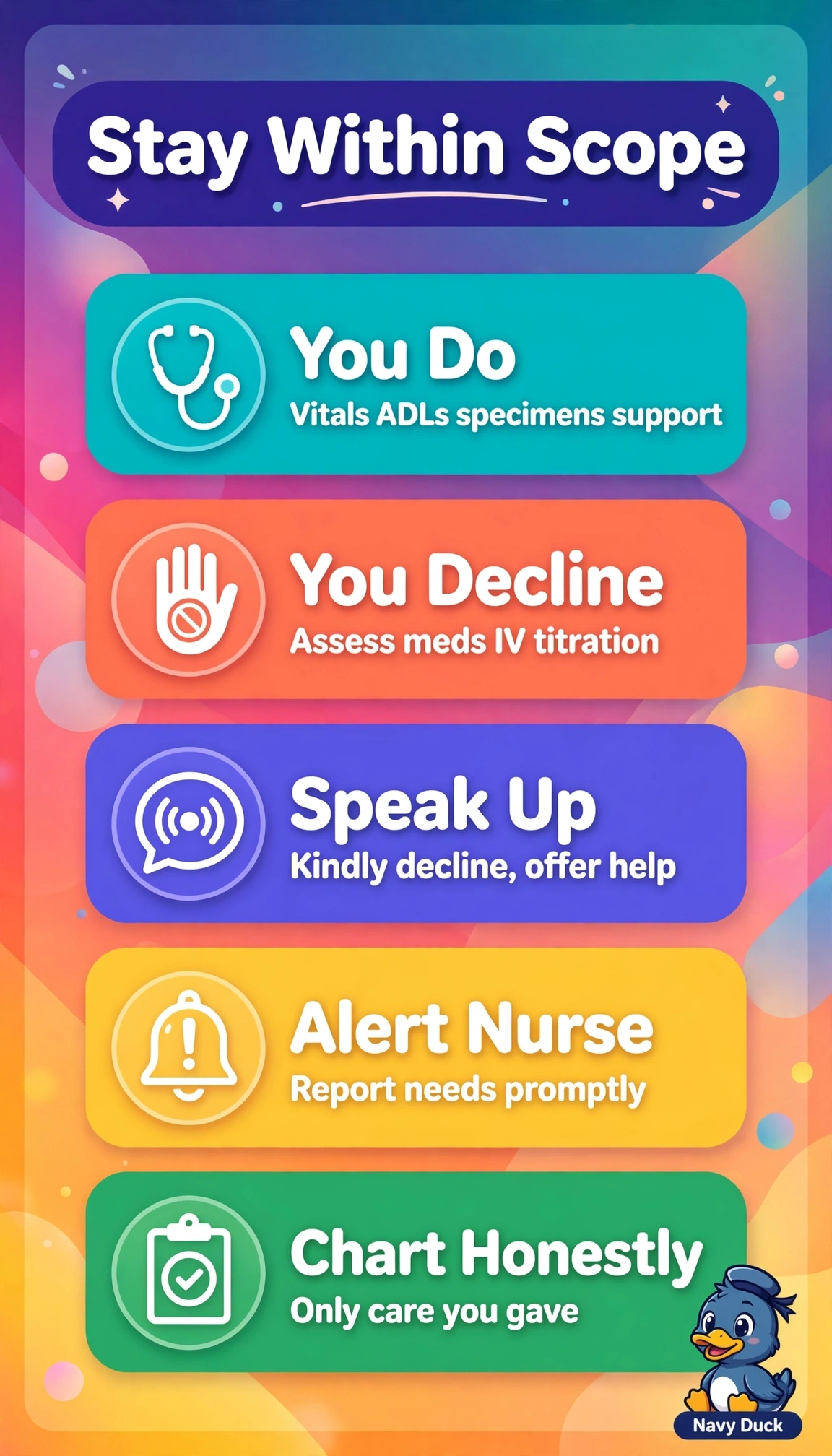
Short Explanation
You shine brightest inside your lane, so hold that scope-steady line kindly. Like a great assist in basketball, you support the play without taking the shot.
Full Explanation
Scope of practice defines the legal and competency boundary for technicians to perform delegated supportive tasks while assessment, medication administration, and infusion management remain licensed responsibilities. Declining independent wound assessment, drug delivery, and drip adjustment while offering vital signs, positioning, and communication support protects the patient from unlicensed judgment and preserves accountability with the delegating nurse. Accepting assessment and medications for team help fails by concept because stability does not expand scope and good intentions do not confer legal authority or assessment competence. Adjusting the drip and misattributing documentation fails by concept because titration requires licensed evaluation and false charting breaches ethics and legal integrity. Giving even an oral pill fails by concept because medication administration in any route remains outside technician scope regardless of apparent simplicity. Exam caveat is that stable patients and verbal nurse requests often bait scope violations, but delegation never overrides licensure limits. Practical check is to state the boundary respectfully, notify the nurse of patient needs, and document only care actually provided.