
A PCT cares for an older adult in inpatient hospice with mottled extremities, irregular breathing, and family at the bedside asking for comfort, cultural rituals, and time alone after death. Which palliative, hospice, and postmortem approach respects goals and PCT scope?
Select an answer to reveal the explanation.
Short Explanation
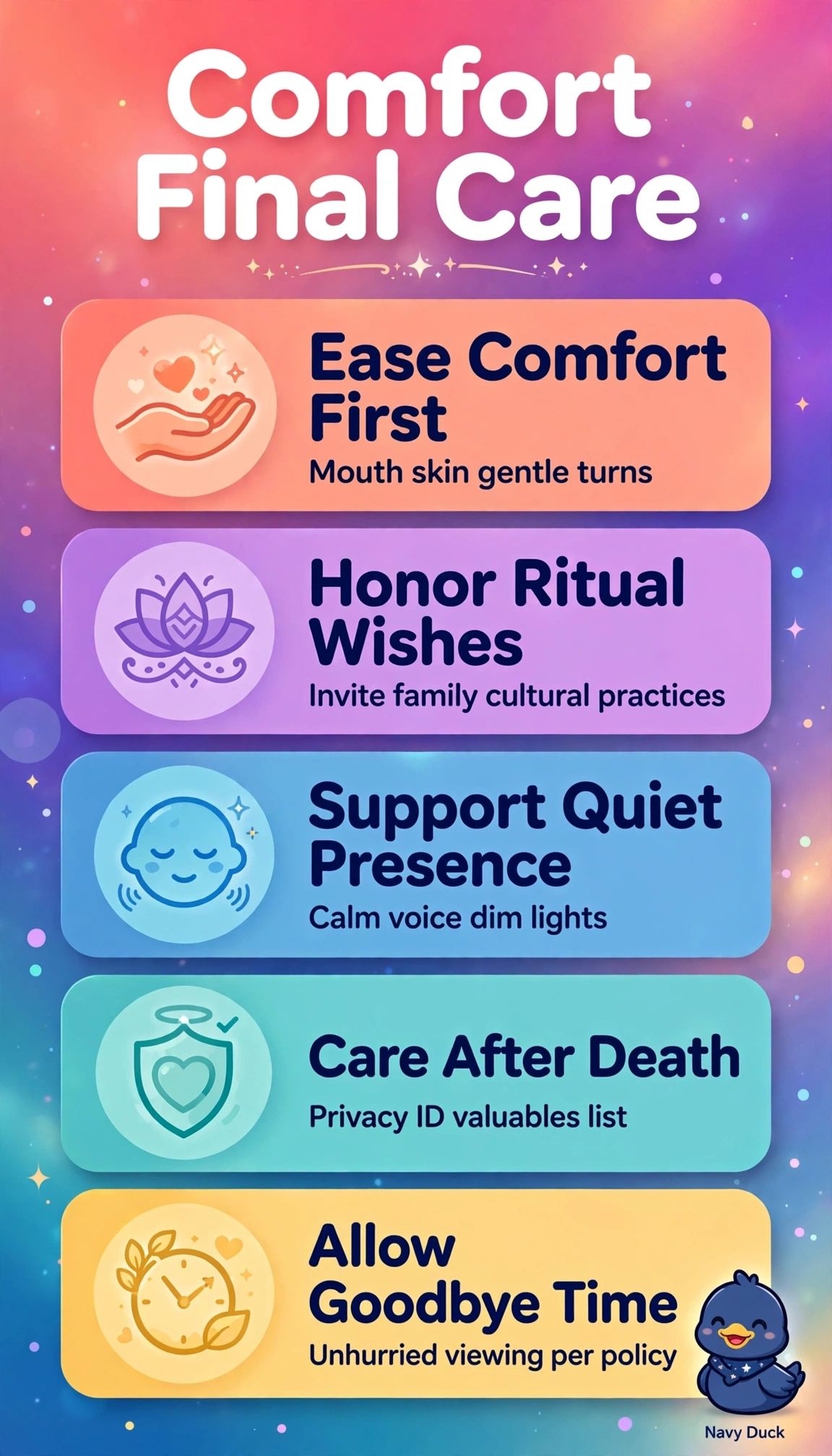
You're keeping the room calm like you're dimming the lights for rest, not trying to fix what's fading. You'll offer gentle comfort, honor their rituals, and protect dignity after death per your policy.
Full Explanation
The correct response reflects active dying with mottling and irregular breathing, where the priority is gentle comfort, symptom support, cultural respect, and dignity within PCT scope including personal care, ritual support, and policy-based postmortem care for privacy, viewing, and belongings. Immediate morgue transfer fails on family-centered timing because efficient disposition is appropriate in many settings but requested time alone, viewing, and ritual observance must precede transport. Independently determining and documenting death fails on scope because assessment, pronouncement, and certification are registered nurse, provider, or examiner responsibilities while the PCT observes, reports changes, provides comfort, and supports the family. Routine care without cultural rituals fails on person-centered adaptation because standard postmortem routines are necessary but must integrate beliefs, handling of sacred items, and preferences for prayer, washing, or silence. An exam caveat is to separate comfort and supportive presence from curative, rehabilitative, or diagnostic interventions and to separate assisting and reporting from assessing or pronouncing. A practical check is to review the care plan and postmortem checklist, clarify desired rituals and alone time, maintain draping and respectful handling, and promptly report breathing changes or family concerns to the nurse.