
In a busy medical unit, a PCT sustains a needlestick from a used needle while clearing a crowded tray, has no severe bleeding, the source patient is known, the sharps container was overfilled, and the shift is short-staffed with many call lights ringing. Which workplace safety and accident reporting action should the PCT take under OSHA, NIOSH, and CDC guidance?
Select an answer to reveal the explanation.
Short Explanation
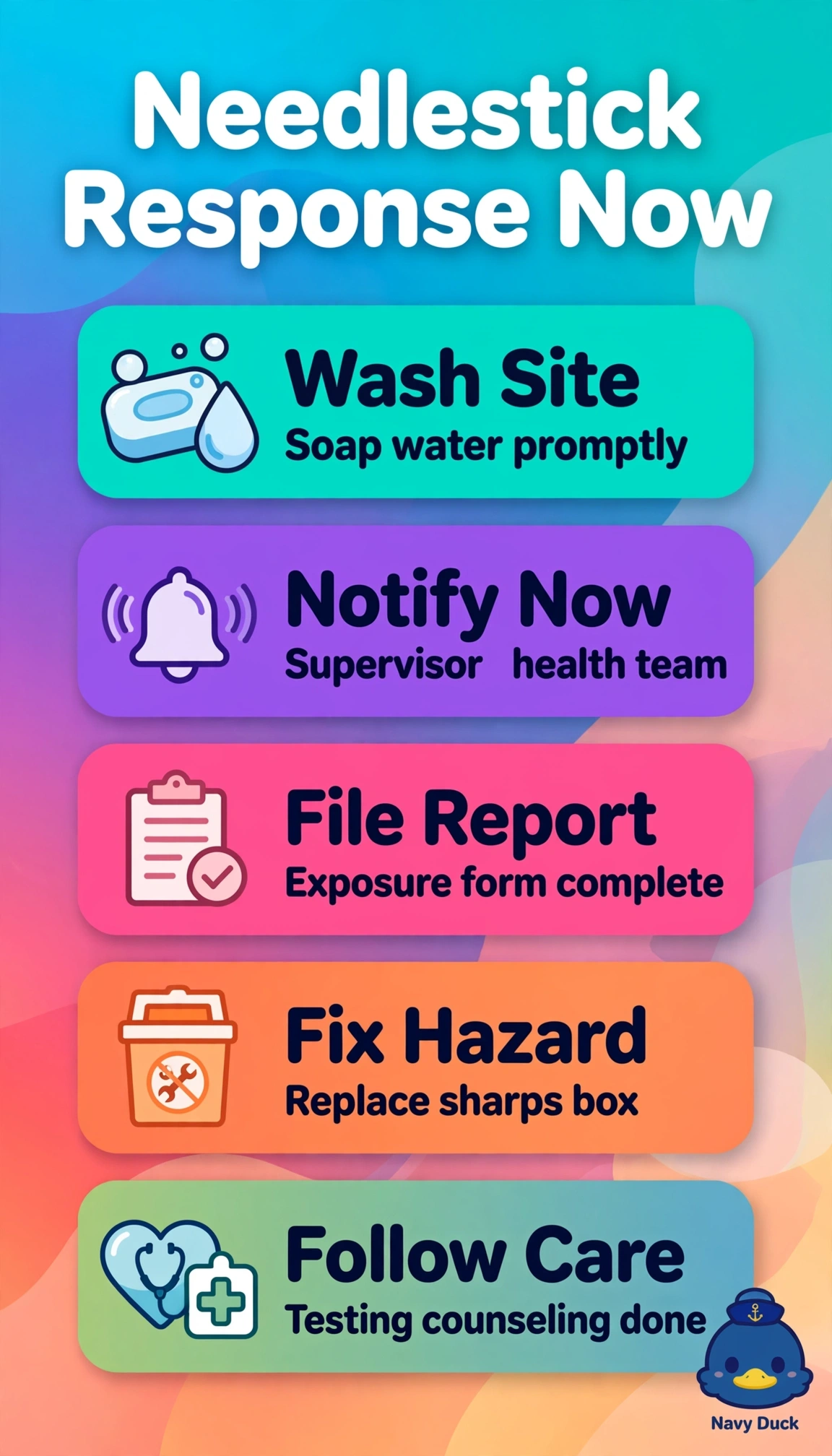
You've got to act fast when you're stuck — you'll wash the spot right away, then let your supervisor and employee health know and fill out that paperwork. Getting that exposure report in quickly is like pulling the fire alarm early, so you can get tested and cared for without delay.
Full Explanation
The correct response reflects CDC, OSHA Bloodborne Pathogens Standard, and NIOSH sharps-injury protocol which require immediate washing with soap and water, urgent notification of supervisory and occupational health services for timely risk assessment, source-patient testing, counseling, and consideration of post-exposure prophylaxis, plus formal exposure incident documentation including route, circumstances, and source identification, which protects both treatment timelines and workers compensation and surveillance. Applying pressure and bandaging as the primary intervention fails by infection-control concept because occluding a contaminated puncture without thorough washing retains viral inoculum and delays decontamination, especially when bleeding is not severe. Deferring the formal report until call lights are covered fails by timeliness concept because exposure documentation and medical evaluation are urgent clinical and regulatory duties that cannot be triaged behind routine workload even when short-staffed. Recording the event only in the unit shift log fails by surveillance concept because an informal unit note lacks required occupational health routing, exposure details, and follow-up triggers needed for OSHA recordkeeping and CDC follow-up testing. An exam caveat is that busy-unit pressures, known source, minor appearance, and overfilled container never justify delaying washing, notification, or formal reporting. A practical check is to pause, wash, activate the chain by calling supervisor and employee health immediately, complete the exposure form before leaving, and flag the overfilled sharps container for replacement.