
An alert older adult needs a nonurgent blood draw and EKG, and the PCT/A explains each step, confirms understanding, and asks permission, but the patient then says to skip the EKG today. The family urges the PCT/A to do it anyway while the patient is present. Which application of medical ethics and informed and implied consent should guide the PCT/A response?
Select an answer to reveal the explanation.
Short Explanation
You've got to follow your patient's lead here — it's a bit like they're holding the steering wheel for their own care. When they say skip the EKG, you'll honor that no to protect autonomy while you go ahead with the blood draw they've approved.
Full Explanation
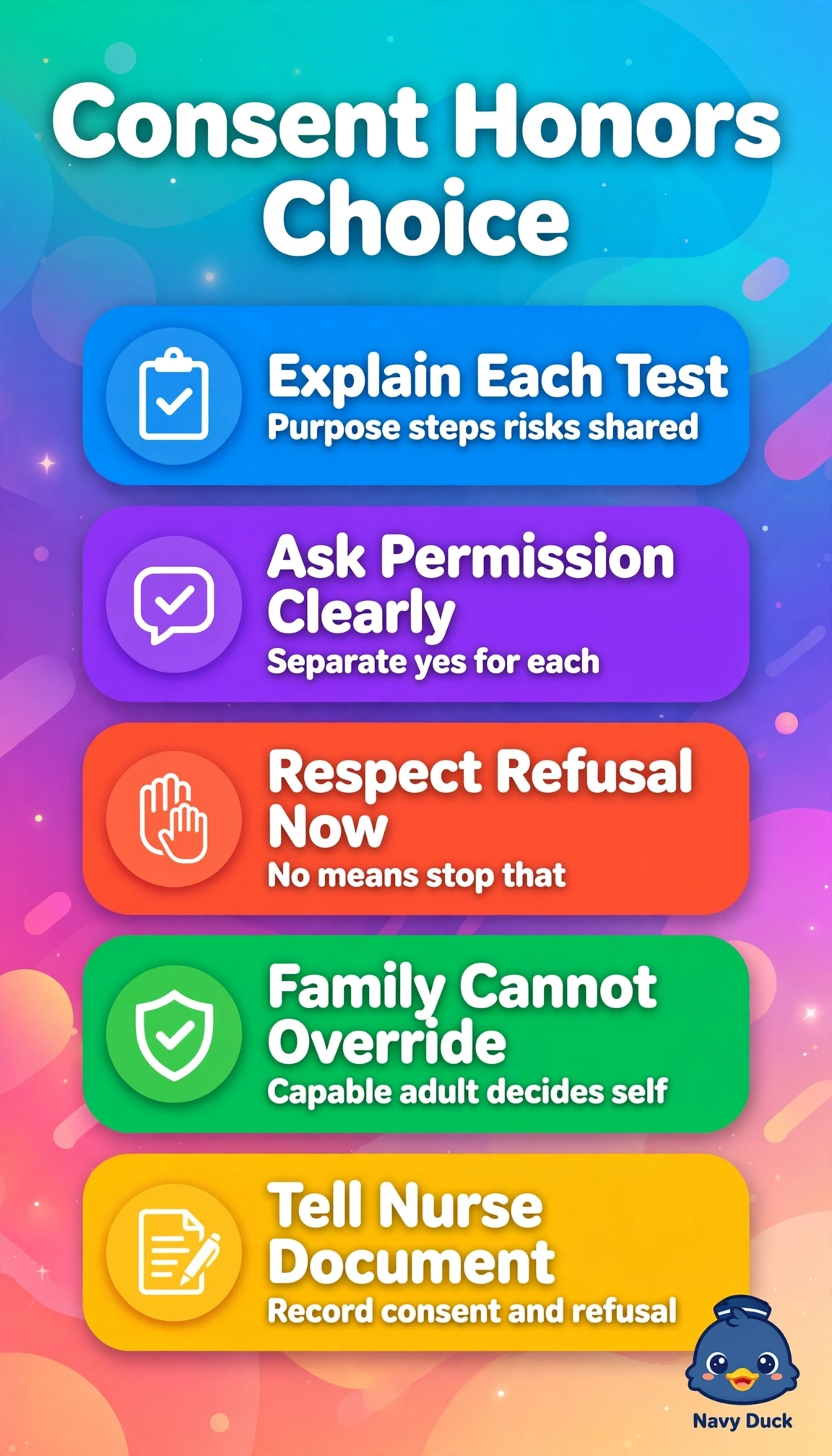
The alert patient retained decision capacity and gave informed consent for the nonurgent blood draw after explanation and teach-back, but explicitly declined the EKG today, so autonomy requires honoring that partial refusal, proceeding only with the consented draw, and not letting family wishes override a present competent adult. Deferring the consented blood draw as well for provider follow-up fails on scope because documenting refusal and seeking clarification fit the declined EKG, yet withholding already-consented care without clinical reason disregards the patient's expressed will. Pursuing further teaching to secure consent for both today fails on voluntariness and timing because education is generally proper, but immediately re-pressing after a clear same-day deferral ignores the stated boundary and risks coercion. Framing the blood draw as implied consent fails on consent type because implied consent applies to emergencies or cooperative routine gestures without discussion, whereas explicit informed consent was obtained here and must be documented as such. Exam caveat: distinguish partial refusal from total withdrawal and informed from implied consent for nonurgent care. Practical check: restate what will and will not occur today, document consent, refusal, education, and witnesses, then arrange respectful follow-up.