
In a rehabilitation gym, a technician works with a frail 78-year-old who is impulsive, wears nonskid socks, and needs transfer from a high bed to a wheelchair with footrests and a lap belt before therapy. The bed alarm is available and the hallway is cluttered. Which combined fall, bed, wheelchair, and restraint-safety practice is correct?
Select an answer to reveal the explanation.
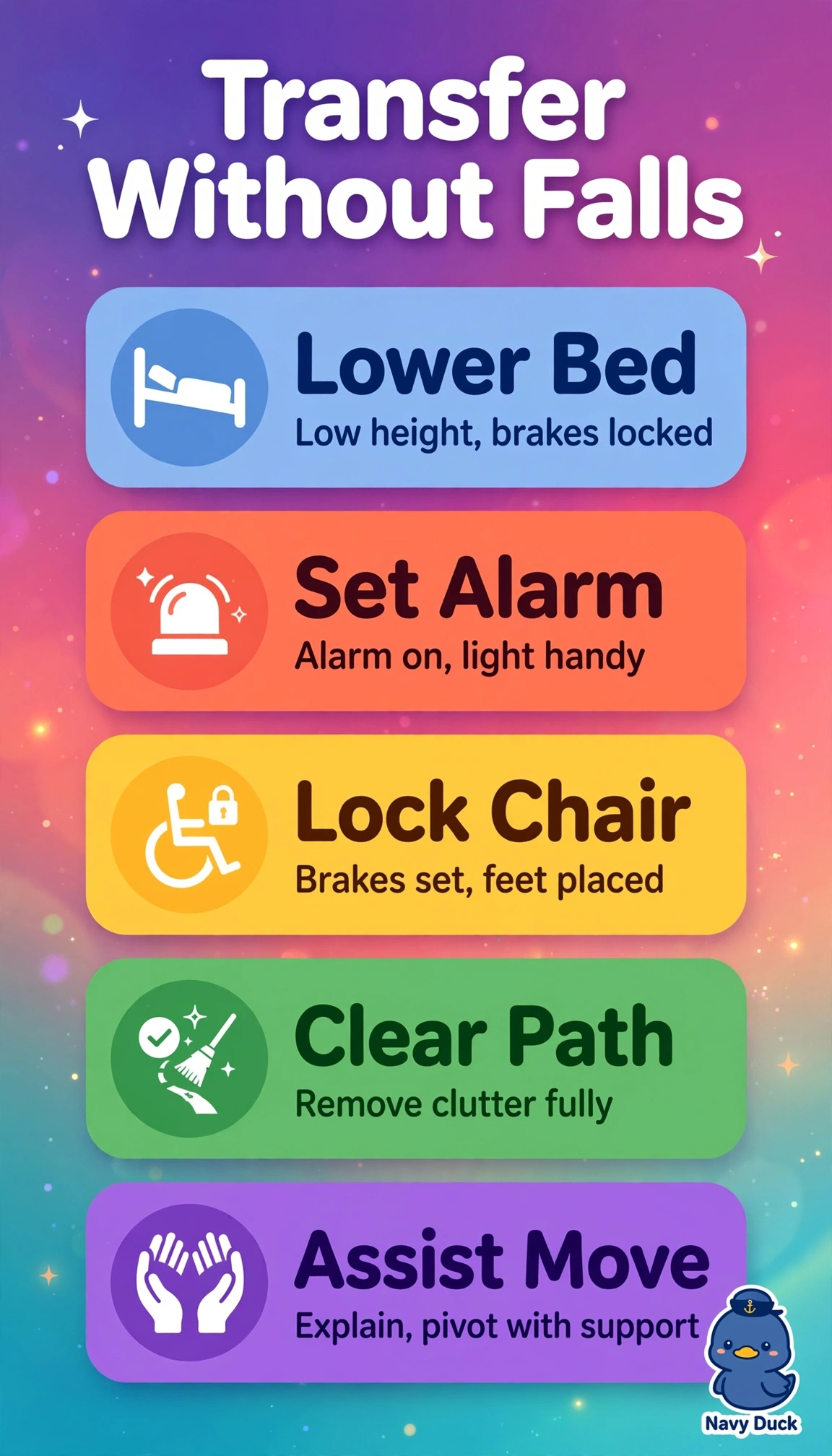
Short Explanation
You've got to set your stage before you move, like putting on your seatbelt before you drive. Once you've lowered the bed, locked the wheels, switched on that alarm, and tucked those feet in place, your transfer checklist is ready to roll.
Full Explanation
The correct practice is right because it layers protection for frailty plus impulsivity: a low bed reduces fall height and eases safe stand-pivot, locked bed wheels prevent shifting during transfer, combined alarm and call light gives both an alert if the patient moves unaided and a way to summon help, and a braked wheelchair with feet secured on footrests prevents dragging, entrapment, and tipping during transport to therapy. The high-bed leverage practice fails on fall-height concept because keeping the high bed raised for ergonomics increases injury risk and control needed for a frail impulsive elder, even with correct locks, alarm, and foot placement. The call-light-only practice fails on surveillance concept because an impulsive patient will not reliably wait and press for help, so omitting the available alarm removes early warning when not directly observed. The foot-propulsion practice fails on wheelchair-transport concept because traveling with footrests flipped up leaves feet unsupported and vulnerable to dragging or catching despite a low locked bed, active alarm, and cleared hallway. Exam caveat: do not select a normally useful rehab method like raised height or self-propulsion when the stem specifies frailty, impulsivity, nonskid socks, and footrest transport, since the test is safe adaptation to stated facts. Practical check: tug bed and chair to verify locks, confirm alarm is armed with light in reach, verify the hallway is fully clear, and look down to confirm both feet are centered on footrests.