
On a night shift on a behavioral health wing, a technician is assigned one-to-one observation of an adult with recent self-harm statements, alcohol withdrawal tremors, and rising agitation toward staff. The room has a belt, plastic bag, and extra visitors. Which one-to-one monitoring safety plan should the technician maintain for this high-risk assignment?
Select an answer to reveal the explanation.
Short Explanation
You’re their steady anchor tonight, and steady eyes-on care matters most. Like a lighthouse that never blinks, constant watch keeps everyone safer.
Full Explanation
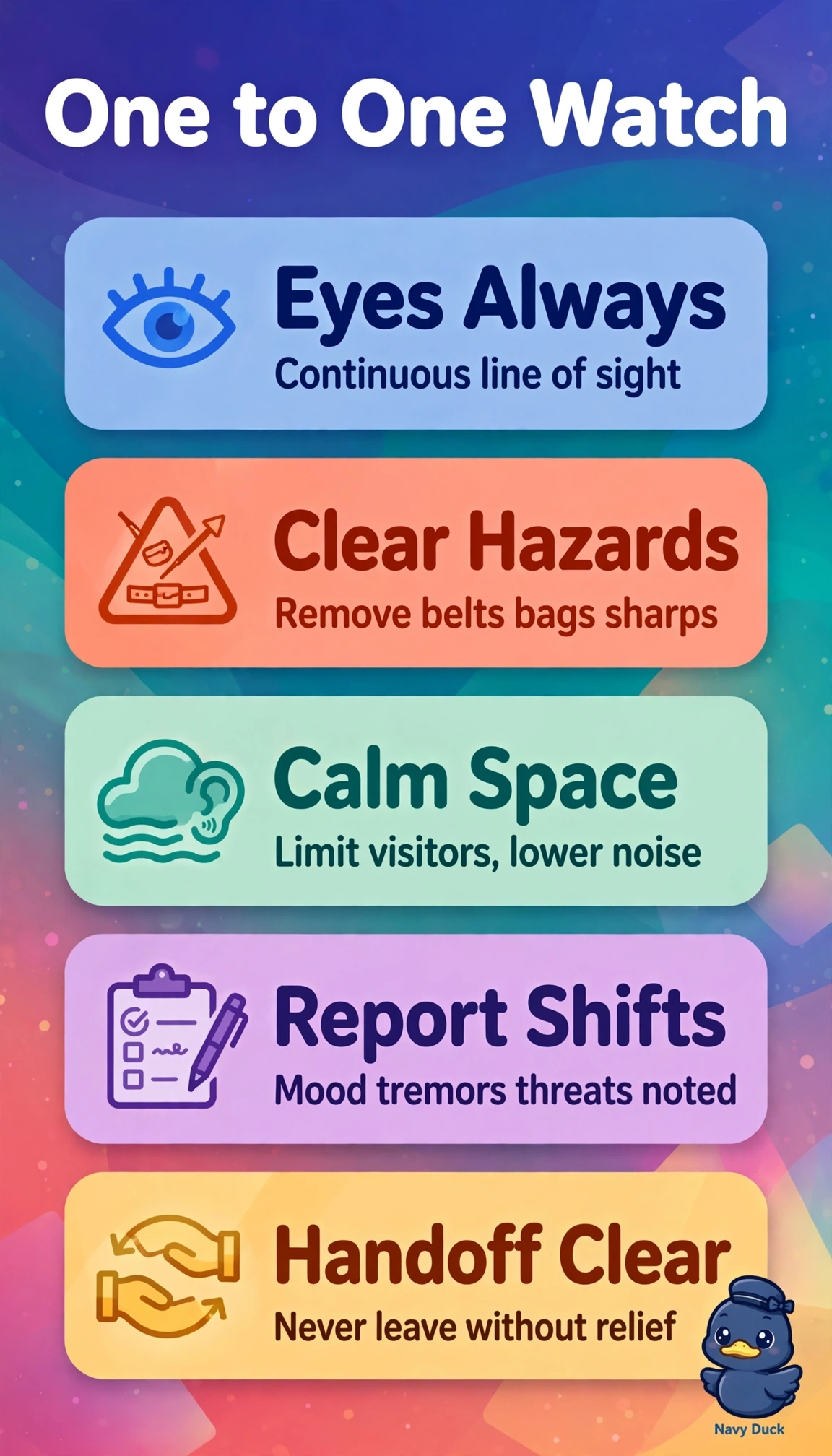
The correct plan fits a high-risk one-to-one assignment where recent self-harm statements, alcohol withdrawal tremors, and rising agitation create concurrent risks for self-injury, medical deterioration, and conflict, so continuous close observation without gaps is required, immediate removal of ligature and suffocation hazards such as the belt and plastic bag is essential, limiting extra visitors reduces stimulation and interference, and prompt reporting lets the nurse reassess suicide precautions, withdrawal severity, and de-escalation needs in real time. The plan using frequent short visual checks fails on continuity because even brief unwatched intervals leave opportunity for impulsive self-harm when intent, tremors, and agitation are present, although intermittent rounding is appropriate for lower-risk levels. The plan that allows visitors to stay for support fails on milieu management because added presence increases noise, demands, and unpredictability for an agitated patient and impairs focus and control, even though family presence is therapeutic when stable. The plan to record changes for the next handoff fails on timely escalation because tremors and agitation can progress rapidly to seizure, aggression, or attempt and require immediate verbal notification, not only later documentation, though thorough charting remains important. As an exam caveat, do not downgrade continuous observation to preserve dignity or sleep when the stem specifies one-to-one for self-harm plus agitation, and as a practical check keep eyes on the patient, scan hands and hazards, monitor visitor numbers, note mental status shifts, and notify the nurse immediately without leaving the patient alone.