
A PCT accepts a one-to-one assignment for a young adult on a medical floor with new suicidal statements, recent alcohol withdrawal, and rising restlessness near sharp meal trays and a bathroom with a locking door. Which monitoring approach best balances safety, withdrawal risk, and dignity?
Select an answer to reveal the explanation.
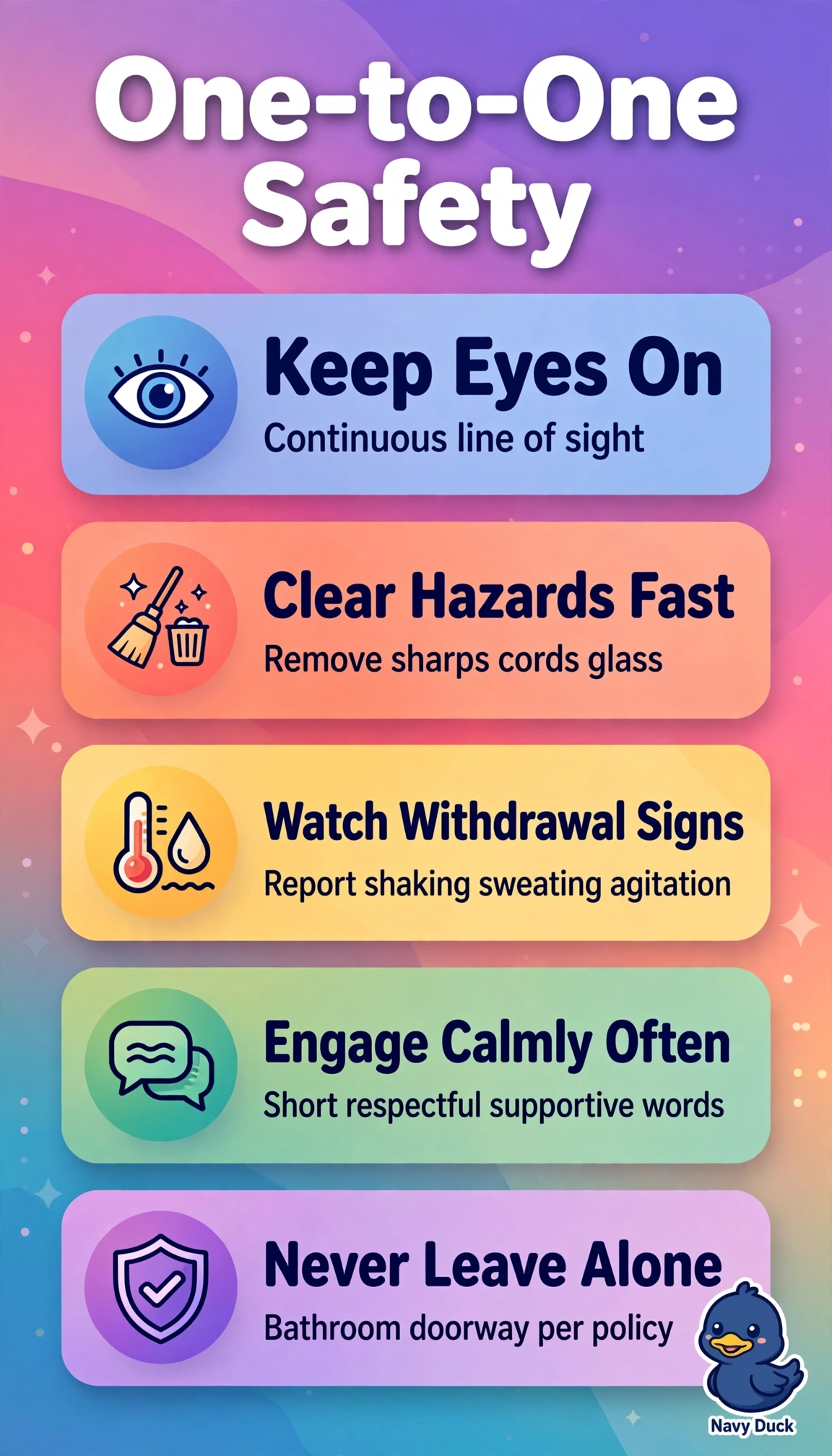
Short Explanation
You protect life while preserving dignity by keeping the patient in sight and making the space safer. Calm, steady observation helps you catch small changes early.
Full Explanation
Continuous line-of-sight is essential because new suicidal statements and rising restlessness near sharps and a locking-door bathroom create immediate means and opportunity for harm; intermittent checks cannot cover those risks. Removing sharps restricts access to dangerous items, promptly reporting behavior changes helps the nurse assess both suicide risk and alcohol withdrawal progression, and calm engagement supports dignity and de-escalation. Brief fifteen-minute safety rounds leave unobserved windows in which impulsive harm or bathroom use could occur, even when sharps are removed and changes are reported. Encouraging normal meal independence preserves autonomy but leaves sharps accessible when suicidal statements are new and withdrawal-related impulsivity is rising. Monitoring withdrawal signs independently exceeds the PCT’s role: findings must be promptly reported to the nurse for evaluation, even when observation, sharps removal, and calm engagement are in place. Exam caveat: privacy does not override continuous safety needs with new suicidal behavior; preserve dignity through respectful explanation and same-gender coverage when possible, rather than unsupervised privacy. Practical check: maintain sightlines during bathroom use according to policy, keep sharps removed, report changes early, and explain each step calmly.