
A post-operative adult on bedrest has an order for sequential compression devices and knee-high anti-embolism stockings, has intact dry skin, equal pulses, no leg pain or swelling, and correctly sized sleeves and stockings available with the pump plugged in and alarms working. Which application step should the PCT prioritize to promote venous return and prevent skin injury?
Select an answer to reveal the explanation.
Short Explanation
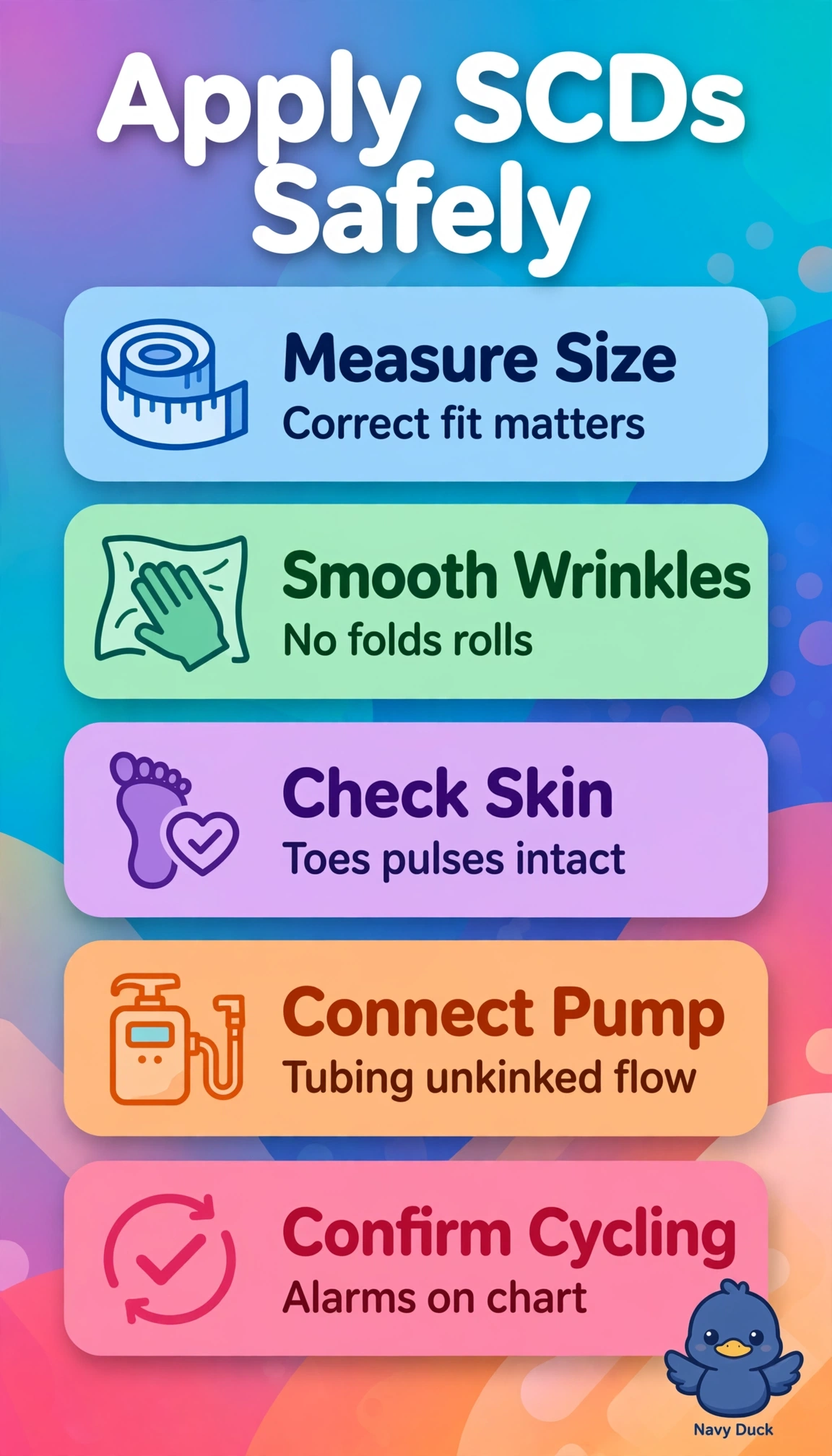
When you're getting your stockings and sleeves on, you'll want them in a smooth, wrinkle-free fit so pressure stays even and skin stays safe, just like flattening your socks inside snug shoes. Once they're fitted right, you can connect the pump and make sure it's cycling to keep blood moving.
Full Explanation
The correct action reflects combined prophylaxis principles where smooth wrinkle-free knee-high stockings provide graduated compression to reduce stasis while correctly fitted sleeves worn over stockings add intermittent pneumatic compression to augment venous return, and connecting tubing with confirmation of cycling ensures prescribed therapy is delivered without pressure points that injure intact skin in this bedrest postoperative patient with equal pulses and no pain or swelling. Placing sleeves underneath stockings fails by layering concept because bladder compression directly on skin beneath an occlusive knit increases friction, shear and pressure injury risk and disrupts graduated compression mechanics even when sizing and cycling are correct. Applying lotion immediately before stockings fails by moisture-management concept because an elastic garment over damp emollient promotes maceration, slippage, wrinkling and loss of graduated pressure, whereas smooth application on dry skin preserves integrity and flow. Using thigh-high stockings for extended coverage fails by order-fidelity concept because substituting length violates the specific knee-high prescription and available correct sizing, risking bunching or tourniquet effect and nonadherence despite correct SCD technique. An exam caveat is to prioritize exact order details of device type, length, fit and functional check over generally helpful actions like moisturizing or maximizing coverage, since a largely correct setup remains wrong if one ordered element is changed. A practical check is to verify no wrinkles, confirm comfortable fit without rolling, ensure tubing is unkinked with audible cycling and alarms on, then reassess skin, pulses, pain and swelling per protocol.