
A stroke patient with a PEG tube receives intermittent pump feeding, coughs when flat, is mildly confused, and needs mouth care and midday assistance while the head of bed can be raised. Aspiration risk is high if positioning or tube handling is wrong. Which feeding-tube and aspiration-precaution assistance should the PCT provide?
Select an answer to reveal the explanation.
Short Explanation
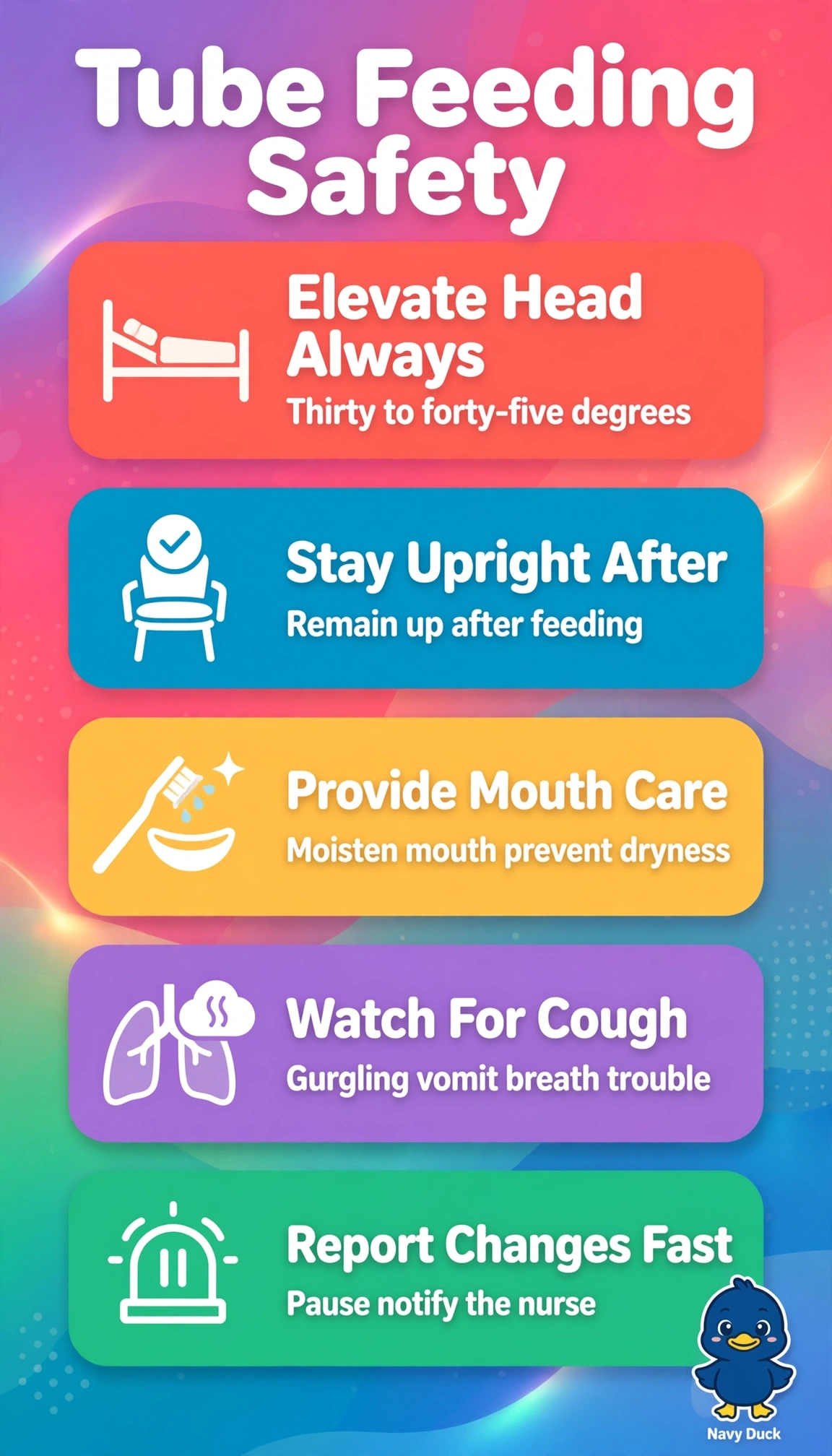
You’re using gravity as a safety helper, not just for comfort. Sitting up keeps formula heading down the right pipe, like keeping a funnel upright while you pour. Keep head-elevated positioning before, during, and after feeds.
Full Explanation
The correct response keeps head of bed elevated 30-45 degrees during intermittent pump feeding and 30-60 minutes after with mouth care and immediate reporting of gurgling because stroke-related dysphagia plus confusion impairs airway protection and gravity reduces reflux and aspiration while reporting triggers nurse assessment of tolerance and placement. Lowering flat right after for rest fails duration concept because aspiration risk persists from gastric contents after pump stops, so sustained elevation is required, not temporary elevation. Providing mouth care with head up but omitting report fails surveillance concept because observe-and-report closes safety loop and gurgling, cough, or distress signals possible aspiration needing prompt nurse evaluation, not silent monitoring. Keeping head elevated while flushing tubing and checking placement fails delegation concept because verification of placement, residuals, flushes, and pump adjustments are nurse-only tasks that cannot be delegated to PCT even when positioning is correct. Exam caveat: never assume PCT may manage tubing because test distinguishes support duties like positioning, hygiene, and reporting from licensed tube management. Practical check: verify bed angle indicator, maintain elevation for prescribed post-feed interval, keep call light reachable, give only nurse-approved oral care without unsafe fluids, and notify nurse at once for cough, gurgling, vomiting, or displacement.