
A frail older adult with an indwelling urinary catheter is incontinent of stool, has dentures, and needs morning hygiene to prevent odor, infection, and skin breakdown. The PCT/A plans oral, denture, perineal, and catheter care in one visit. Which combined oral, denture, perineal, and catheter care sequence best prevents infection and tissue injury?
Select an answer to reveal the explanation.
Short Explanation
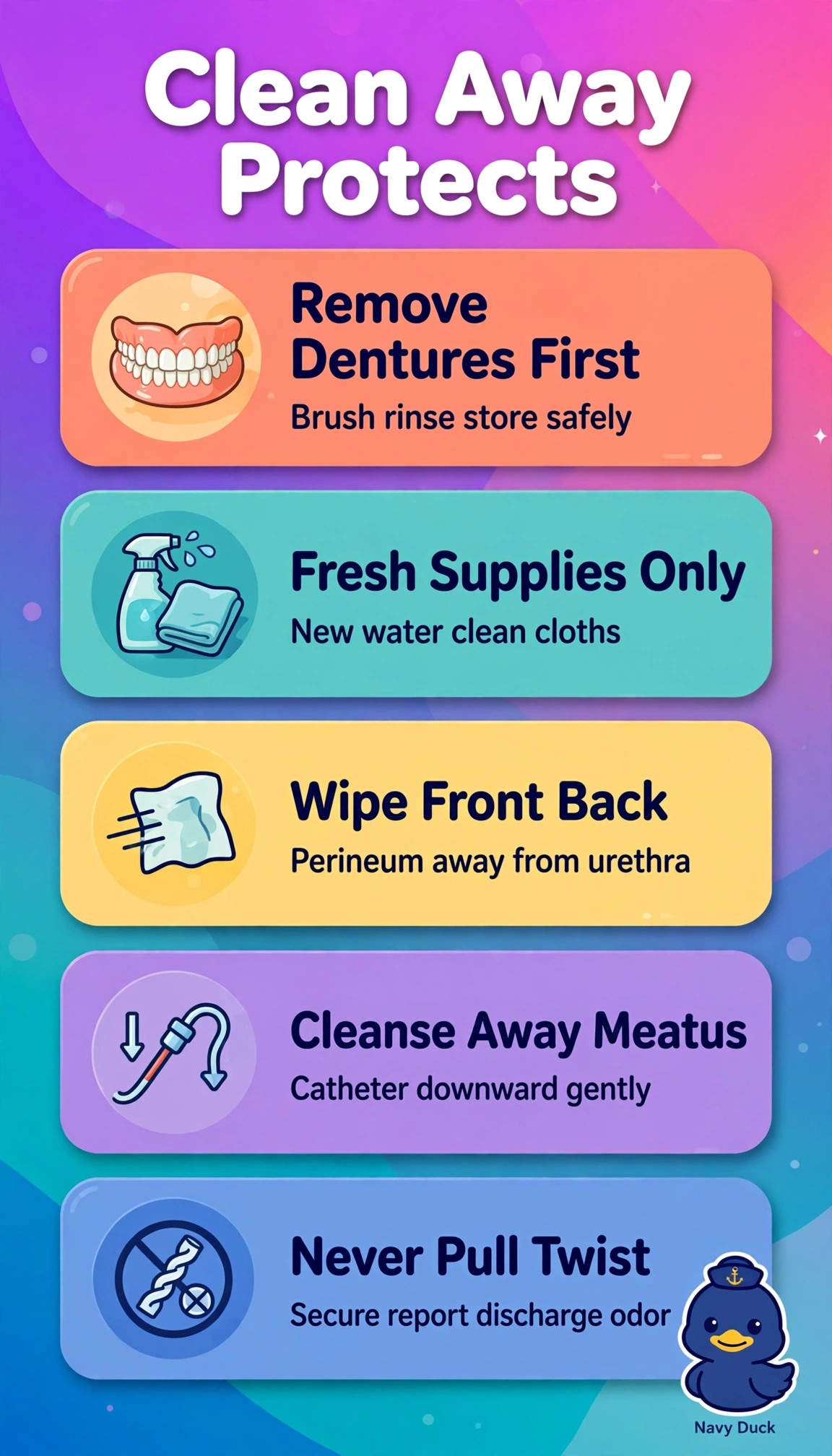
Clean always flows away from the cleanest spot, not toward it. Moving outward from the urinary opening keeps germs heading the right way, thanks to direction you can remember every time.
Full Explanation
The correct combined sequence protects dentures, perineum, and catheter together by removing dentures for separate gentle cleaning with lukewarm water and cleanser to prevent odor and stomatitis while allowing gum inspection, wiping the stool-soiled perineum front to back with separate cloth areas followed by thorough rinsing and patting dry to carry fecal organisms away from the urethra and prevent dermatitis and urinary infection, and cleansing the catheter outward away from the meatus for several inches without pulling or breaking the closed system to prevent biofilm migration and urethral trauma. One plausible choice correctly handles dentures and perineal direction but cleanses toward the meatus, which violates the away-from-source principle by moving surface bacteria toward the sterile tract and increasing infection risk. Another plausible choice uses correct wiping and cleansing directions but keeps the same gloves from perineal and catheter work for oral care, which violates clean-to-dirty sequencing and hand hygiene by risking fecal-oral transfer despite good technique. A third plausible choice is correct on perineal and catheter direction but uses hot water for acrylic dentures, which violates material care because heat warps the baseplate and creates poor fit, sore spots, ulceration, and odor retention. As an exam caveat, focus on the single directional, sequencing, or temperature detail that breaks infection control even when the rest sounds routine. As a practical check, confirm fresh gloves and hand hygiene before oral tasks, front-to-back strokes with clean cloth areas and complete drying, and gentle outward catheter cleansing with the bag below bladder level and tubing free of pull.