
In a hospital cafeteria during lunch, a technician finds an adult visitor clutching the throat, unable to speak or cough, with a reddening face. A chair and table block access, bystanders are panicking, and the emergency code has been called. Which first aid and BLS choking response should the technician provide for this severe airway obstruction?
Select an answer to reveal the explanation.
Short Explanation
You’ve recognized a true silent emergency, so act with abdominal thrusts. Sharp upward pressure can free the blockage quickly, like popping a cork.
Full Explanation
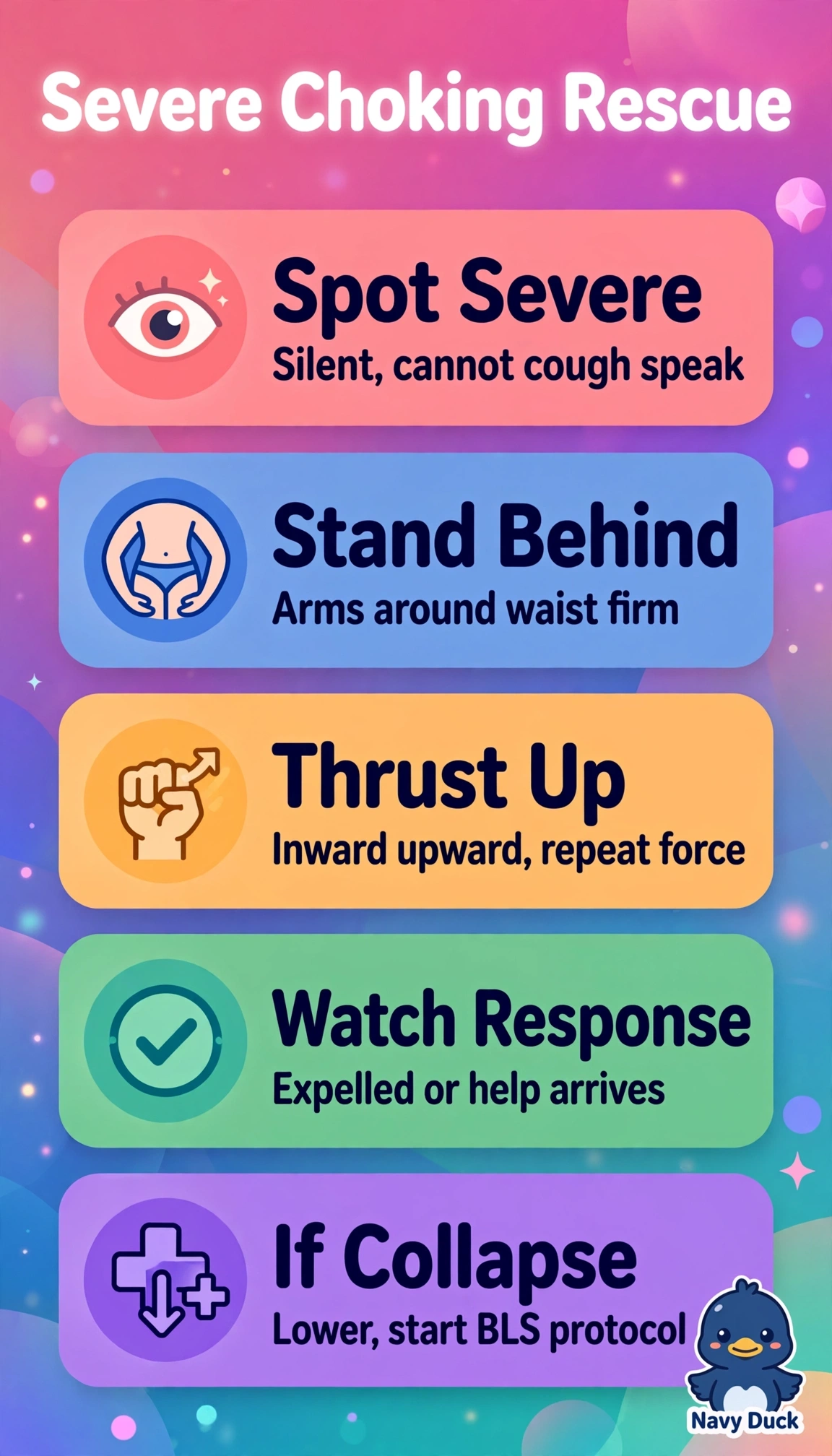
For a responsive adult with severe foreign-body airway obstruction—shown by throat clutching, inability to speak or cough, and facial color change—stand behind the victim and deliver quick inward-and-upward abdominal thrusts. This creates an artificial cough by elevating the diaphragm and increasing intrathoracic pressure, helping expel the object; continue until the obstruction clears or advanced help takes over. The emergency code has already been called, so bystanders can guide responders while you act. Encouraging loud coughing and watching is appropriate for mild obstruction when air exchange is effective and the person can cough strongly, but absent speech and cough indicate ineffective airflow; waiting risks rapid hypoxia. Moving to open space and performing chest thrusts can be appropriate when abdominal thrusts are impossible or unsafe, but no such circumstance is described here, so abdominal thrusts are the indicated response. Moving the victim to the floor and starting CPR with AED setup is appropriate if the victim becomes unresponsive and is not breathing normally, but this victim remains responsive and needs immediate obstruction relief. An exam caveat is to assess severity and responsiveness first, since those findings determine whether you assist coughing, use thrusts, or begin CPR. As a practical check, clear the chair and table for access from behind, take a stable stance, place your hands just above the umbilicus, and deliver distinct thrusts; if responsiveness is lost, lower the victim and begin CPR while arranging AED use.