
A PCT receives orders for blood cultures on a febrile adult in the emergency department with chills, with instructions for two sets from two separate venipunctures before antibiotics, using chlorhexidine and aerobic plus anaerobic bottles. Which blood culture collection technique best prevents contamination and preserves accuracy?
Select an answer to reveal the explanation.
Short Explanation
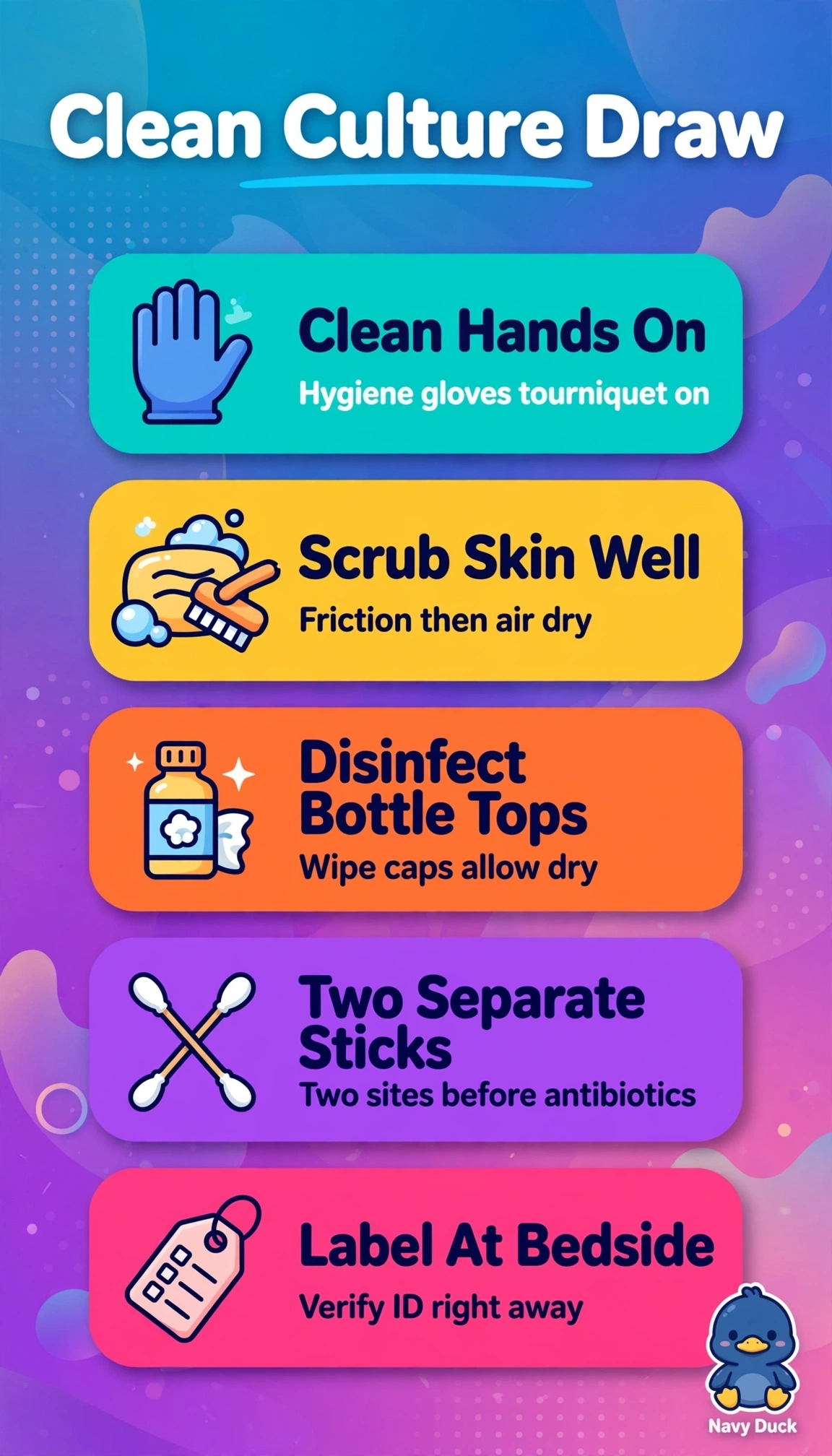
Give those bottles a clean runway: clean your hands, disinfect the skin and bottle tops with friction, and collect two sets from separate venipunctures before antibiotics. Like wiping a counter before setting food down, careful aseptic technique helps keep skin microbes out of your results.
Full Explanation
For a febrile adult with chills, the collection plan should maximize pathogen recovery while minimizing skin contamination: perform hand hygiene, disinfect the skin and bottle tops with friction, and collect two sets from two separate venipunctures before antibiotics, using aerobic and anaerobic bottles. Collecting both sets from one venipuncture fails by sampling strategy: a single site cannot help distinguish true bacteremia from skin contamination and may miss intermittent bacteremia, even with good antisepsis and timing. Collecting two separate venipunctures after antibiotics start fails by timing because circulating medication can suppress microbial growth and reduce the culture yield, despite appropriate sites and bottles. Using alcohol alone with separate sites and pre-antibiotic timing fails by antisepsis: alcohol lacks chlorhexidine’s sustained activity against skin flora and can increase contamination risk. The correct technique includes friction disinfection of both the skin and bottle tops; chlorhexidine is the specified skin antiseptic in the stem. An exam caveat is that changing the timing, using one venipuncture, or substituting alcohol alone makes the technique inconsistent with the stated requirements. As a practical check, verify unexpired aerobic and anaerobic bottles, disinfect the tops, avoid touching or re-palpating the prepared site, fill to the marked volume, and label each collection at the bedside with its site and time.