
On a crowded medical unit with a new measles case, an influenza patient, and a wound infection, a technician must move between rooms with shared equipment. Hands are visibly clean between tasks and alcohol sanitizer and sinks are available. Which CDC Standard and Transmission-based Precautions and hand hygiene plan should the technician follow for these assignments?
Select an answer to reveal the explanation.
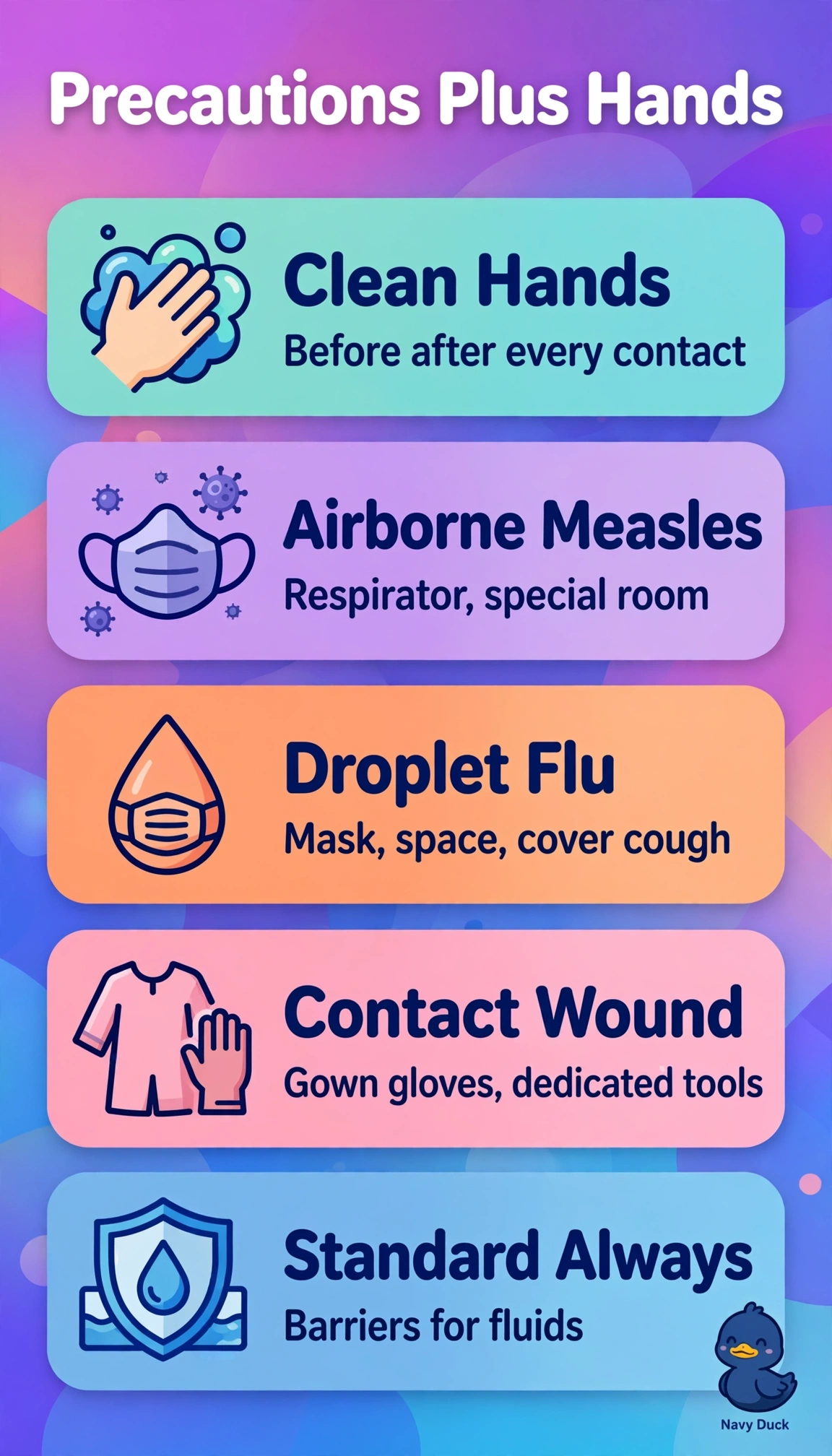
Short Explanation
You’re the germ gatekeeper here, and consistent precaution-matched habits win. Like dressing for the weather, you layer protection to fit each sign.
Full Explanation
The correct plan reflects CDC Standard Precautions plus Transmission-Based Precautions applied together: hand hygiene before and after every patient or equipment contact interrupts cross-transmission even when hands look clean, while added barriers are driven by organism route with airborne for measles, droplet for influenza, and contact for wound infection with dedicated or disinfected shared devices per signage. One distractor describing only droplet and contact precautions is inadequate by airborne concept because measles virus remains suspended and requires airborne infection isolation, fit-tested respirator, and room controls that surgical masks and droplet spacing do not provide. Another distractor limiting hand hygiene to after contact fails by timing concept because Standard Precautions require cleaning both before to protect the patient and after to protect self and the next patient, and moving between crowded rooms with shared equipment without pre-contact hygiene seeds transmission. A further distractor proposing once-daily disinfection of shared equipment fails by contact and fomite concept because Standard Precautions require cleaning and disinfecting reusable devices between patients and when soiled, and daily schedules allow wound pathogens to persist on stethoscopes and cuffs. Exam caveat: distinguish routine alcohol-based sanitizer for visibly clean hands from soap and water for visibly soiled or Clostridioides difficile norovirus situations, and do not downgrade measles to droplet or upgrade seasonal influenza to routine airborne. Practical check: pause at each doorway to read the posted sign, perform hand hygiene, don the required respirator mask gown and gloves, and wipe shared equipment before bringing it into the next room.