
In a 24-bed medical unit, a technician must care for a patient with draining MRSA wound infection and another with suspected influenza cough, with alcohol sanitizer, gowns, gloves, masks, and eye protection available. Turnover is rapid and hand sinks are nearby. Which combined use of CDC Standard and Transmission-based Precautions and hand hygiene is correct?
Select an answer to reveal the explanation.
Short Explanation
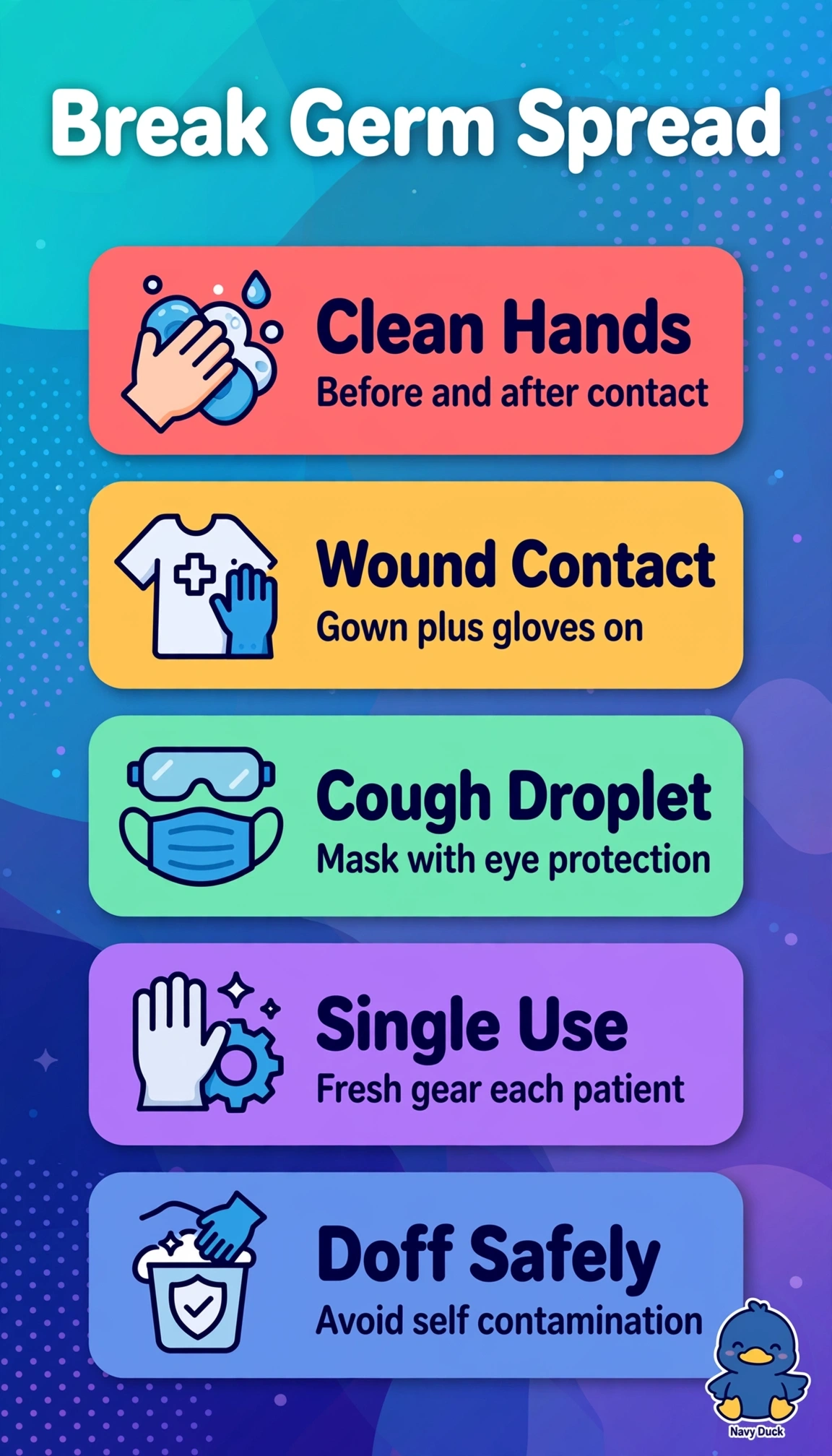
You match protective gear to each route of exposure: gown and gloves for wound contact, and a mask for cough. Clean your hands before and after care; that barrier helps stop spread. Change your gear between patients to keep care safe.
Full Explanation
Correct care combines Standard Precautions with Contact Precautions for the draining MRSA wound, using a gown and gloves for wound contact, and Droplet Precautions for suspected influenza, using a mask for cough. Hand hygiene before and after care helps block cross-transmission. Using those barriers but cleaning hands only after care misses the before-care step: contamination on entry can reach wounds or mucous membranes. Using the correct barriers and timing but relying on sanitizer when hands are visibly soiled fails because organic drainage can inactivate alcohol; with sinks nearby, wash with soap and water when hands are visibly dirty. Using gloves alone for wound contact, while wearing a mask for cough and cleaning hands before and after care, omits the gown; draining fluid can contaminate clothing and transfer MRSA to the environment or the next patient. Exam caveat: match mask type to the transmission route; suspected influenza calls for droplet precautions, not an airborne N95, and sanitizer does not replace washing visibly soiled hands. Practical check: put on task-specific barriers on entry, remove and discard them on exit, change them between patients, and verify hand cleaning before and after contact, using soap and water when hands are soiled.