
An older adult on bed rest needs a partial bath and an occupied bed change, has fragile skin and mild incontinence, can roll with help, and clean linens are ready. Soiled linens must not touch the floor or clean side. Which bathing and occupied bed-making technique should the PCT use for safety and comfort?
Select an answer to reveal the explanation.
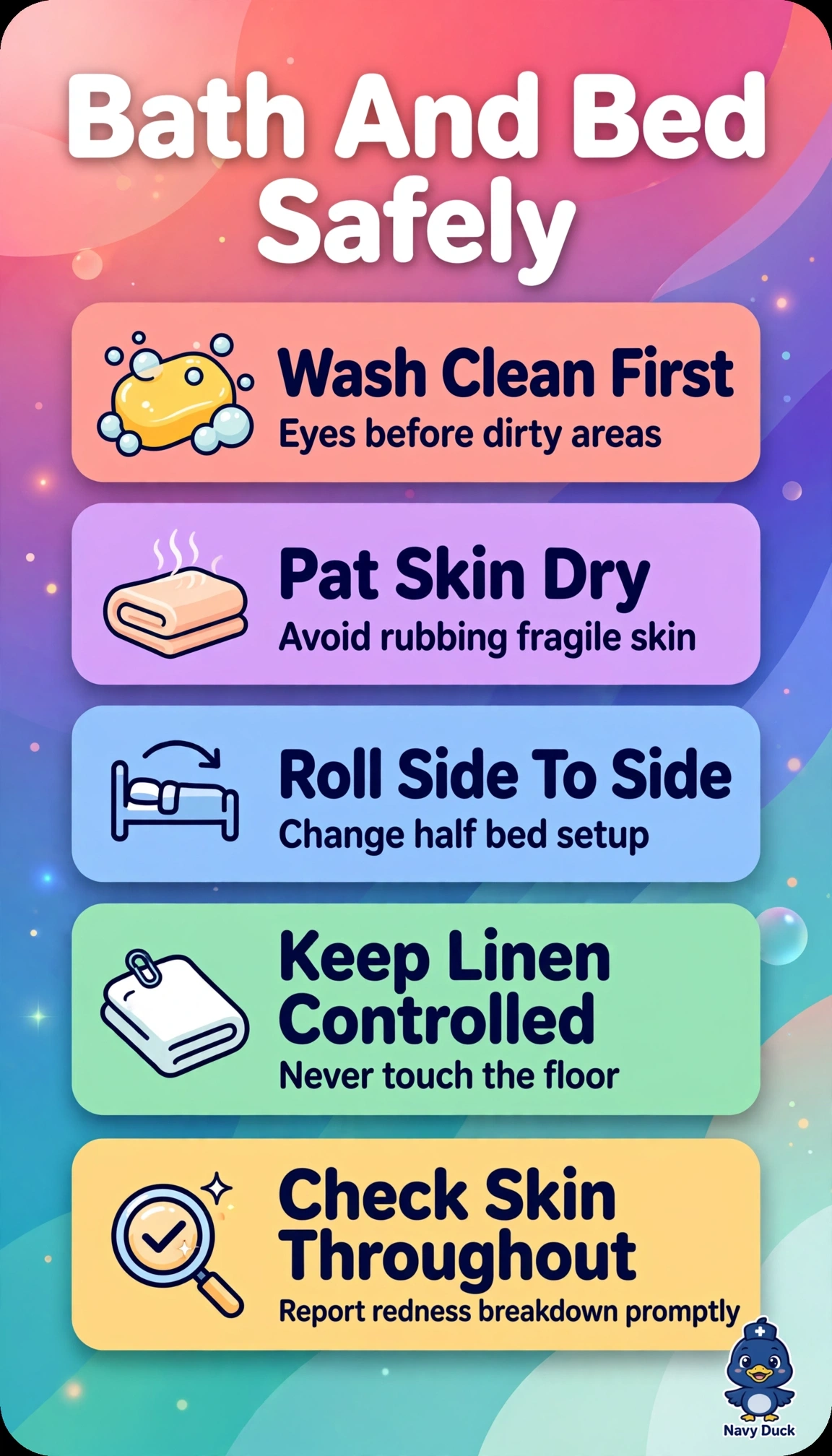
Short Explanation
You’re keeping germs moving away from clean spots, not back again. Washing outward and rolling side-to-side protects skin and dignity, like smoothing a tablecloth without lifting the whole table. Follow clean-to-dirty direction every time.
Full Explanation
The correct technique reflects infection control, skin protection, and safe occupied bed-making for a bed-rest older adult who can roll with help. Bathing clean to dirty prevents moving incontinence flora to cleaner areas, while a partial bath matches the ordered scope and conserves energy and warmth, and rolling to change one side at a time keeps the patient supported, maintains alignment, and allows the soiled linens to be fanfolded tightly to the center and then removed without touching the floor or the fresh side. Holding soiled linen against the clean side fails the concept of medical asepsis and cross-contamination control because contact transfers moisture and organisms to fresh linens despite correct washing and rolling. Using firm strokes fails the concept of skin integrity in aging fragile skin because friction and shear cause tears and pressure injury even when direction and bed-making are correct, so gentle cleansing with lukewarm water, patting dry, and minimal rubbing are required. Giving a complete head-to-toe bath fails the concept of following the care plan scope and energy conservation because it exceeds the requested partial bath and increases chilling, fatigue, and exposure despite correct infection and bed-making technique. On exams, focus on qualifier words such as partial, fragile, with help, and must not touch the clean side or floor to select the fully matching description. In practice, always check water temperature, gather clean linens beforehand, keep the patient covered for warmth and privacy, inspect incontinence areas and skin folds, and confirm soiled linen is rolled inward and kept clear of clean surfaces.