
A hospitalized adult has new watery diarrhea, a test ordered for Clostridioides difficile, shares a bathroom, and needs vital signs and linen change with the door closed and supplies stocked outside the room. The PCT has no open skin lesions but will have contact with stool and surrounding surfaces. Which precaution and hand hygiene combination should the PCT apply for this care?
Select an answer to reveal the explanation.
Short Explanation
Some germs shrug off sanitizer, so you need soap plus barriers. Contact precautions with thorough handwashing physically removes stubborn spores, like rinsing mud instead of just wiping it.
Full Explanation
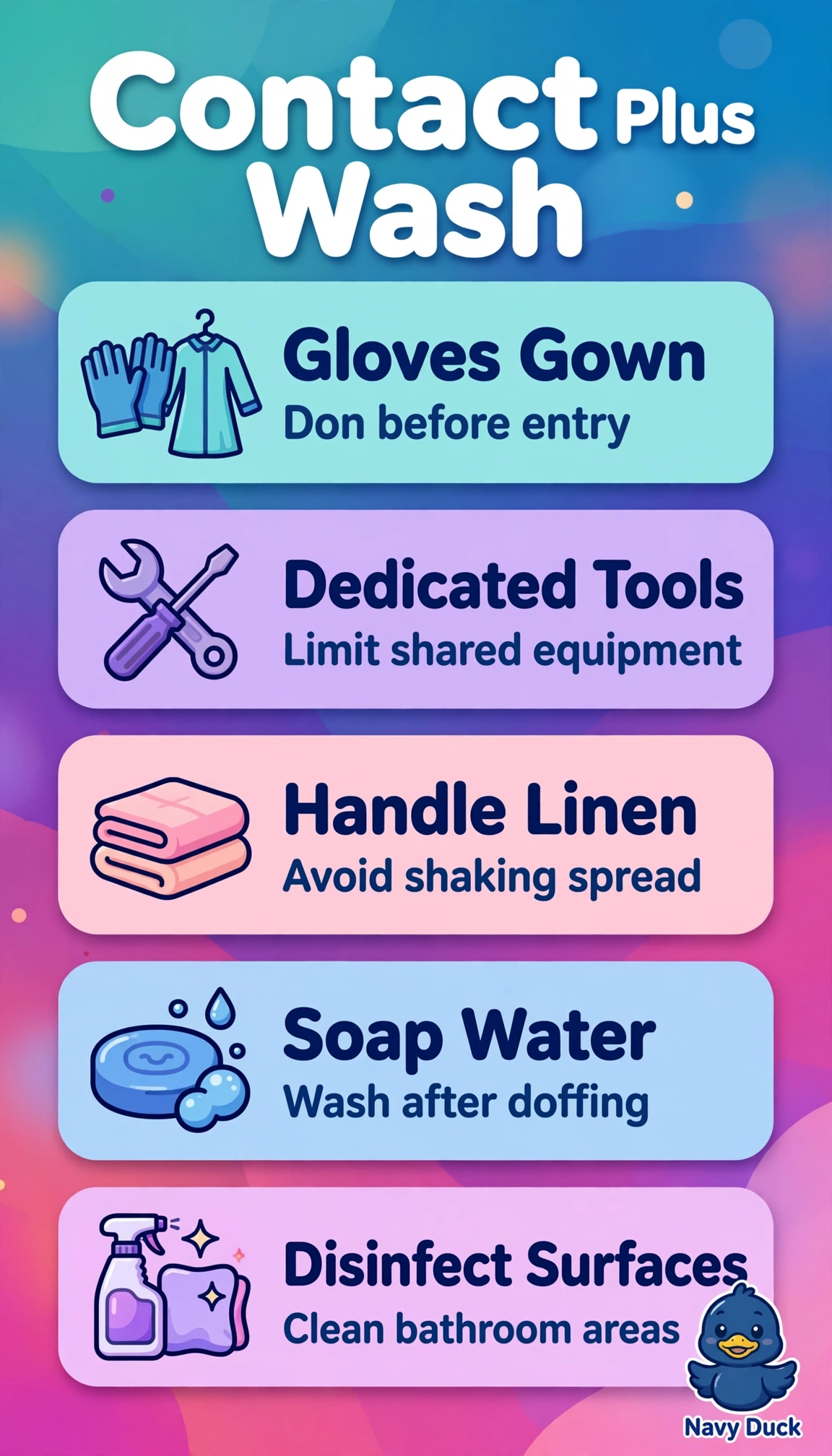
Suspected Clostridioides difficile requires Standard plus Contact Precautions with gloves and gown, dedicated or disinfected equipment, careful handling of linen and surfaces, and handwashing with soap and water because alcohol-based sanitizer does not reliably kill spores and mechanical friction with rinsing is needed for removal. Gloves only without a gown plus sanitizer leaves uniform and skin exposed to environmental contamination and fails spore removal, even though it feels faster for vital signs. A respirator and face shield for routine entry overemphasizes airborne protection while missing the contact route and still relies on sanitizer, so the actual fecal-oral and surface transmission is unaddressed. Standard Precautions alone with handwashing only for visible soil underestimates shedding onto bathroom surfaces and linen and delays containment until the test returns. Exam caveat is that sanitizer versus soap questions often hinge on C. difficile and norovirus, so look for diarrhea clues, and practical check is to don before entry, doff without contaminating clothing, disinfect equipment, and wash immediately after glove removal.