
In a cardiology clinic, a technician applies a 24-hour Holter monitor to an active older adult who showers daily, takes beta blockers, and fears interfering with the tracing. Skin is prepped, electrodes are secure, and the recorder is charged. Which Holter and telemetry monitoring education should the technician provide for this recording period?
Select an answer to reveal the explanation.
Short Explanation
You’re handing them a heart diary for the day, so emphasize diary-linked recording. Like pairing photos with captions, the log gives each squiggle meaning.
Full Explanation
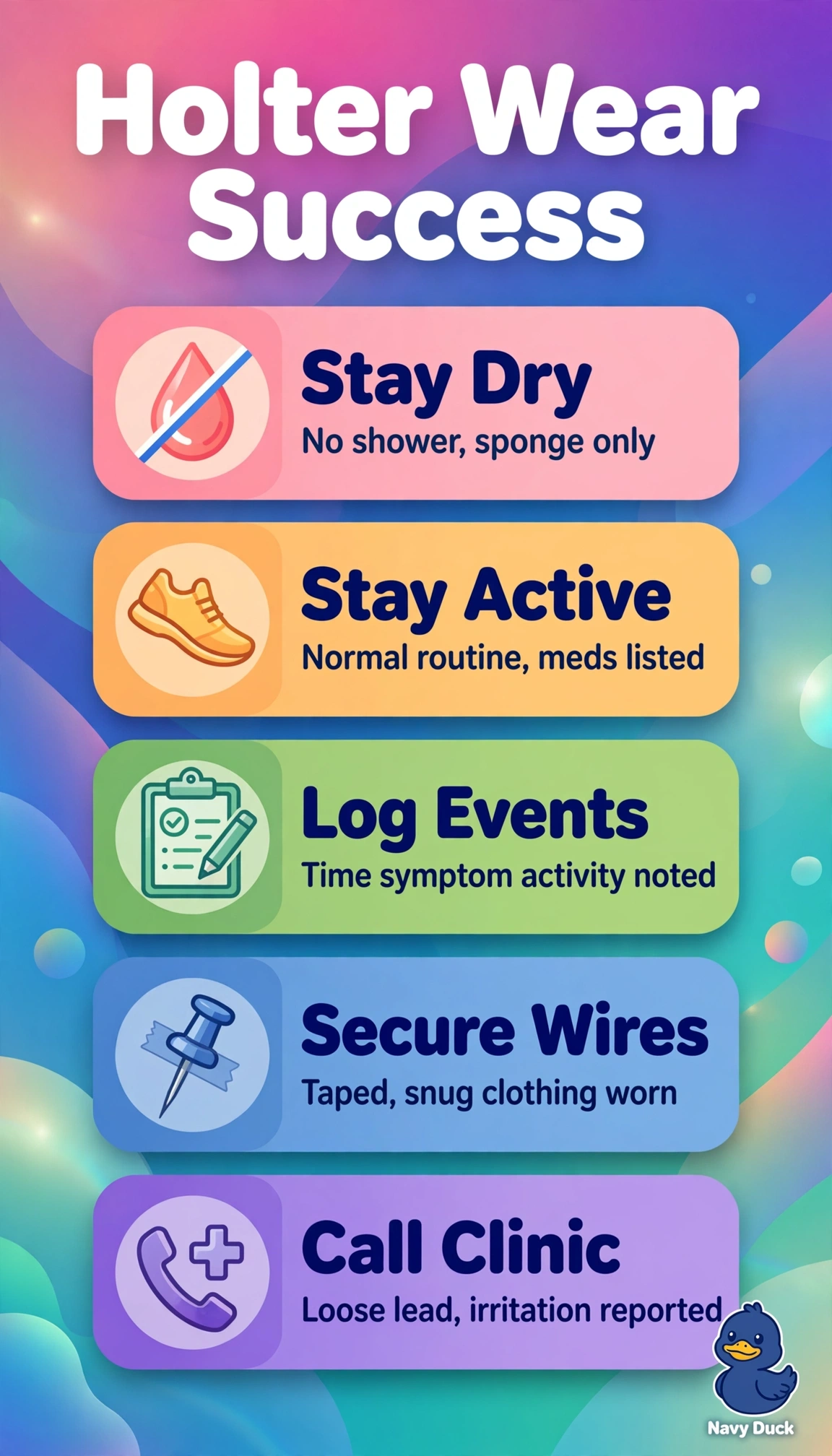
The correct education preserves diagnostic yield because a standard 24-hour wired Holter recorder is not showerproof, so keeping electrodes dry and avoiding showers prevents adhesive loosening, contact loss, baseline wander and premature termination, while maintaining normal daily activity ensures the tracing reflects real-world cardiac workload rather than an artificially quiet day, and a contemporaneous diary linking each symptom to exact clock time plus activity enables precise rhythm-symptom correlation, with beta blockers continued unless ordered otherwise and reassurance that normal movement will not ruin the tracing. Allowing brief covered showers fails by moisture-protection concept because water, steam, soap and handling degrade electrode gel and adhesion for this device class, although covered showering suits some shower-tolerant patch monitors. Advising limited exertion to prevent artifact fails by provocation concept because suppressing usual activity hides exertional arrhythmias, rate responses and daily triggers and defeats ambulatory monitoring. Logging symptoms with activity but estimated times later fails by temporal-correlation concept because even small errors prevent matching diary entries to the continuous ECG timeline. An exam caveat is to distinguish uninterrupted 24-hour Holter rules from intermittent event-monitor rules and stress protocols where shower permissions or beta-blocker holds differ by order. A practical check is teach-back with a sample diary entry showing time plus activity, confirmation of wear start and return time, skin inspection guidance, and instructions for loose electrodes without showering or stopping the recorder.