
A PCT enters a single room to check vitals on an adult with productive cough and suspected tuberculosis, with an N95 available, gloves, gown, and alcohol sanitizer at the doorway. The patient is coughing without a mask and the PCT just shook hands on greeting. Which infection prevention sequence meets CDC Standard plus airborne Transmission-based Precautions and hand hygiene?
Select an answer to reveal the explanation.
Short Explanation
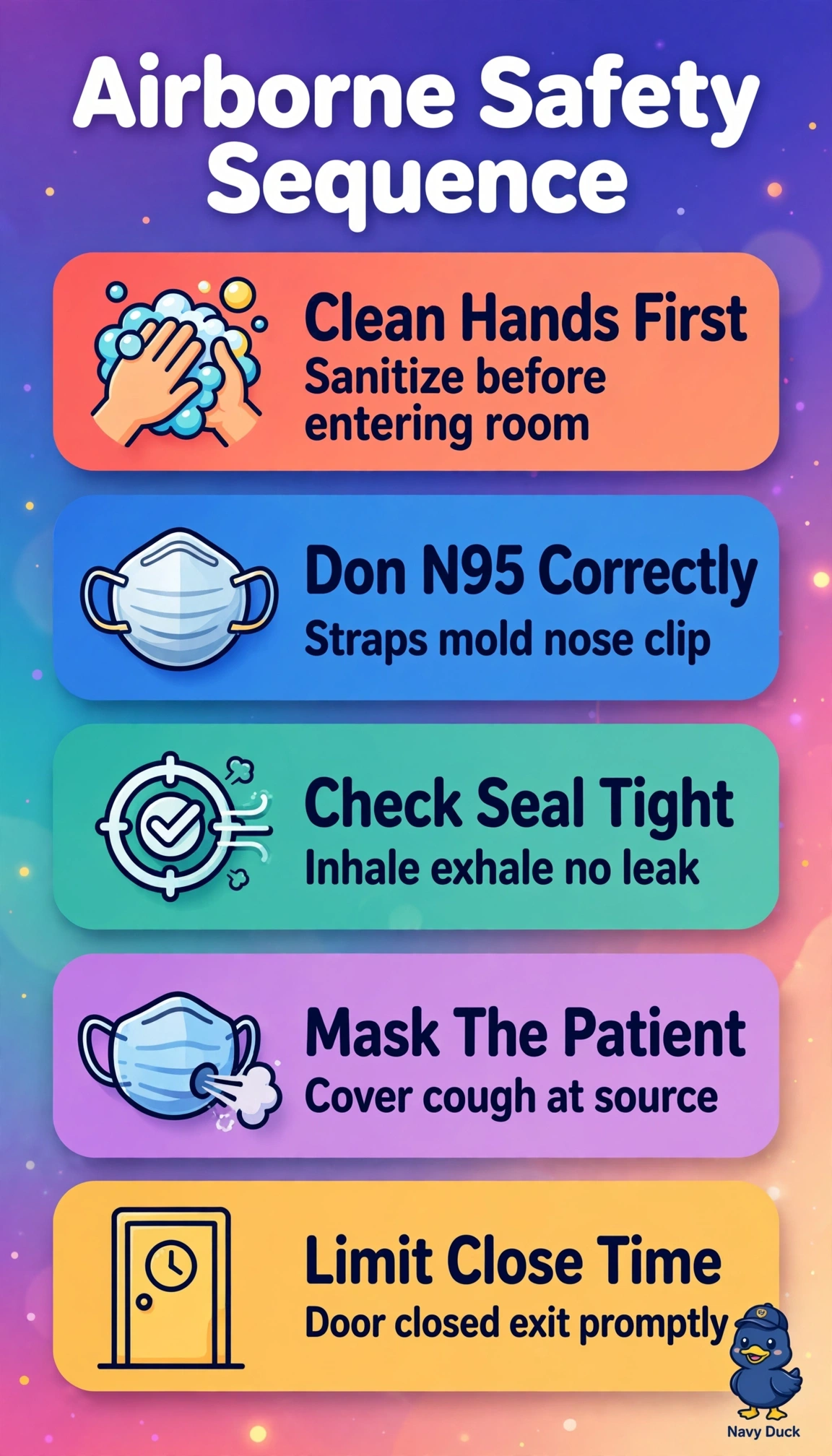
Airborne bugs demand airtight habits, starting with clean hands and a sealed respirator. Your seal-check turns that N95 from a costume into real protection.
Full Explanation
CDC Standard Precautions require hand hygiene before and after contact, while airborne precautions for suspected tuberculosis require a fit-tested N95 with user seal check, patient source control with a mask when feasible, private room with door closed, and limiting time and exposure, making hand hygiene plus proper respirator use and patient masking the correct sequence. Gloves, gown, and surgical mask misalign with airborne needs because a surgical mask does not filter airborne nuclei and donning gloves and gown before hand hygiene reverses order; placing a surgical mask on self and re-shaking hands without hygiene fails both respirator protection and hand hygiene; wearing an N95 without a seal check and sanitizing only when dirty omits the critical fit verification and the routine before-and-after hygiene moments. Exam caveat is that airborne always means N95 plus seal check, not a surgical mask on staff, and practical check is to sanitize, strap and mold the N95, inhale and exhale to check for leaks, then hand the patient tissues and a mask.