
A morning draw requires blood cultures, a light-blue coagulation tube, a serum tube, and a lavender hematology tube, the patient is properly identified, and only a straight needle is available. The tubes must prevent additive carryover that alters clotting and cell results. Which collection sequence correctly applies order of draw and tube additives?
Select an answer to reveal the explanation.
Short Explanation
You’re keeping additives from crashing each other’s tests. Cultures stay sterile and citrate stays uncontaminated when sterile tubes lead, like pouring clean water before soapy water. Remember sterile-first order to protect cultures and clotting tests.
Full Explanation
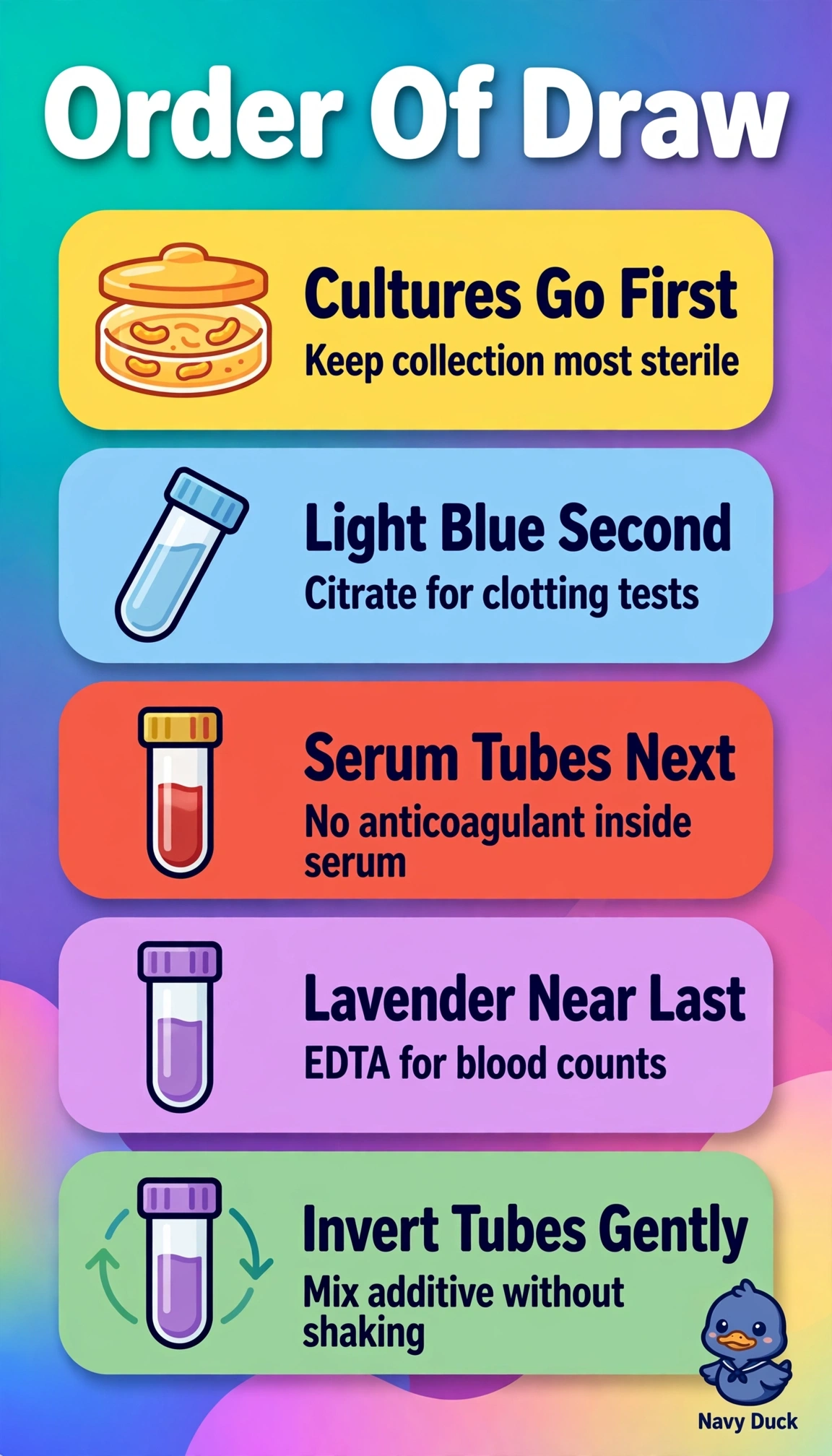
Order of draw prevents carryover of additives between tubes during needle changes, which matters because EDTA chelates calcium and elevates potassium effects while citrate binds calcium for coagulation testing, so EDTA contamination falsely prolongs clotting times. Sterile blood cultures come first to avoid bacterial contamination, followed by light-blue citrate for coagulation, then serum tubes for chemistry without anticoagulant carryover, then heparin if ordered, then lavender EDTA for hematology, then gray glycolytic inhibitor last. Starting with lavender spreads EDTA into citrate and serum tubes and delays cultures, risking false coagulation results and contaminated cultures. Starting with serum then lavender then citrate exposes the citrate tube to EDTA and clot activator, with cultures last losing sterility priority. Starting with citrate then lavender then serum then cultures still contaminates later serum and misses sterile-first protection. Exam caveat: link color to additive purpose rather than memorizing colors alone. Practical check: verify tubes, follow sterile first, invert gently after each tube.