
In an outpatient clinic bathroom, a technician must instruct a female patient with limited health literacy on a midstream clean-catch urine culture. Supplies include antiseptic wipes, a sterile cup, and written pictures. The patient asks how to avoid germ contamination. Which clean-catch urine collection instruction should the technician teach for this specimen?
Select an answer to reveal the explanation.
Short Explanation
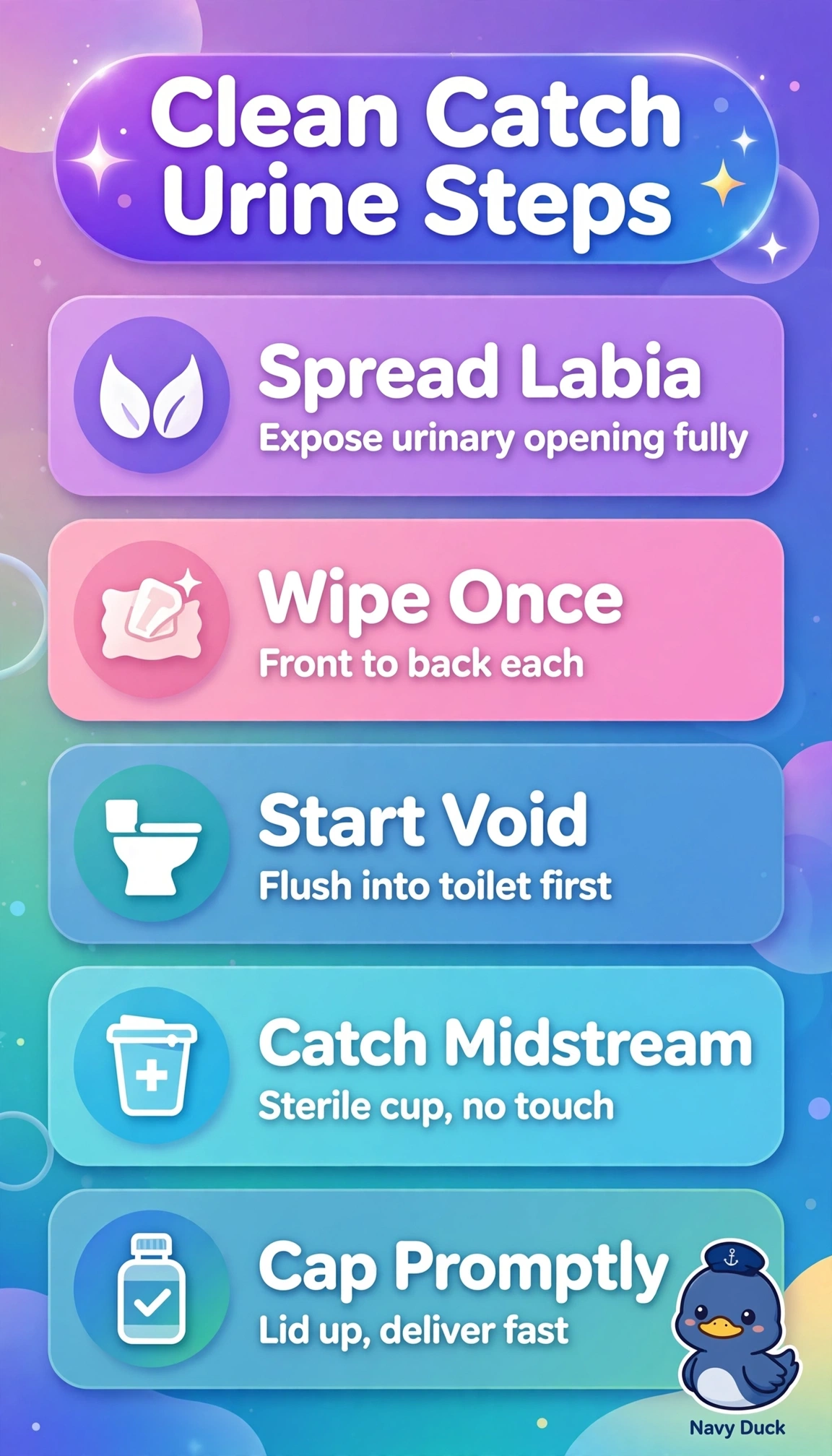
You can help keep the sample clean by guiding her through midstream collection. Show her how to wipe front to back, briefly void, and catch the urine without touching the inside of the sterile cup.
Full Explanation
Spreading the labia and wiping each side once from front to back helps remove vaginal and perineal flora without dragging enteric organisms forward. Having the patient void briefly first flushes distal urethral colonizers; catching the midstream portion in a sterile cup then provides representative bladder urine for quantitative culture. Pictures and a simple demonstration can make these steps easier to follow when health literacy is limited. Catching the first stream instead fails because it can carry more urethral commensals into the specimen, increasing contamination and potentially mimicking infection. Wiping without spreading the labia fails because the stream may still contact vaginal mucosa and secretions, leading to mixed flora and a possible repeat collection. Using a clean but nonsterile jar fails because culture interpretation relies on a specimen collected in a sterile container; a household jar does not meet that requirement. An exam caveat is to attend closely to whether the question specifies a culture and a midstream specimen, since the test purpose determines the collection method. A practical check is to use teach-back: confirm hand hygiene, labial separation, one front-to-back wipe per side with each wipe discarded, voiding past the initial stream, catching without touching the inside of the cup, closing it promptly, and delivering it promptly or refrigerating it.