
A long-term care resident with a PEG tube receives continuous pump feeding, is slightly reclined flat for a linen change, and coughs when lying flat. The nurse asks the PCT/A to help maintain feeding safety and aspiration precautions during routine care. Which aspiration precaution should the PCT/A prioritize while assisting this resident receiving PEG feeding?
Select an answer to reveal the explanation.
Short Explanation
Gravity is your quiet helper against reflux when tube feeding flows. Keeping the head raised lets the stomach stay below the airway, protecting elevation during and after feeding.
Full Explanation
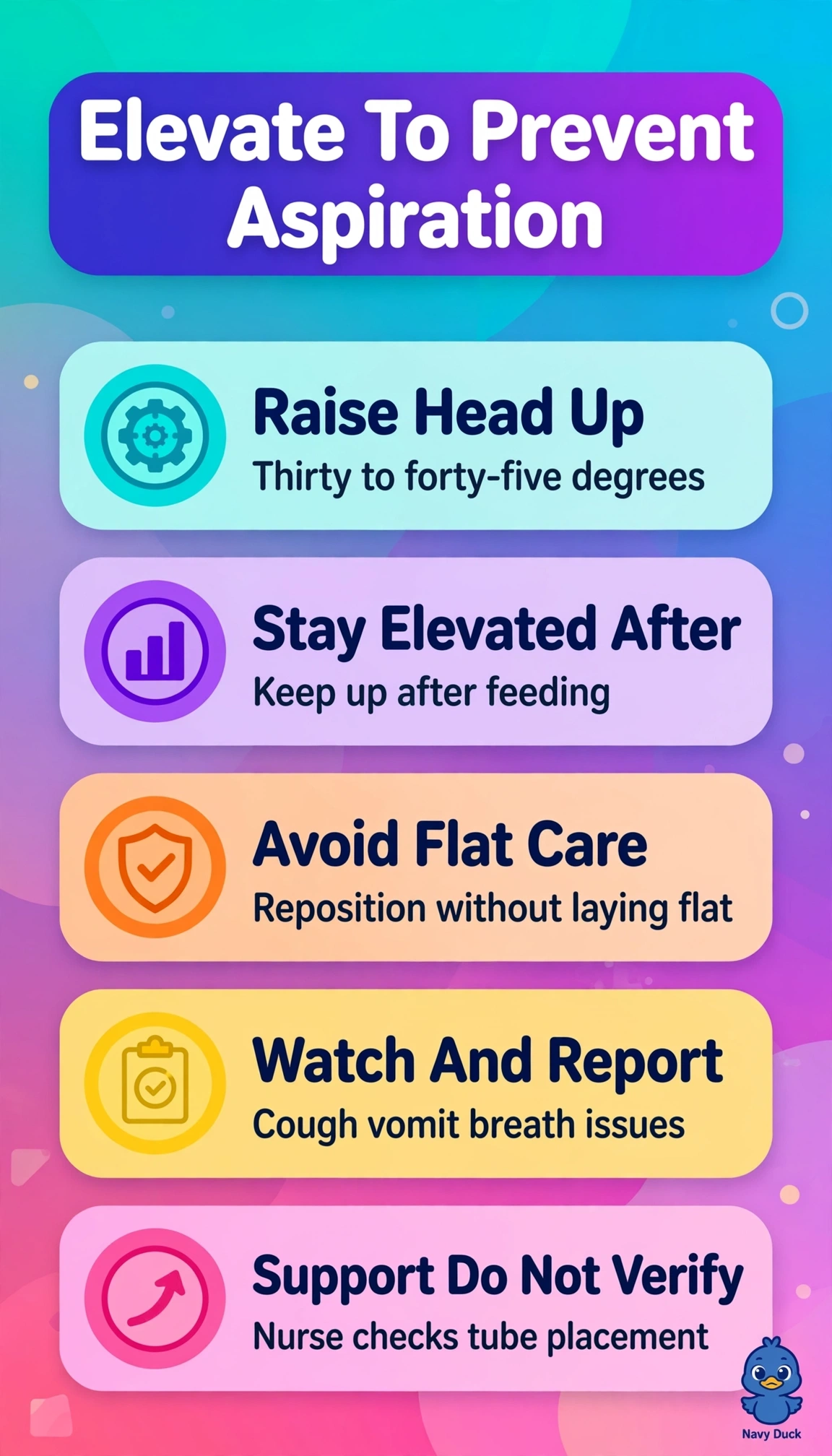
Continuous PEG pump feeding delivers formula constantly, so the stomach always holds fluid and any flat or low recline lets reflux move toward the airway, and coughing when flat signals impaired protection that makes 30 to 45 degrees during and for 30 to 60 minutes after feeding and handling the standard to use gravity for aspiration prevention while care continues. Elevating to 30 to 45 degrees during feeding then lowering flat right after care fails on duration because risk does not end when the linen change ends, since residual formula and delayed emptying can still reflux, so early lowering recreates the cough-provoking exposure. Keeping the head at 15 to 20 degrees fails on angle because low elevation is a comfort position, not an aspiration precaution, and does not create enough gradient to limit reflux in a resident already coughing supine. Stopping pump feeding for the linen change and restarting after fails on priority and scope because a brief pause does not empty the stomach or protect the airway if positioning remains inadequate, and pump changes and tube checks are nurse-directed, while the PCT/A role centers on positioning, observation, and reporting. On exams, never trade feeding safety for easier linen access and never choose pump control over positioning as the PCT/A priority. In practice confirm the bed-angle indicator, maintain elevation while turning with help, keep elevation after care, monitor cough, breathing, vomiting, leakage or displacement, and report promptly without adjusting rate or giving anything by mouth.