
On a busy morning surgery unit, a technician is preparing an adult scheduled for abdominal surgery in two hours who is anxious, wearing jewelry and nail polish, and has not voided. The consent is signed and NPO status is confirmed since midnight. Which pre-operative preparation checklist should the technician complete next for this surgical patient?
Select an answer to reveal the explanation.
Short Explanation
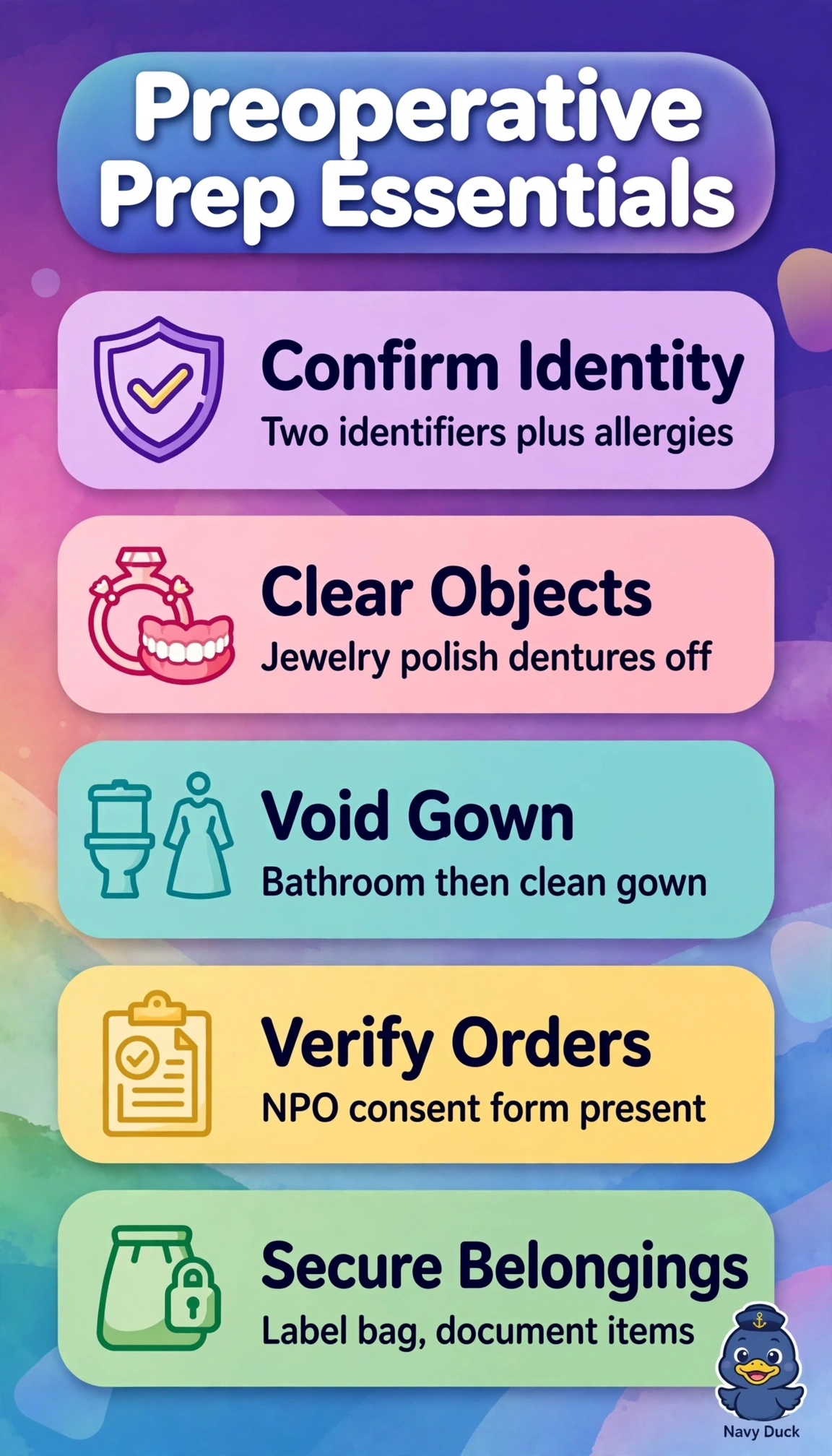
You’ve got that pre-surgery jitters moment covered when you stick to checklist-ready basics. Like a pilot before takeoff, you confirm identity, clear hazards, and empty the tank.
Full Explanation
The correct checklist is right because it completes the bedside safety bundle for abdominal surgery in two hours: identity and allergy verification prevents wrong-patient and anaphylaxis errors, jewelry removal eliminates electrosurgical burn, pressure and loss risks, polish removal ensures accurate pulse oximetry and perfusion assessment, voiding when the patient has not voided reduces discomfort, bladder injury and improves abdominal exposure, and gowning maintains dignity and asepsis while permitting anxiety support. The reassurance with intact polish approach fails by monitoring concept because retained polish absorbs light and hides nailbed color, compromising oxygen and circulatory surveillance under anesthesia. The removal with immediate transfer without voiding approach fails by elimination concept because a full bladder causes distress, post-induction retention and difficult catheterization, and risks contamination or operative injury. The reconfirming consent and NPO approach fails by verification concept because consent is already signed and fasting since midnight is already confirmed, so repeating them while omitting allergies leaves a life-threatening gap. Exam caveat is that empathy or efficiency phrasing distracts from non-delegable safety items, so prioritize identity, allergy and procedure-specific preparation. Practical check is to use a tick sheet, scan the wristband, ask open allergy history, bag and label valuables, inspect nails, document void time, and secure the gown before handover.