
A PCT prepares a middle-aged adult for morning gallbladder surgery in a same-day unit, with orders for NPO after midnight, removal of jewelry and dentures, voiding, and a signed consent on the chart. The patient sipped coffee at 6 a.m. and asks to keep a wedding band on. Which pre-operative preparation action best meets PCT scope and safety priorities?
Select an answer to reveal the explanation.
Short Explanation
You're the safety net catching that morning coffee before it becomes an anesthesia problem. Prompt escalation keeps you in scope while protecting the airway and the valuables.
Full Explanation
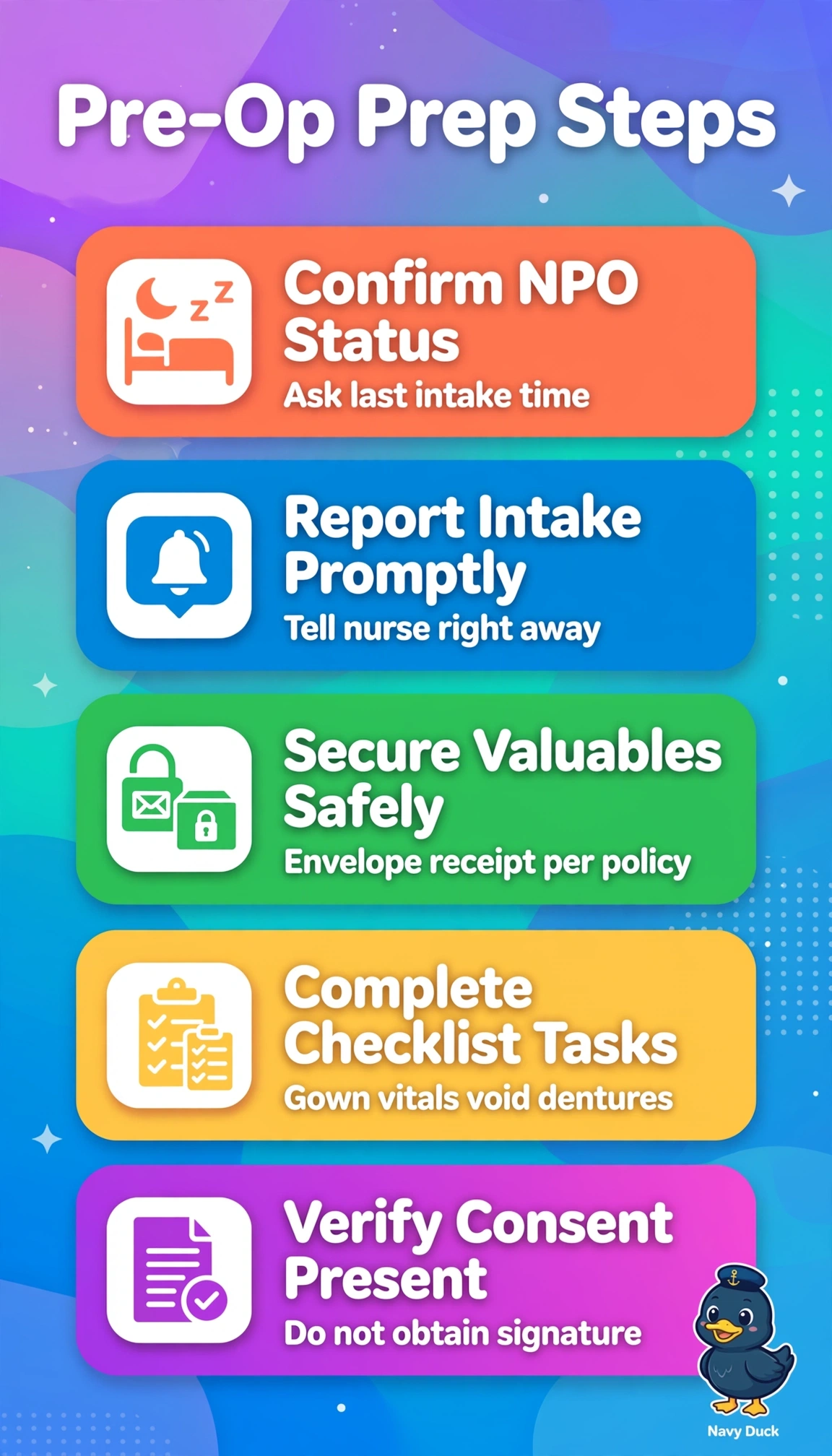
Pre-operative PCT duties focus on reinforcing NPO status, completing the checklist, hygiene, gowning, vitals, voiding, removing prostheses and valuables per policy, and reporting deviations, while consent verification and decisions about proceeding rest with the nurse, anesthesia, and surgeon because aspiration risk from recent intake can require delay or cancellation. Documenting a sip and proceeding minimizes NPO violation and bypasses required escalation; removing items and sending them away yourself exceeds safe handling and may violate valuables policy and patient autonomy when refusal or secure storage options exist; asking for a signature places obtaining informed consent outside PCT scope and ignores the unresolved NPO issue. Exam caveat is that NPO violations must always be reported immediately rather than judged as small, and practical check is to state time, type, and amount of intake to the nurse, offer a valuables envelope and receipt, and recheck gown, void, and armband.