
During morning care in long-term care, a dependent older adult has grouped bruises on the inner arms and torso, flinches when touched, and gives a vague history while the regular caregiver insists the injuries are from frequent falls despite no fall reports and a calm unit routine. The resident is alert, wants help, and asks that family not be confronted. Which mandated reporting action should the PCT take to address suspected abuse and neglect?
Select an answer to reveal the explanation.
Short Explanation
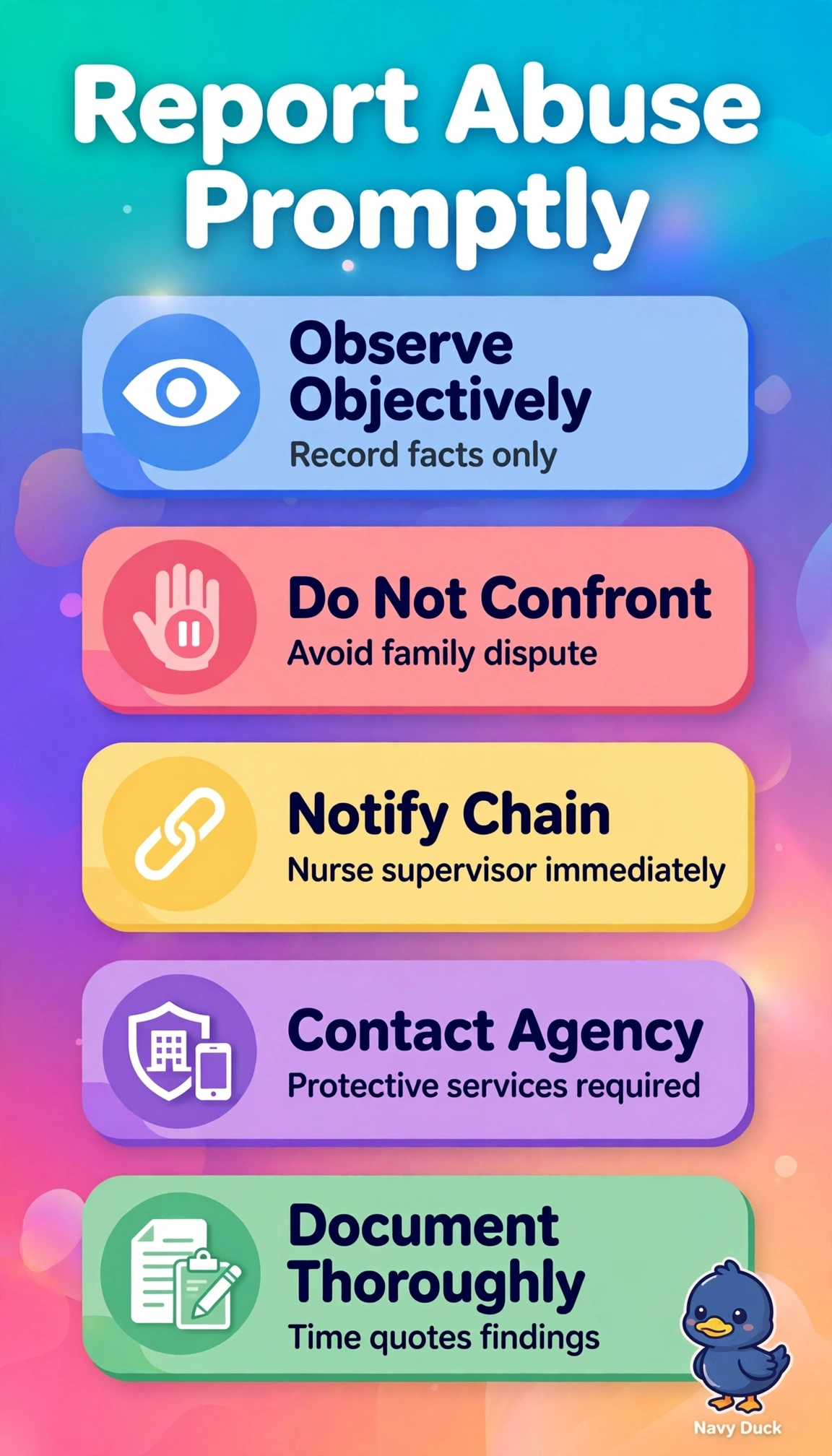
You do not have to solve the case, you just have to sound the alarm clearly. Reporting up the chain and to protective services protects the resident while investigation stays with the right team, like pulling a fire alarm.
Full Explanation
The correct action reflects mandated duty when reasonable suspicion exists, where grouped bruises in protected locations plus flinching, vague history, no fall reports to support frequent falls claim, dependency and explicit request for help require prompt objective reporting through facility chain and to designated protective agency without investigating cause or confronting caregiver or family. Comfort with careful assessment, objective documentation and close monitoring provides appropriate supportive care but fails because observation and monitoring do not satisfy the separate legal obligation to escalate suspicion immediately for independent investigation. Reporting only to the charge nurse while deferring external notification to the supervisor follows internal communication but fails because institutional hierarchy cannot substitute for or delay the direct report that applies to staff under state law and the federal Elder Justice Act, made to the state-designated agency (for example the state survey agency, long-term care ombudsman, adult protective services or law enforcement, depending on the state and setting). Implementing fall precautions and revising the care plan around the caregiver explanation applies valid injury prevention but fails because it accepts an account contradicted by injury pattern and missing documentation, since grouped inner-arm and torso bruises are atypical for accidental falls and suggest inflicted injury needing protection. On exams remember suspicion alone triggers reporting, and consent, certainty, or family discussion are never prerequisites, while privacy law permits protective disclosure. Practically confirm the facility policy, timeframe and agency contact now, chart exact quotes, size color shape and location on a body map with date time and witnesses, maintain safety and continuity, and avoid repeated questioning.