
A hospitalized adult has new watery diarrhea and is on contact precautions for suspected Clostridioides difficile, needing vital signs and linen help. The room has gown, gloves, soap, and alcohol sanitizer available. Which CDC Standard plus Transmission-based Precautions and hand hygiene combination should the PCT/A apply during this assignment?
Select an answer to reveal the explanation.
Short Explanation
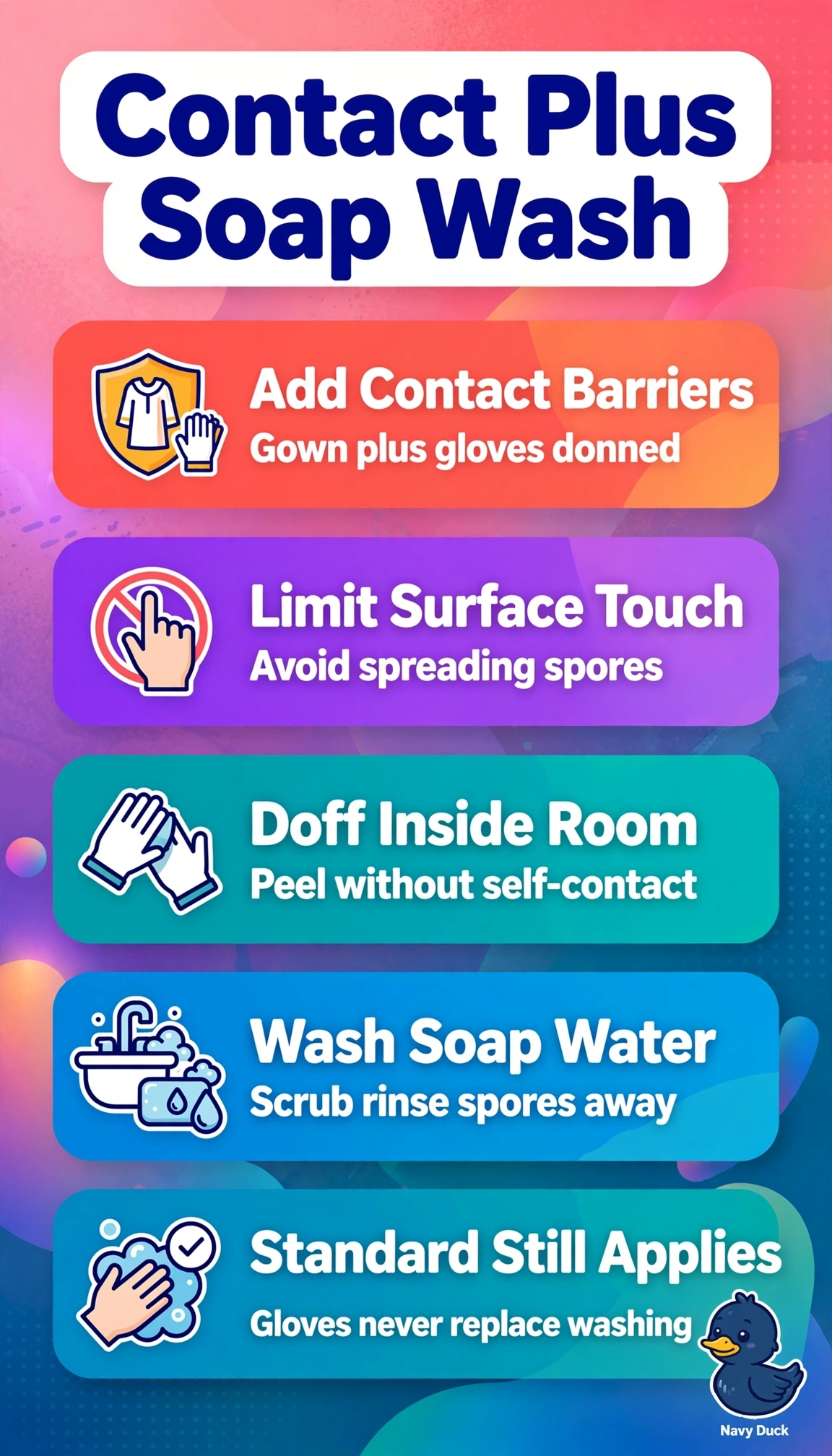
Spores are stubborn little survivors that sanitizer can't kill. Choosing soap and water after gown and gloves gives you the friction needed to physically remove them after contact care.
Full Explanation
Clostridioides difficile forms alcohol-resistant spores that require Standard Precautions plus contact precautions with gown and gloves to block fecal-oral and environmental spread, plus mechanical removal with soap and water because alcohol does not kill spores and hand friction with rinsing is required after glove removal. The alcohol-after-contact approach correctly identifies gown and gloves but fails on hand hygiene science, since sanitizer is ineffective against spores and would leave contamination on hands. The N95 and face shield approach confuses transmission categories, since N95 respirators are for airborne pathogens and droplet masks with eye protection do not address contact-driven spore contamination of hands and surfaces. The surgical mask only approach understates the requirement, since Standard Precautions alone omit needed barriers and sanitizer alone is inadequate for visible soiling and spores. Exam caveat is that C. difficile and norovirus are classic exceptions where soap and water is required over sanitizer. Practical check is to doff gown and gloves inside the room without touching outer surfaces, then wash immediately and avoid touching door handles with bare soiled hands.